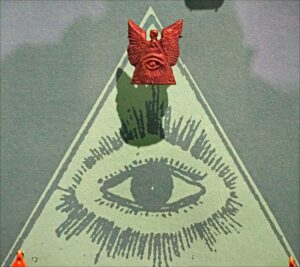
The Center for Humanist Studies of the Americas (CEHA) is honored to present an upcoming cultural program entitled “Bathala – The Myth of the Tagalog People,” which will be held on March 29 at 10:00 a.m. in Punta de Vacas.
This special event featured Karina L. M. Santillan from Manila, Philippines, who will share perspectives on the ancestral spiritual tradition of the Tagalog culture, centered on Bathala, the supreme creator deity.
The Tagalog culture, rooted in the Austronesian migrations that arrived in the Philippine archipelago around 2000 BCE, developed a worldview deeply connected to nature and the sacred. In this tradition, the universe is understood as a living structure where heaven, earth, and the invisible realms are intertwined.
Bathala is recognized as the source of creation and order, inhabiting a higher celestial realm, while the human world exists in constant relationship with the anitos — ancestral and nature spirits present in rivers, forests, mountains, and the elements
The geographical environment of Luzon, with its rivers, lakes, and volcanic mountains, shaped this spiritual vision. Natural spaces were not perceived as neutral, but as sacred territories where the visible and invisible worlds meet. Rituals, dances, songs, and offerings allowed communities to maintain harmony with these forces and access deeper states of consciousness.
From a humanist perspective, the Tagalog tradition reflects a deep aspiration: the search for meaning, the connection with the sacred and the transformation of the human being through contact with a higher order.
This cultural heritage continues to offer valuable insights into the relationship between humanity, nature, and the spiritual dimension of existence.
Source of the Copyright-free Image:
https://commons.wikimedia.org/wiki/File:Le_dieu_supr%C3%AAme_Bathala_aux_Philippines_(mus%C3%A9e_du_quai_Branly,_Paris)_(46974254744).jpg