A few months ago, I sat in a restaurant watching a family of five share a meal together. At first glance, they seemed happy to be in each other’s company. But within minutes, the silence became impossible to ignore. The parents were scrolling through their phones, one teenager was recording a video for TikTok, another was laughing at something on Instagram, and the youngest child kept tapping a screen while eating quietly. No one was speaking. No one was really present. They were physically together, yet emotionally somewhere else entirely.
by Kimberley Khasiala
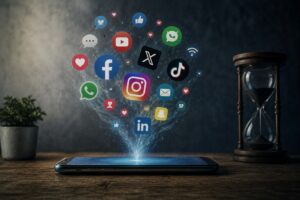
That moment captured something many people experience every day but rarely stop to question. We are living in the most connected period in human history, yet loneliness, emotional distance, and communication breakdowns continue to grow. Social media has transformed how people interact, build relationships, express themselves, and understand the world. Platforms such as Facebook, Instagram, X, TikTok, WhatsApp, and LinkedIn have become deeply woven into everyday life, shaping not only communication but also identity, culture, and social behavior.
There is no doubt that social media has brought remarkable benefits. Families separated by migration, work, or education can remain connected despite living thousands of kilometers apart. A simple video call allows grandparents to watch grandchildren grow up in real time. Friends who have not seen each other for years can reconnect instantly through a message or photograph. In many ways, social media has reduced the barriers created by physical distance and made communication faster and more accessible than ever before.
The digital world has also transformed access to information. News spreads globally within seconds, and educational resources are now available to millions of people online. Students participate in discussions beyond classroom walls, professionals’ network internationally, and ordinary citizens contribute to conversations once dominated by governments and major media organizations. During emergencies and natural disasters, social media often becomes one of the fastest ways to distribute critical information and coordinate support.
In recent years, social movements focused on climate justice, racial equality, human rights, and gender issues have gained international visibility largely because of social media. Individuals who previously lacked public platforms can now share their experiences and mobilize collective action. A single post, video, or hashtag can spark global conversations and challenge powerful institutions. Social media has given many people a voice they never had before.
Businesses and entrepreneurs have also benefited from this digital transformation. Small businesses can market products directly to customers without depending entirely on expensive advertising. Artists, writers, musicians, and content creators have built careers through online audiences. For many young people, social media is no longer simply entertainment; it is a source of income, creativity, and opportunity.
Yet behind these advantages lies a growing concern about what social media is doing to human relationships and emotional well-being. Although people are constantly connected online, many are becoming increasingly disconnected from the people physically around them. Conversations are interrupted by notifications. Moments are experienced through cameras instead of emotions. Meals, vacations, celebrations, and even acts of kindness are often shaped by the desire to post and receive validation online.
One of the most damaging effects of social media is the culture of constant comparison. Every day, users are exposed to carefully edited lifestyles that appear perfect, successful, and glamorous. People compare themselves to filtered images, luxury experiences, and unrealistic standards of beauty or happiness without realizing that much of what they see online represents only selected moments rather than reality. Over time, this endless comparison can create anxiety, insecurity, and dissatisfaction.
Young people are particularly vulnerable to these pressures. Research across different societies continues to link excessive social media use to depression, low self-esteem, sleep problems, and emotional stress. Many users begin to measure their value through likes, comments, and followers. Validation that once came from family, friendship, and personal achievement is increasingly sought from strangers online.
Cyberbullying has also become a serious social problem. Unlike traditional bullying, online harassment follows victims everywhere because digital spaces never truly close. Hurtful comments, rumors, public humiliation, and threats can spread rapidly across platforms and remain visible for long periods. For many teenagers and young adults, the psychological effects of cyberbullying can be devastating.
Another major challenge is misinformation. Social media allows information to travel quickly, but speed does not guarantee truth. False stories, manipulated images, conspiracy theories, and misleading headlines are frequently shared without verification. During elections, conflicts, and public health emergencies, misinformation can influence decisions, create panic, and divide communities. Algorithms designed to promote highly engaging content often amplify sensational or emotionally charged material regardless of its accuracy.
Privacy concerns continue to grow as well. Many people share personal information online without fully understanding how their data may be collected or used. Social media companies monitor browsing habits, interests, and online behavior, often for commercial purposes. Cases involving data breaches, identity theft, and unauthorized access to private information have increased public anxiety about digital security.
Perhaps the greatest question society must confront is whether social media is strengthening human relationships or quietly weakening them. Technology itself is not inherently harmful. The real issue lies in how deeply digital interaction is replacing meaningful human connection. Genuine relationships require empathy, listening, trust, patience, and emotional presence, qualities that cannot always be fully expressed through screens and notifications.
This does not mean social media should be rejected entirely. Digital platforms remain valuable tools for education, communication, activism, and economic growth. The challenge is learning how to use them responsibly without allowing them to dominate human interaction and emotional life.
Digital literacy is now more important than ever. People need the skills to identify misinformation, protect their privacy, and communicate respectfully online. Schools and universities can help by teaching critical thinking and responsible online behavior. Parents and guardians also play an important role in guiding children toward healthy social media habits and encouraging balanced offline experiences.
Technology companies must also accept greater responsibility. Stronger policies against cyberbullying, hate speech, and misinformation are necessary to create safer digital environments. Users deserve more transparency regarding how their personal information is collected and used. Social media platforms cannot continue prioritizing profit and engagement while ignoring the emotional and social consequences affecting millions of users worldwide.
At its best, social media has the power to educate, unite, inspire, and amplify important voices. At its worst, it can deepen loneliness, spread misinformation, and weaken the quality of human relationships. The future of communication therefore depends not only on technological advancement but also on society’s ability to preserve empathy, authenticity, and meaningful connection in the digital age.
The family I watched in that restaurant may not have realized how symbolic their silence had become. They were connected to hundreds of people online, yet disconnected from one another across the same table. Perhaps that is the contradiction of modern life: never before have people been able to communicate so easily, and yet never before has genuine human presence become so difficult to maintain.