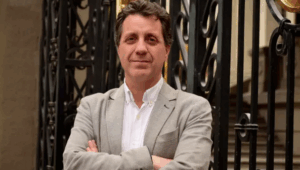
The five-year sentence handed down to Schafik Nazal Lázaro, former director of the Army Intelligence Directorate, and former judge Juan Antonio Poblete for illegally intercepting journalist Mauricio Weibel’s communications while he was investigating the corruption case known as Milicogate goes far beyond the individuals involved. We are not merely witnessing the conclusion of a legal proceeding. We are facing a warning about one of the boundaries that a democratic society can never afford to cross: using the power of the state to monitor those who hold the authorities accountable.
Intelligence activities are justified insofar as they protect the state and its citizens from organized crime, terrorism, foreign espionage, and other real threats. Precisely because they involve extraordinary powers, the rule of law requires that their use be subject to strict limits: a clear law authorizing them, a legitimate purpose, and effective safeguards to ensure that the measures taken are necessary and proportionate. When those limits disappear, intelligence ceases to protect society and begins to threaten the very freedoms it is meant to safeguard.
A free press does not exist to protect journalists. It exists to protect freedom. Freedom of expression includes seeking, receiving, and disseminating information of public interest. When a journalist investigates a case of corruption, it is really millions of citizens who are doing so by accessing information that is essential for demanding transparency, accountability, and responsibility from those in power.
When the state spies on a journalist, it not only affects their work. It also shatters the trust of those who report acts of corruption or provide information of public interest. As noted in the amicus curiae brief filed by Columbia Global Freedom of Expression, when journalists and sources fear that their communications may be intercepted, many stop investigating, others stop speaking out, and society loses access to information essential to public debate. The impact is not limited to a single journalist; it is an attack on freedom.
That is why illegal surveillance of journalists constitutes much more than a violation of their privacy. It is a form of indirect censorship. It has a chilling effect that discourages new investigations, intimidates sources of information, and encourages self-censorship. The consequence is that society begins to lose its freedom because it ceases to know what it needs to know to hold those in power accountable.
Freedom does not consist solely of people’s ability to consume, start businesses, travel, or express their opinions. It also depends on the freedom to investigate, seek out, and disseminate information of public interest; on the media’s ability to publish without political or economic pressure; and on ensuring that no “official truth” is imposed without the indispensable counterbalance of independent voices.
People do not lose their freedom overnight. They gradually surrender it when they accept self-censorship by the media, when fear replaces debate, and when those who investigate those in power come to be treated as a threat rather than as fulfilling the essential role of holding them accountable. Defending the freedom to investigate and report is not about protecting journalists. It is about protecting freedom.