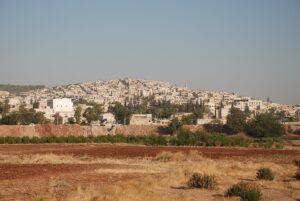
My name is Shiler Sido, a visionary peacebuilding specialist and community leader with over a decade of dedicated service in humanitarian response, human rights advocacy, and organizational development across conflict-affected regions. I was born in 1989 in Afrin, Syria. I studied English Literature at the University of Aleppo. I am now a Master’s Degree student at Amman Arab University, majoring in Psychological and Educational Counseling. Before the war and the displacement, I enjoyed a very successful life full of goals and achievements. I was a teacher, a translator, a writer, and a researcher about ancient Middle Eastern languages.
By Shiler Sido – August 10, 2026
Then the war came.
The Syrian conflict, which erupted in 2011, is often described as a civil war that spiraled into chaos. But for the Kurdish people of northern Syria, the war has always followed a clearer logic: the logic of demographic engineering, forced displacement, and political erasure. Among the most emblematic chapters of this ongoing tragedy is the story of my home — Afrin.
Before the war, Afrin was one of the most homogeneous Kurdish districts in Syria, with a population of roughly 500,000. It was a region of small farmers, olive oil producers, and tightly knit communities. Our olive groves were legendary — golden-green hills stretching as far as the eye could see, supporting generations of families. When the Syrian government withdrew from the area in 2012, the Kurdish Autonomous Administration established civilian governance. They built schools, women’s cooperatives, and local councils. Women held positions of power. Religious and ethnic minorities were protected. Afrin became a quiet symbol of what a different Syria could look like — a Syria based on democracy, pluralism, and human dignity.
That experiment came under direct assault in January 2018, when Turkey launched Operation Olive Branch. The Turkish government claimed that our political and military structures were terrorist organizations. But what happened on the ground was not counter-terrorism. It was an invasion aimed at destroying Kurdish self-governance and remaking the demographic map of northern Syria.
2018
Occupying Afrin paved the way for Neo-Colonialism in Syria, led by Turkey
An unforgettable year — because what followed changed everything. I thought I knew about who I was, what I could lose, and what I could still become. It was the beginning of an orchestrated demographic transformation. Turkey and its Syrian allies began repopulating Afrin with Arab families — including, in a deeply controversial move, Palestinian refugees from other parts of Syria.
So many reports proved that, but a study done by Lund University stated in detail what happened in Afrin:
“Before the Turkish operation, 95 percent of the population in Afrin was Kurdish, but everything changed drastically, especially after 2018-2019. Until 2018, Arabs and Kurds lived together peacefully. However, after that year, the demographics in Afrin shifted, with the majority of the population now consisting of Arabs and Turkmen. The olive fields in Afrin were destroyed; 18 million trees were cut down, although reported numbers vary across sources, from 500,000 to 13 million. In place of these trees, new settlements and residential buildings have been constructed with funds coming from Kuwait or sometimes Qatar for the new settlers, facilitated most likely by groups such as the Muslim Brotherhood, Islamic Jihad, and also Hamas. After the occupation, around 10,000 homes and 7,000 shops were destroyed or confiscated.”
The biggest process of refugees took place under the pretext of Turkish National Security․ More than 38 new housing units were built. These housing units are built by international organizations controlled by the Muslim Brotherhood, either in Qatar or in Kuwait, or by some Palestinian organizations controlled by Hamas, Islamic Jihad and others loyal to Turkey. They began renaming the territory, including streets, squares, and villages, switching everything from Kurdish to Turkish.
The symbolism was unmistakable: our land was being resettled by others, and we, the original inhabitants, were scattered across camps in a bombed-out landscape. The Kurdish identity of Afrin was being systematically erased. There was more evidence posted by The Insight International, which also published a piece “Turkey settles 10,000 Palestinians in Afrin in Syrian Kurdistan. In that piece, it was stated clearly that Turkification and Arabization of Afrin city were systemic and funded by Muslim Brotherhood organizations in the region.
The Structural Paralysis of the International Community, Including the UN
The situation in Afrin and its aftermath represents a textbook case of violations that international law defines as war crimes and crimes against humanity. These patterns are not accidental — they follow a deliberate logic. But the big question that has always been in my head is: Why are the UN and the international organizations that call for justice and human rights silent, and why don’t they take any action? Activists like me and Kurdish bodies sent tens of documents to the UN agencies describing with evidence what is happening in Afrin, but these documents were completely dismissed.
In fact, the United Nations’ response to the crisis in Afrin — and to the broader demographic engineering of northern Syria — has been marked by a profound disconnect between documentation and action. Various UN mechanisms have acknowledged the severity of what has transpired. The Independent International Commission of Inquiry on the Syrian Arab Republic has documented patterns of forced displacement, property destruction, and the transfer of populations into occupied areas — acts that fall squarely within the definition of war crimes and crimes against humanity under the Rome Statute.
Yet the UN Security Council, paralyzed by geopolitical divisions and the veto power of permanent members (notably Russia, a key ally of the Syrian government, and the complex positioning of member states vis-à-vis Turkey, a NATO member), has been unable to authorize meaningful enforcement measures. No Chapter VII resolution authorizing intervention, no referral to the International Criminal Court, no targeted sanctions regime specifically addressing the Turkification and Arabization of Afrin. The UN’s humanitarian agencies — OCHA, UNHCR, and UNICEF — have operated in the region. Still, the competing territorial claims of the Syrian regime, Turkish-backed forces, and the Kurdish Autonomous Administration has constrained their access. The result is a humanitarian apparatus that can document suffering but cannot stop it.
The response from the broader international community reflects the same structural paralysis. The United States, under both the Trump and Biden administrations, maintained a military presence in northeastern Syria primarily to counter ISIS, not to protect Kurdish civilian governance. When Turkey launched Operation Olive Branch in January 2018, the U.S. did not intervene militarily, despite the Kurdish-led Syrian Democratic Forces having been Washington’s primary ground partner in the fight against the Islamic State.
The message was unmistakable: Kurdish lives could be leveraged for counterterrorism but not defended against a NATO ally. European nations, while rhetorically supportive of human rights in Syria, have largely deferred to Turkey on matters concerning northern Syria, mindful of the 2016 EU-Turkey migration deal and Ankara’s leverage over refugee flows. Individual states have offered asylum to some Syrian Kurds, but no coordinated diplomatic strategy has emerged to hold Turkey accountable for the demographic transformation of Afrin.
Arab states, for their part, have been largely silent — some because of their own Kurdish minorities, others because of alignment with Turkey or the Syrian government. On the whole, the international community’s response has been one of selective attention: ISIS atrocities generate military coalitions; Syrian regime barrel bombs generate diplomatic outrage; but the quiet, systematic erasure of Kurdish Afrin has generated little more than statements of concern.
The Challenges of Achieving Accountability
I realized later the following fact:
First, the obstacles to accountability are layered and interlocking. Legal jurisdiction is fragmented. Turkey is not a state party to the Rome Statute of the International Criminal Court, so the ICC cannot prosecute Turkish nationals for crimes committed in Afrin unless the UN Security Council refers the situation — a near-impossibility given the geopolitical dynamics described above. The International Court of Justice could theoretically hear a state-to-state case, but no state has brought one. The Syrian regime’s own judicial system is both complicit and compromised. This leaves universal jurisdiction prosecutions in European courts as the most plausible legal avenue, and indeed cases have been brought against Syrian officials in Germany, France, and Sweden — but these have focused overwhelmingly on the Assad regime, not on Turkey or its allied factions.
Second, documentation challenges persist despite the efforts of groups like Human Rights Watch and local documenters like me. The destruction of physical evidence, the displacement of witnesses, the difficulty of verifying mass graves and destroyed olive groves in active conflict zones — all of these impede the construction of evidentiary records that would hold up in international courts.
Third, political reality is the most formidable barrier. Turkey is a NATO member with a powerful military and significant diplomatic leverage. It controls migration routes into Europe. It has economic relationships with major powers that dwarf the political weight of the Kurdish minority. The international community has repeatedly demonstrated that it is unwilling to sacrifice strategic relationships with Ankara for accountability in Afrin. The fundamental challenge is that the Kurdish people of northern Syria lack the geopolitical relevance necessary to compel action. As I always say, “To be Kurdish is to live in a house where you are perpetually unwelcome.”1
One Corridor Left
Going back to my story: I carried my baby in my arms. My husband held my hand. We walked for tens of kilometers across mountains while the sky burned behind us. I cannot tell you how many family members I lost. Even forming the number feels like tearing through the scar again. We ended up in Tal-Rifaat — a place that had been bombed flat, the earth still seeded with mines left by ISIS. Nearly 300,000 displaced Kurds arrived there. I lived in a tent with my husband and my two-year-old daughter.
One night, I was gripped by relentless diarrhea for eating food my body rejected, never known before. No medicine. No clinic. The toilets were a kilometer away through the mud. My husband held my hand and walked me there — back and forth, all night long, through the rain — because there was nothing else to do. No doctor. No help. Just rain and mud and a man who refused to let me suffer alone.
I stayed in that tent for a year, still thinking of the nightmare the children in the Camp are enduring. I volunteered with the Kurdish Red Crescent. I documented the lives of the displaced in three languages. I sat with women who had survived horrors. I listened; I wrote. I shared the truth with the world, only to be met with deafening silence. But one of my reports reached the U.S. Congress.
2021
Columbia University offered me a nine-month course in international law and humanitarian documentation. I attended from inside a tent.
Imagine that: a woman who had walked through a massacre, who had spent a year in a refugee camp with no medical care, who had buried too many names to count — searching for a bar of signal on her phone, squinting at a screen, learning international law so she could fight for her people with more than just her grief. I finished the course despite the strain; I carried the weight instead of my complaints.
2022
Healing Trauma as a Foundation for Social Cohesion and Peacebuilding in Syria
In 2022, I founded ACES — Action for Community Empowerment in Syria — with a simple mission: to show broken people that the strength within us is greater than what the war inflicted on us. My focus was mental health and psychosocial support (MHPSS) for traumatized communities. I trained doctors and nurses at the region’s only hospital to care for the traumatized, especially the young, and I served and empowered thousands of displaced people. But the scale of the collective trauma I witnessed convinced me to go further, for the following reasons:
We know that trauma fuels conflict; mentally and emotionally regulated people can easily build dialogue and have peace talks. That is why I always link good mental health in any community, especially in a conflicted one, with social cohesion and peacebuilding. Furthermore, when individuals are trapped in cycles of fear, grief, hypervigilance, and unresolved anger, social trust erodes, intercommunal tensions rise, and the capacity for reconciliation collapses. By providing trauma-informed care, Psychological First Aid, and sustained psychosocial support, ACES created and still creates the psychological groundwork upon which social cohesion can be rebuilt. A person who has healed enough to trust again is a person who can engage in dialogue, cooperate across ethnic lines, and invest in shared community life.
I had been broken myself. I knew exactly what healing required — and how easily the world forgets to try. I knew that trauma can be transformed into inner power. That’s what I did, and what I continue to do through my NGO because I genuinely believe that sustainable peace cannot be built on traumatized communities.
2023 to 2026
Working More with the Minorities, but WHY
By 2023, I had moved to Northeast Syria, expanding my work across three governorates. I ran workshops on mental health, education, social cohesion, and peacebuilding. I worked with Armenians, Yezidis, Christians, Syriacs, Arabs — every community that war had tried to erase. I had lived in their tents, held their hands in the rain, documented their daughters’ suffering to ensure that someone, somewhere, read the truth. For four years, I brought hope to places where hope had died. My greatest award was earning their trust.
In conflict-affected settings, minorities are often the first to be scapegoated and the last to receive support. ACES prioritizes these communities because we understand that the resilience of the whole society depends on protecting its most vulnerable parts. By strengthening the psychological and social resilience of minority individuals and families, we are building bulwarks against the forces of division, extremism, and communal violence. A Yazidi woman who has regained her sense of agency through psychosocial support, a Kurdish teacher trained in trauma-informed education, a Syriac community leader equipped with Psychological First Aid skills — these are the building blocks of a peaceful, pluralistic Syria.
January 2026
The new ruler in Damascus turned on the minorities. Alawites and Druze were massacred first. Then the Kurds. In Aleppo, two neighborhoods — home to half a million Kurds — were attacked overnight. Seven members of my husband’s family died in a single drone strike while trying to escape, including his sister, her husband, their daughter, his sister-in-law, and their three small children. Many others simply vanished with no trace, which is all too familiar following such violence. I was in Qamishli when the Autonomous Administration areas came under attack. There was no safety anywhere. For the fourth time in my life, I fled.
Now I am in Amman, Jordan, with my husband and our three daughters. We sold our furniture to pay the rent. We struggle, but we survive. Nothing about the present tells us to go back. People often ask me: How do you endure this without becoming bitter, without becoming hard?
I do not have a colorful answer. I only know that I have never surrendered to my reality. I am still here — fighting, working, empowering myself and others toward a better present and a better future. I have been bombed, and so has every Kurdish Mountain. The bombs have fallen on Qandil, on Shengal, on Afrin, on Kobanê, on Kirkuk — dropped from foreign jets, fired from domestic mortars. The soil of Kurdistan does not remember a time without craters. I say this not as a statistic, but as a body that has absorbed the shockwave and kept walking.
Despite the hardships, ACES and I continue working
Today, ACES continues to expand its integrated programming across Syria, with a growing presence in northeast Syria from its main office in Qamishli and plans for a second office in Damascus. We are currently implementing programs in MHPSS, GBV prevention, child protection, and trauma-informed education — reaching thousands of participants across eight governorates.
Our 2025 forums on sustainable peace and educational transformation have brought together over 260 stakeholders, generating actionable recommendations for local and international decision-makers. We are deepening our partnerships with academic institutions, including Columbia University, Georgetown University’s Institute for Women, Peace and Security, and Fordham University’s Institute of International Humanitarian Affairs, ensuring that our work remains evidence-based, globally informed, and locally grounded.
But the scale of need far outstrips our capacity. The international community cannot afford to look away from Syria — not when Kurdish communities and other minorities continue to face threats to their very existence, not when a generation of children is growing up in the shadow of unaddressed trauma, not when the infrastructure of social cohesion has been systematically destroyed.
We call on governments, international organizations, and humanitarian actors to act — not with empty resolutions, but with sustained political will, flexible funding, and genuine partnership with local civil society. Accountability for past and ongoing crimes must be pursued. Human dignity must be placed at the center of every intervention. Peacebuilding must be understood as inseparable from healing. And the women, minorities, and communities who have held Syrian society together through its darkest years must be recognized, protected, and empowered.
A peaceful, inclusive, and resilient Syria is possible — but only if we build it together, from the ground up, starting with the psychological and social well-being of every person.
I am Shiler Sido.
My story is every Kurd’s story. The maps erased us. The censuses didn’t count us. The chemical weapons tried to dissolve us. And yet, we are still here. My story represents a nation of itself. What really makes it hard is the lack of justice and accountability.
I am not just a Kurd who survived. I am a Kurd who is still becoming. And that becoming — that stubborn, unbreakable, endlessly creative insistence on being — is the only thing the bombs have never been able to destroy.
Çiya dikarin bitefin, lê milet namire. (in Kurdish)
The mountains can be destroyed. The people will not die. (Its meaning in English)
1. For more details, see https://www.hrw.org/news/2018/04/08/syria-afrin-residents-blocked-fleeing-aid; https://www.hrw.org/news/2025/05/14/syria-turkiye-backed-armed-groups-detain-extort-civilians; https://www.hrw.org/report/2024/02/29/everything-power-weapon/abuses-and-impunity-turkish-occupied-northern-syria.
Shiler Sido is a Kurdish peacebuilding specialist and community leader with over a decade of dedicated service in humanitarian response, human rights advocacy, and organizational development across conflict-affected regions. She is the Co-Founder and Executive Director of ACES (Action for Community Empowerment in Syria).