By Oliver P. Ngiwas
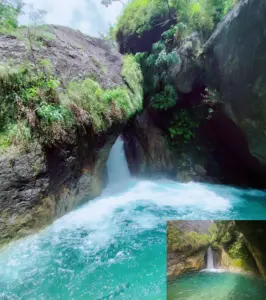
Ubbog Falls. Tucked away in the mountains of Bagu, Bakun, Benguet, Ubbog Falls stands as one of the community’s remarkable natural treasures. Known locally as the “Largest Ubbog,” its crystal-clear waters cascade through the rugged mountain landscape, offering a refreshing glimpse of nature at its purest.
Deep in the mountains of Bakun, Benguet, lies a community that many people may never have heard of—a place where life moves quietly, simply, and peacefully. Barangay Bagu is one of the far-flung communities of the municipality. Modern conveniences may not always be within easy reach, and people continue to live closely connected to the land.

Bagu has been known primarily as a farming community. Locals rise early, tend their rice fields, plant tomatoes and other crops, and work patiently with the seasons. Life here is not extravagant. It is simple, hardworking, and deeply rooted in the land.
Yet behind this simplicity lies something extraordinary.
Bagu is home to natural treasures that, for generations, were known mostly to the locals themselves—rivers flowing through the mountains, waterfalls hidden among trees and rocks, majestic mountain landscapes, and places where one can pause, breathe deeply, and appreciate the beauty of nature.
These places were always there. People simply did not realize that they were treasures.
For many residents, traveling to distant places has often been associated with relaxation and recreation. When people want to see breathtaking waterfalls, beautiful mountains, refreshing rivers, and peaceful landscapes, they often think of destinations outside their own community. They travel long distances and spend money in search of places where they can unwind.
But sometimes, the places we long to visit are already waiting for us at home.
Bagu is slowly discovering this truth.
Where Simplicity Meets Nature
Life in Bagu reflects the simplicity of rural mountain living. The rhythm of everyday life is largely dictated by agriculture. Families cultivate rice fields and vegetable gardens, while tomatoes and other crops provide an important source of livelihood.
The people work with what the land provides.
The rivers, too, have always been part of community life. To visitors, these rivers may appear to be picturesque natural attractions. To the locals, however, they have long been part of everyday existence.
They are fishing grounds.

Bagu’s rivers and waterfalls offer more than breathtaking scenery. They are also part of the community’s natural resources and a source of recreation for both locals and visitors. Some tourists come not only to admire the cool, flowing waters and mountain landscapes but also to experience the simple pleasure of fishing.

Bayukbok Falls: When the Mountains Weep. During the rainy season, the mountains of Bagu reveal a different kind of beauty. Water cascades down their rugged slopes, forming countless streams and waterfalls that seem to emerge from every corner of the landscape. Like crying mountains, they pour their tears into the rivers below—turning the highlands into a breathtaking spectacle of nature, alive with the rhythm of rain and rushing water.
Small fish and wild eels are gathered from these waters and prepared as food. Wild eels, in particular, are among the delicacies that locals proudly serve during special occasions and when welcoming visitors into their homes.
For generations, the river was not considered a tourist destination. It was simply part of life.
People went there to fish, gather food, spend time with family, or enjoy the cool mountain water. The waterfalls were familiar features of the landscape.
Children grew up knowing where the water flowed. Farmers passed through the trails surrounding them. Families knew the sound of rushing water echoing through the mountains.
What was ordinary to the people of Bagu could be extraordinary to someone seeing it for the first time.
The Beauty That Locals Almost Overlooked
There is a curious reality about places we call home: sometimes, familiarity prevents us from seeing their beauty.
We become accustomed to the mountains surrounding us. We hear the river every day. We pass by the same trails and trees. We see the waterfalls and landscapes so often that they become ordinary.
Meanwhile, people from other places travel hundreds of kilometers to experience something similar.
This began to change when visitors from outside the community started noticing Bagu’s natural attractions.
Armed with smartphones and cameras, visitors began taking photographs and videos of the rivers, waterfalls, mountains, and surrounding landscapes. They shared these images on social media.
Suddenly, places that had remained relatively unknown began appearing on people’s screens.
A photograph of a waterfall could inspire someone to ask, Where is this place? A video of a river could encourage another person to visit. A beautiful mountain landscape could make someone realize that there was another destination worth exploring in the remote mountains of Bakun.
Social media became an unexpected bridge between Bagu and the outside world.
Hidden Places becoming Emerging Destinations
As photographs and videos continued to circulate online, more people became curious about Bagu’s attractions.
Visitors began arriving.
Some came to see the waterfalls. Others wanted to explore the rivers and mountains. Some came to take photographs. Others came to experience the peace and quiet that cannot easily be found in crowded places.
The locals also began to appreciate their surroundings differently.
They started taking photographs. They began sharing their own experiences and posting the beauty of their community online. They became residents of Bagu as well as storytellers and ambassadors of their own place.
The community began to recognize that its natural environment could become a source of pride—and potentially another source of livelihood.
Tourism is still developing but is beginning to create opportunities. Visitors may need local guides, transportation, food, and other services. Small businesses can emerge around these activities, providing additional income to families whose primary livelihood has traditionally depended on farming.
But perhaps, the most valuable change is not economic.
It is a change in perspective.
Learning to Appreciate What Is Ours
Sometimes, we become so fascinated by destinations advertised on social media that we forget to look at what is around us.

Once known mainly to the local community, Bagu’s rivers, waterfalls, and mountain landscapes are now attracting visitors from neighboring communities and other places. Drawn by photographs and stories shared through social media, local tourists are discovering the natural beauty that has long been part of Bagu’s landscape. Their visits are helping bring new attention to the community while giving residents a renewed appreciation for the treasures they have always called home.
We see beautiful places in other provinces and dream of visiting them. We admire photographs of mountains, rivers, and waterfalls from distant destinations. We plan trips and save money just to experience nature somewhere else.
Yet there may be a river just beyond our backyard.
There may be a waterfall a short trek away.
There may be a mountain view that we have seen countless times, but never truly stopped to appreciate.
Bagu reminds us that beauty does not always have to be far away.
Sometimes, it is hidden in the places we already know.
The challenge is learning to see it.

Penged Mati Falls: A scenery so beautiful, it turns moments of weariness into moments of joy.
A Jewel Worth Protecting
Bagu may still be a far-flung and less privileged community. Its people may continue to live simple lives, cultivate their fields, and depend on what the land provides.
But being far from the centers of development does not mean being deprived of beauty.

Part of Ubbog Falls
In fact, distance from the busy world has allowed much of Bagu’s natural environment to remain peaceful and authentic.
The waterfalls continue to flow, the rivers to run through the mountains. The rice fields continue to turn green during planting season. The tomato gardens continue to provide livelihoods. And the people continue to welcome visitors with the warmth and simplicity that have long characterized mountain communities.
As more people discover Bagu, tourism should also come with responsibility. Visitors should respect the environment, keep the surroundings clean, follow local practices, and remember that these attractions are not merely places for photographs.
They are part of someone’s home.
Perhaps Bagu’s greatest treasure is not any single waterfall, river, or mountain. It is the realization that beauty has always been there—it simply needed to be noticed.
Before spending time and money traveling far in search of beautiful places, take a moment to look around your own community. Explore the paths you have never taken. Listen to the rivers you have always heard. Look at the mountains you have always passed. Ask the elders about the places they have known for generations.
Take a photograph. Tell the story. Appreciate home.
Because sometimes, the places we are searching for are not far away. They may be quietly waiting behind the mountains, flowing through a familiar river, or standing silently in the landscape we have always called home.
Bagu is one of those places—a simple, peaceful farming community slowly discovering its own jewels.
Its natural attractions may have been hidden for generations, but through appreciation, responsible tourism, and the power of storytelling, these treasures are finally being seen.
And perhaps that is the most beautiful journey of all—not simply discovering a new destination but rediscovering the beauty of the place we already call home.
###############
About the Author:
 Oliver P. Ngiwas. A native of Bagu, Bakun, Benguet, the School Head of Bagu Integrated School. An adventurer, nature lover, and storyteller at heart, he finds inspiration in the mountains, rivers, waterfalls, and quiet landscapes of his hometown. His deep connection to Bagu has strengthened his belief that some of nature’s greatest treasures are found not in famous destinations, but in the places we often call home. Through his writing and advocacy, he hopes to encourage people to discover, appreciate, protect, and preserve the natural beauty of their communities while promoting responsible and sustainable appreciation of nature.