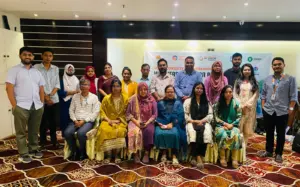
Dhaka, 30 September 2026: Youth representatives and young workers have called for their concerns, experiences and demands to be reflected in Bangladesh’s climate policies and national position for COP31, saying that climate change, automation and the green transition are already affecting employment, workplace safety, skills and livelihoods.
They made the call at a consultation workshop on the Workers’ Position Paper for COP31, which focused on the perspectives of youth organisations and young workers. The consultation created a space to identify their challenges and develop recommendations for a worker-centred just transition.
The consultation was organised as part of the ongoing process to develop the Workers’ Position Paper and Charter ahead of COP31 by Manusher Jonno Foundation (MJF), Bangladesh Labour Foundation (BLF) and National Alliance for Just Transition Bangladesh (NAJTB), with support from Oxfam Bangladesh.
Speaking at the opening, Zubaer Alam, Program Officer at BLF, said the consultation aimed to bring the risks and demands of grassroots workers into Bangladesh’s national climate position. He said young people’s voices are essential in the just transition process, and the shift towards renewable energy and greener production must address workers’ employment, livelihoods and social protection.
Pablo Narudha from Manusher Jonno Foundation said automation and technological changes could create serious risks for workers if they are not supported with proper skills, alternative employment opportunities and social protection. He stressed that the grassroots realities of workers must be reflected in national and international policy discussions.
During the group discussions, youth and young worker representatives placed their demands under four key areas: climate governance, decent work and social protection, skills development and occupational health and safety, and climate finance.
On climate governance, participants called for meaningful youth and worker representation in climate decision-making, dedicated climate-finance allocations for workers and a national database to track workers’ skills, employment status and transition-related job losses.
Participants called for a worker-centred just transition that ensures decent work, social protection, skills development, occupational safety and dedicated climate finance. They demanded paid breaks during extreme heat, regular health check-ups, safe drinking water, PPE, childcare facilities, stronger protection for young, women and contract workers, accessible reskilling and upskilling, income protection during training, recognised green-skills certification and clear career pathways. The youth participants also recommended heat-risk assessments, workplace temperature guidelines, adjusted working hours, stronger safety measures, dedicated financing for green technology, alternative employment and emergency support, along with gender- and health-responsive climate finance monitored transparently with workers and trade unions.
They stressed the need to close the gap between policy discussions and field realities through better data, stronger engagement with young workers, simple-language materials, short videos, social media content and workplace outreach on just transition.
The recommendations from the consultation will contribute to the Workers’ Position Paper and Charter for COP31, ensuring that the perspectives of youth organisations and young workers are reflected in Bangladesh’s climate-policy discussions.
The consultation reaffirmed that young people should be active participants in shaping policies, skills, employment strategies and climate action that will influence their future of work.