Rohingyas, critical minerals, and a war in which the ground is worth more than those who live on it.
“When a land contains strategic minerals, its inhabitants risk becoming the least valuable part of the territory.”
I. THE MINERAL
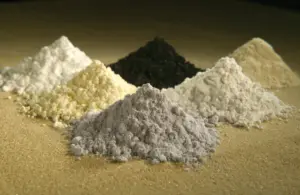
There are seventeen chemical elements grouped under the name rare earths. They are not simply minerals for electric vehicles: neodymium, praseodymium, dysprosium, and terbium are essential for high-performance permanent magnets used in electric motors, wind turbines, electronics, aerospace systems, and military applications. The energy transition and technological competition have multiplied their strategic importance. China dominates much of the world’s processing, while the United States is trying to build alternative supply chains to reduce a dependence it considers vulnerable for its industry and defense. In September 2026, despite increased American production, the USA was meeting only about 42% of its rare-earth demand domestically and remained dependent on China for materials that are especially difficult to replace.
Myanmar then appears in an unexpected place on the board. Kachin State, bordering China, became a fundamental source of heavy rare earths. Mining already existed before the military coup of February 2021; afterward, it expanded extraordinarily. OHCHR reported in February 2026 that satellite imagery made it possible to identify more than 370 mining areas and 2,795 leaching pools, an increase of 194% since 2021. The income from these activities also finances armed organizations and militias that control territories. (Bangkok OHCHR)
Here our story begins. Above are China, the USA, Russia, the technology industry, electric vehicles, and military systems. Below are the mountains of Kachin, a civil war, and communities living beside thousands of chemical pools. Rare earth ceased to be merely geology: it became money, territory, and power.
“Myanmar discovered that beneath an extraordinarily poor land lay extraordinarily valuable minerals. The world, always attentive to these geological injustices, did not take long to become interested.”
II. BENEATH THE EARTH
The extraction of heavy rare earths in Kachin makes extensive use of in-situ leaching. The mountain is drilled and chemical solutions are introduced to separate the elements contained in the clays. The process makes it possible to obtain extremely valuable minerals, but when carried out without sufficient regulation it can contaminate water and soil. Global Witness documented highly acidic waterways and elevated concentrations of arsenic, as well as testimony about worker illnesses, crop losses, fish, and animals. In 2023, China imported some 41,700 tons of heavy rare-earth oxides from Myanmar, compared with 19,500 tons in 2021. The trade reached approximately US$1.4 billion that year. (Global Witness)
Geography explains much of the business. Kachin lies against China, and the minerals cross that border to enter Chinese processing facilities. But since 2024 the military map has changed. The Kachin Independence Army, KIA, captured important producing areas previously controlled by militias linked to the military authorities. The disruption caused Chinese imports from Myanmar to fall 89% year-on-year in February 2025 and raised the price of terbium by around 22%. The mineral immediately demonstrated that a remote battle could move an international market.
China needs supply stability. The USA seeks alternatives to Chinese dominance. Russia views Myanmar from another dimension, linked mainly to political, military, and energy relations with its authorities. None of those powers lives beside the leaching pools. The communities of Kachin remain there. The mineral leaves the mountain; the environmental consequences remain behind.
“The mineral leaves the mountain, crosses the border, and acquires value. Pollution demonstrates less international ambition: it prefers to remain with those who extracted it.”
III. THE GREEN PRICE
There is a contradiction that we must examine without oversimplifying it. Electric vehicles and wind turbines are important instruments for reducing emissions, but some of their components require minerals whose extraction can cause serious environmental and social impacts. Myanmar’s heavy rare earths enter mainly through China, are processed, and can end up in global industrial supply chains for permanent magnets. Global Witness maintains that materials originating in Myanmar can ultimately reach international manufacturers, although opacity and mixing during processing make it impossible to automatically attribute a particular mineral to a specific automobile or turbine. (Global Witness)
China possesses about 90% of the world’s rare-earth processing capacity, according to the Global Witness research used to analyze Myanmar. Washington considers that concentration a strategic vulnerability. The dispute became even more visible when Beijing developed export controls on critical materials and the USA accelerated investments aimed at creating its own production and processing. In 2026, rare earths such as yttrium had already become a direct part of trade and technology negotiations among the USA, China, and Japan.
Myanmar lies beneath that competition. It does not manufacture millions of electric vehicles or dominate the global magnet industry, but it possesses minerals that industry needs. There appears the uncomfortable question of the energy transition: it is not enough to know how much carbon a technology avoids; we must also know where its materials come from.
Energy can be cleaner where it is ultimately consumed and simultaneously leave pollution where the chain begins. A truly clean transition must also look at the mountain where the mineral was born.
“The energy transition is admirably clean when we begin measuring it after someone, sufficiently far away, has finished getting their hands dirty.”
IV. AFTER THE COUP
On February 1, 2021, the armed forces overthrew the civilian government and detained Aung San Suu Kyi and other leaders. The repression of protests fueled an armed resistance that eventually expanded ethnic wars that had already existed for decades. Myanmar became progressively fragmented among military forces, ethnic armed organizations, resistance groups, and administrations controlling different territories. Kachin and Rakhine are two different theaters of that fragmentation, but both make it possible to observe how territory, resources, and military power ultimately become intertwined.
Mining grew within that disorder. OHCHR maintains that extractive activities are directly connected to the conflict because mining revenues finance armed organizations. The KIA, the United Wa State Army, border forces, and militias linked to the military apparatus have obtained resources through taxation or control of activities related to rare earths. Controlling territory also means controlling roads, border crossings, mines, and revenue collection.
China shares a long border with Myanmar and has economic and security reasons to prevent a total collapse next to Yunnan. The USA maintains sanctions and political support for a democratic transition, but at the same time its competition with China has placed critical minerals within its strategic agenda. Russia has developed a close relationship with the military authorities, including military and energy cooperation. They are three different approaches to the same fragmented territory.
The civil war did not begin because of rare earths. Reducing it to a mining war would be false. But when a mineral can finance armed forces, sustain administrations, and control borders, geology begins to extend politics by other means.
“The war did not begin because of rare earths. It only discovered later that minerals, routes, and borders could discreetly help ensure that it did not have too much reason to hurry toward an end.”
V. THE ROHINGYAS — MYANMAR / BANGLADESH
Origin: Rakhine State, Myanmar. Current situation: a large part of the Rohingya population lives as refugees in Bangladesh, especially in Cox’s Bazar. Central problem: displacement, statelessness, citizenship restrictions, violence, and the absence of safe conditions for a mass return to Myanmar.
The Rohingyas are a predominantly Muslim minority originating mainly from Rakhine State. For decades they suffered restrictions on citizenship, movement, education, work, and access to services. The violence reached an extreme dimension in 2017, when military operations triggered a mass flight into Bangladesh. The United Nations and international organizations documented killings, sexual violence, and the destruction of villages; the case concerning possible violations of the Genocide Convention continues before the International Court of Justice.
The war that followed the coup did not resolve their situation. The report published by OHCHR on August 25, 2026, covering June 2025 through May 2026, concludes that conditions for the Rohingyas continued to deteriorate because of abuses committed both by the military forces and by the Arakan Army, the organization that controls much of Rakhine. The document examines restrictions, displacement, violence, and a conflict economy that connects resource exploitation with civilian suffering.
Here, too, the powers appear. The USA maintains political pressure and sanctions linked to Myanmar. China has strategic interests, infrastructure, and a border whose stability it considers fundamental. Russia maintains ties with the military authorities. None of these relationships means that the three powers bear equal responsibility for abuses against the Rohingyas; it means that Myanmar is far from being outside world geopolitics.
“Myanmar denied them belonging; violence expelled them; Bangladesh gave them refuge; and the world offered them the elegant solution of living indefinitely in a camp. This is sometimes how the international defense of human rights works: first the homeland is lost, and then the waiting is carefully administered.”
VI. BETWEEN TWO FIRES
For years, speaking about the persecution of the Rohingyas meant speaking mainly about Myanmar’s armed forces. The current scenario demands a more complex description. OHCHR states that during 2025–2026 the situation continued to deteriorate because of actions by both the military and the Arakan Army, AA. This organization emerged primarily defending the aspirations of the ethnic Rakhine population and eventually conquered much of the state. Controlling territory, however, also means assuming responsibility for those who live there.
The Rohingyas have denounced restrictions on movement, detention, recruitment, displacement, and violence within a war in which virtually no force represents their interests. While the military attempts to retake territories through air and ground attacks, the AA is building a de facto administration. The Rohingya population once again remains trapped between military powers fighting over the same territory.
Reality has reached the present day. On September 29, 2026, an air strike by military forces against an area of Rakhine near Bangladesh left at least 50 dead, according to local sources and the rebel group controlling the area. The United Nations expressed alarm over the available information. The war, therefore, does not belong to last year’s report: it continues as we write this column. (Reuters)
The USA condemns violations and uses sanctions; China seeks to maintain influence and border stability; Russia retains ties with Myanmar’s authorities. But for a family trapped in Rakhine, those strategies have a very concrete measure: whether tomorrow it can remain in its home or will have to cross another border.
“Changing masters is not liberation. If the flag changes, the uniform changes, and the person controlling the territory changes, but the Rohingya continue to flee, then freedom was only for whoever won the war.”
VII. BANGLADESH
On the other side of that border is Bangladesh. As of June 2026, it had registered 1,200,171 Rohingya refugees: 1,166,352 in Cox’s Bazar and 33,819 in Bhasan Char. In addition, 153,640 new arrivals had been biometrically identified. Bangladesh has carried an enormous humanitarian responsibility for years, despite being a country that did not create the persecution that caused the exodus. ***UNHCR describes Cox’s Bazar as the largest refugee settlement in the world***.
The bill also exists. The United Nations and its partners requested US$710.5 million in May to cover critical needs of refugees and Bangladeshi communities during 2026. International resources have declined, and essential services have had to be prioritized or reduced. The EU announced another €14 million in June and Australia AUD 25.25 million in August, but dependence on external financing remains enormous. (Operational Data Portal)
The solution that appears obvious — returning to Myanmar — collides with an elementary question: returning to what conditions? If Rakhine remains under war, air strikes, displacement, and disputes between the military and the Arakan Army, safe, voluntary, and sustainable repatriation becomes extremely difficult. The problem has also ceased to be limited to Bangladesh. This September 29, Malaysia began returning approximately 1,500 Myanmar citizens, including children; UNHCR expressed concern over the safety of those being returned.
The USA, China, and Russia can debate sanctions, stability, and sovereignty. Bangladesh has to feed and shelter real people. Geopolitics can wait for a negotiation; 1.2 million refugees need to eat every day.
“Bangladesh received those Myanmar expelled; the world, meanwhile, received the news, expressed concern, and left the humanitarian bill in the hands of the neighbor.”
VIII. THE ECONOMY OF WAR
Myanmar possesses rare earths, jade, gold, timber, and other resources capable of generating money in territories where the State has virtually ceased to control the entire country. OHCHR uses a precise expression: “conflict economy.” War creates its own markets; markets finance armed structures, and those structures need to control territory in order to maintain income. The result is a circuit in which economy and conflict can end up sustaining each other.
Kachin demonstrates the mechanism. Global Witness estimated the heavy rare-earth trade with China during 2023 at US$1.4 billion. Later, the KIA captured important mining areas in 2024 and imposed levies on operations. The organization had previously acknowledged that it viewed mining revenues as a source for financing its struggle against the military forces. That does not make all armed organizations equal, nor does it turn every mine into a military installation; it demonstrates that minerals can be converted directly into political and military resources.
International competition adds another dimension. The USA needs alternative sources of critical minerals. In 2025, officials in the Trump administration heard proposals to gain access to Myanmar’s rare earths through agreements with the KIA or even through some form of understanding involving Myanmar’s authorities. These were exploratory proposals, not an adopted American policy, but they show how far the mineral’s strategic importance has reached.
China needs to maintain its supply chain. The USA wants to diversify it. Russia maintains its political-military relationship with Myanmar. In the middle of the three stands a country where controlling a mountain can also mean controlling a source of financing.
“When war learns to finance itself, peace stops being good business. Then the natural resource no longer feeds the country: it feeds those who need the conflict to continue.”
IX. CHINA
No external actor can analyze Myanmar the way China can. They share more than two thousand kilometers of border; there is trade, oil and gas pipelines, infrastructure, investments, and corridors connecting Yunnan with the Indian Ocean. Beijing needs to prevent the war from turning its southern border into a permanent belt of instability. But it also needs minerals and trade routes whose importance extends far beyond Myanmar.
Rare earths demonstrate that dependence. In October 2024, when the KIA captured producing areas in Kachin, the disruption quickly reached the Chinese market. Imports from Myanmar collapsed and prices of strategic minerals rose. In 2026, military forces intensified operations over areas of Kachin containing critical deposits and along border routes. Reuters notes that the region contains approximately half of the world’s heavy rare-earth resources, although exact reserves are difficult to establish in such an underexplored and conflict-ridden territory.
China does not simply control Myanmar either. It must deal with the central authorities while simultaneously managing relationships and pressure involving ethnic organizations that dominate border sectors. Its interests can coincide with certain actors at one point and confront them at another. That explains why Beijing prioritizes stability, open corridors, and protection of its investments.
The USA views precisely that concentration as a vulnerability. The technological competition between the two turns a mine in Kachin into part of a global industrial dispute. China is on the other side of the mountain; the USA is trying to stop depending on what crosses that mountain.
“China does not need to love Myanmar. It is enough for its routes to function, its minerals to circulate, and the border not to burn too much. Stability, when it carries raw materials, quickly acquires strategic value.”
X. USA
Washington appears from an apparently contradictory position. For years, the USA responded to the military coup with sanctions and political pressure, while supporting democratic aspirations and denouncing human-rights violations. But at the same time, it considers American dependence on China for critical minerals a national-security problem. Myanmar brings both issues together on the same map.
Its importance increased during the second Trump administration. In July 2025, Reuters reported that American officials had heard proposals to gain access to rare earths controlled by the KIA. One possibility involved working with that organization; another contemplated some form of negotiating mechanism involving Myanmar’s authorities. At that time there was no formal decision, and there were people within Washington warning that an approach to the military authorities would contradict years of American policy on human rights and democracy.
In September 2026, the strategic problem remained unresolved. Despite major domestic investment, the USA was producing approximately 42% of its rare-earth needs and remained dependent on China, particularly for heavy elements used in military and technological applications. Building an independent supply chain could extend into the next decade.
There appears the central tension. The USA can defend human rights and simultaneously need minerals originating in a country devastated by violations of those rights. China can demand stability while its industry needs the mineral. Russia can defend sovereignty while maintaining relations with the military authorities. The powers have principles; they also have strategic needs. Myanmar forces us to look at both at the same time.
“Washington talks about democracy while watching the minerals. In Myanmar, human rights can provoke great indignation; rare earths, on the other hand, manage to make that indignation consult the map first.”
XI. RUSSIA, INDIA, AND THE OTHERS
Russia occupies a different space from China and the United States. Its importance in Myanmar is less connected to rare earths than to diplomatic and energy cooperation with the authorities that emerged from the military apparatus. That relationship provides Myanmar with an important partner when Western sanctions restrict other ties. That is why Moscow is part of the board even though it does not control the mining route from Kachin into China.
India appears closer to the mineral. It shares a long western border with Myanmar and simultaneously watches border security, insurgencies, connectivity toward Southeast Asia, and the expansion of Chinese influence. After the KIA disrupted the supply of rare earths into China, India explored possibilities connected to the sector, although the technological, geographical, and political difficulties involved in building an alternative supply chain are enormous.
Japan, South Korea, the EU, and other industrial countries face the same problem from the final end of the chain: they need critical materials for automobiles, energy, semiconductors, electronics, and defense. ASEAN, by contrast, directly faces the political instability of one of its members. Bangladesh receives refugees. Thailand bears border and environmental impacts. Each actor looks at a different part of the same country.
That is why Myanmar cannot be understood only as junta versus opposition or as China versus the USA. There are several overlapping boards. But three major powers remain running through them: China through border, minerals, and infrastructure; the USA through sanctions, technology, and the search for alternative supply chains; Russia through political and military cooperation. The Rohingyas and mining communities live beneath all those boards.
“Russia, India, Japan, South Korea, the European Union, ASEAN, Bangladesh, and Thailand look at Myanmar from different interests, but they all end up looking at the same board. The reasons change — weapons, minerals, borders, industry, refugees, routes, or influence —; what does not change is that, beneath so much strategy, the Rohingyas and local communities continue to pay the bill.”
XII. THE RARE EARTH
The OHCHR report of August 2026 makes it possible to bring together things that are normally published separately. At one end appear the Rohingyas and other minorities subjected to violence, displacement, and restrictions. At the other end appear rare earths, illegal mining, and armed groups. Between them lies a conflict economy in which territory, resources, taxes, and military power feed one another. Myanmar demonstrates that human rights and geopolitics are not two different stories when both end up taking place on the same ground.
The figures summarize the scale: more than 370 mining zones, 2,795 leaching pools, and 194% growth since 2021 in Kachin; 41,700 tons of heavy rare-earth oxides sent to China in 2023 and a business then estimated at US$1.4 billion; around 1.2 million Rohingya refugees in Bangladesh by mid-2026 and a humanitarian appeal for US$710.5 million. Mineral and refugee appear on different balance sheets, but they belong to the same country.
China needs to protect a strategic industrial supply chain. The USA is trying to build another one that reduces its dependence on China. Russia has maintained since the mid-1990s a long-standing military and strategic relationship with Myanmar; India seeks its own space. None of them by itself explains the tragedy, and none should be artificially turned into the party responsible for everything that occurs.
The final question then comes close to us. We cannot claim that a particular phone, automobile, or turbine contains mineral extracted in Myanmar without specifically tracing its supply chain. We do know that those global supply chains have absorbed heavy rare earths originating in Kachin. Before reaching a factory, a technology, or a great power, the rare earth was first beneath someone’s feet.
“In Myanmar, human rights and rare earths occupy the same ground, but rarely the same front page. The Rohingyas appear when there are deaths; the minerals, when there are contracts. Between them circulate territory, money, weapons, and interests. Geopolitics calls it a supply chain. The victims might call it something else: discovering that, to the world, their land is worth more when it contains minerals than when, unfortunately, it contains human beings.”
CLOSING
As of June 2026, Bangladesh hosted 1,200,171 Rohingya refugees, according to the Government of Bangladesh and UNHCR. More than half are children and adolescents: approximately 624,000 under the age of 18. Applying the demographic structure published by UNHCR and rounding the figures, there would be around 288,000 adult women, 240,000 adult men, and some 48,000 people over the age of 60. These groups add up to approximately 1.2 million people, practically the official total, with a minimal difference resulting from rounding. Overall, about 51% are women and girls and 49% are men and boys. It is also an extraordinarily young population, with an estimated average age of around 23.
“More than one million displaced people; and behind the figure, hundreds of thousands of children whose first recognizable homeland may end up being a camp.”
“There are 624,000 refugees under the age of 18, of whom it is estimated that around 415,000 children are under the age of 10. This is brutal and means that approximately more than 30% — one third — of all Rohingya people who are refugees in Bangladesh are children.”
“Figures are statistics. Names are human identity. When names disappear, it becomes far too easy to forget that behind every number there was a person.”
Author: Mauricio Herrera Kahn
CLOSING BIBLIOGRAPHY
1. UNHCR / Government of Bangladesh. Rohingya Refugee Population in Bangladesh — June 2026.
Main source for the total of 1,200,171 registered Rohingya refugees in Bangladesh as of June 30, 2026, including 1,166,352 in Cox’s Bazar and 33,819 in Bhasan Char.
2. UNHCR / Government of Bangladesh. Population Breakdown as of June 2026.
Official source for the demographic structure by age and sex of the Rohingya refugee population in Bangladesh. Published on July 7, 2026.
3. UNHCR / Government of Bangladesh. *ge and Gender Breakdown — Bhasan Char, June 2026.
Complementary source for the distribution by sex and age groups of the Rohingya refugee population in Bhasan Char.
4. UNHCR Bangladesh. Operational Update — June 2026.
Operational update on the Rohingya refugee population and the humanitarian response in Bangladesh.
GENERAL BIBLIOGRAPHY
· Office of the United Nations High Commissioner for Human Rights (OHCHR), Situation of Human Rights of Rohingya Muslims and Other Minorities in Myanmar, August 25, 2026.
· OHCHR, Myanmar Annual Update 2025, February 2026.
· UNHCR and Government of Bangladesh, statistics on the Rohingya population, June 2026.
· United Nations and partners, Joint Response Plan 2026, May 2026.
· Global Witness, Fuelling the Future, Poisoning the Present: Myanmar’s Rare Earth Boom, 2024.
· Reuters, investigations into Kachin, rare earths, and U.S. policy, 2025–2026.
· International documentation on human rights, mining, displacement, and conflict in Myanmar, 2025–2026.
· Human Rights Watch, World Report 2026: Myanmar, 2026. Broad report on violations committed during 2025, the situation of the Rohingyas, abuses by the junta and the Arakan Army, displacement in Rakhine, and the actions of international actors.
· Amnesty International, The State of the World’s Human Rights 2026 — Myanmar, 2026. Assessment of the escalation of the conflict during 2025, attacks against civilians and infrastructure, forced labor, torture, repression, and abuses committed both by military forces and by armed groups.