By G M Forhadul Mozumder (Dhaka Bureau),
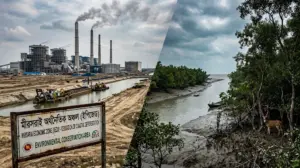
The National Special Economic Zone being developed in Mirsarai, Chittagong, is widely framed as a key driver of Bangladesh’s future economic prosperity. Billions of dollars in proposed investments, rapid industrialization, and job creation undoubtedly open doors of opportunity for an emerging economy. However, when coastal mangrove forests disappear behind this promise, natural disaster shields are weakened, and the future of the vulnerable Chital (spotted deer) hangs by a thread, a fundamental question arises- who pays the ultimate price for this development?
The striking contrast between recent investigative reports and official statements has raised significant public concern. While forestry documents reveal vast habitat destruction and the clearing of an estimated 55 million trees, the Bangladesh Economic Zones Authority (BEZA) has contested these claims. Resolving this contradiction requires more than conflicting official statements- it demands truth established through satellite imagery, independent legal audits, and on-the-ground ecological surveys.
Perhaps the most tragic dimension of this crisis is the severe fragmentation of wildlife habitats. An area once home to an estimated 5,000 spotted deer is now feared to hold as few as 200. Poorly planned industrial encroachment is pushing these creatures toward local extinction.
Short-term economic growth achieved through environmental destruction escalates long-term climate vulnerabilities, leaving coastal communities exposed to severe storms and ecological collapse. True progress- a principle Pressenza advocates globally- cannot come at the cost of the natural world. Industrial GDP is easily calculated, but the loss of a complex mangrove ecosystem and its biodiversity is irreversible.
The Government of Bangladesh must immediately institute an independent investigation, declare protected status for remaining mangrove forests, and establish science-backed safe corridors for the spotted deer population. Development and environmental preservation are not mutually exclusive; genuine human advancement occurs only when nature’s right to exist is valued alongside capital and industry.

G M Forhadul Mozumder: Staff Correspondent, Pressenza- Dhaka Bureau.