By: Mariel Tay-eo, Pinky Pascaden, Arnel Dumo, Normalyn Sayduen, Emmanuel Orpia, Roxanne Lassin, Love Lyn Hogat, and Johna Salagma
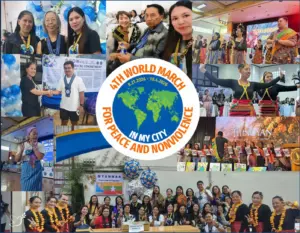
The Opening of the 4th World March for Peace and Integral Regeneration (4WMPIR) at Baguio Central University. Flutist Dom-an Florence Macagne delivered a heartfelt prayer through her rendition of “Peace Is Flowing Like a River”, gently drawing everyone into a moment of stillness and reflection. Each solemn note invited the participants to listen to the melody and the emotions conveyed. Her composed expression and graceful, intentional movements revealed a profound sense of reverence, as though she were offering the music as a prayer for a world yearning for peace. The flute’s gentle tones resonated, creating an atmosphere of serenity and deep emotion, awakening contemplation, sorrow, longing, and hope among those present.
The audience was encouraged to understand peace and experience it on a deeper, more personal level, transcending an ordinary cultural presentation and becoming a meaningful introduction to the World March for Peace. The WM participants could reflect on the struggles facing the world while embracing the hope that peace can continue to spread quietly from one person to another, flowing like a river that perseveres on its journey forward.


A solemn call for peace. Flutist Dom-an Florence Macagne solemnly performs “Peace Is Flowing Like a River,” filling the hall with a quiet emotional resonance that invites participants to pause, reflect, and hope, carrying a prayer for peace. Photo Credit: Mariel Tay-eo.
One of the highlights of the 4WMPIR was the vibrant showcase of ASEAN dances: Philippine indigenous dance from the Cordillera Administrative Region, Indonesian Menari, and Myanmar’s Thingyan dance, which celebrated the rich cultural heritage and traditions of Southeast Asia through expressive movements, colorful costumes, and captivating rhythms.
Indonesia Menari showcased the beauty and diversity of Indonesian dance. Thingyan dance reflected the festive spirit of Myanmar’s traditional New Year celebration. Together, the performances highlighted the region’s cultural diversity and shared identity, reinforcing the spirit of unity, friendship, and mutual respect among ASEAN nations. The dances served as a meaningful reminder that cultural exchange can bring people together and strengthen the bonds of peace and solidarity across nations.


The dancers, dressed in colorful, traditional-inspired costumes. They brought energy and joy to the gathering. Their movements, expressions, and coordinated performance captured the festive spirit associated with Thingyan, drew the attention of the audience and created an atmosphere of celebration.
The cultural presentation brought color, energy, and emotion to the gathering through the performances of Indonesia Menari, Myanmar’s Thingyan dance, and the Fungakan dance, an artistic display of meaningful expressions, cultural identity, and shared aspiration for peace.
Indonesia Menari reflected the richness and diversity of Indonesian culture. Myanmar’s Thingyan dance radiated joy and festive energy, inspired by the country’s traditional New Year celebration. Adding another meaningful dimension to the presentation, the Fungakan dance showcased cultural expression through its distinctive movements and rhythms, reminding the audience of the importance of preserving traditions and honoring the identities of different indigenous communities.
Together, these performances created an atmosphere filled with enthusiasm, pride, and hope, conveying emotions that words alone could not fully express, inviting the audience to appreciate the beauty of cultural diversity and the connections that unite people across borders…each rhythm and gesture became a reminder that, despite differences in language, traditions, and backgrounds, humanity shares a common longing for harmony and understanding.

EDMGT participants posing in front of the Myanmar booth, showcasing their appreciation for Myanmar’s rich cultural heritage and traditions during the 4th World March for Peace and Integral Regeneration.
Another significant highlight of the 4th World March for Peace and Integral Regeneration was the gathering of prominent speakers whose insights, experiences, and messages emphasized the urgent need to cultivate peace, strengthen solidarity, and promote meaningful social change. The speakers shed light on the challenges facing communities today, including violence, discrimination, and the growing concerns about viciousness and harm in digital spaces.
Their messages encouraged participants to look beyond individual differences and recognize their shared responsibility in building a more compassionate, inclusive, and peaceful society… serving as calls to action, inspiring individuals, institutions, and communities to transform the ideals of peace and integral regeneration into concrete, lasting harmony, justice, and sustainable growth.


Ms. Willa Isabella Bulos Tecson, Representative of Ang Komunidad Para sa Ikaunlad ng Tao (The Community for Human Development), emphasized how cultural spaces, digital engagement, and nonviolence can bridge communities, strengthen regional solidarity, and advance a collective vision of peace and unity.
The gathering brought together a powerful sense of hope, unity, and shared responsibility, as Ms. Willa Isabella Bulos Tecson, Representative of Ang Komunidad Para sa Ikaunlad ng Tao, emphasized the importance of cultural spaces, digital engagement, and nonviolence in strengthening regional connections. Reflecting on the contrast between Manila’s fast-paced urban lifestyle and Baguio’s welcoming highland culture, she highlighted how open and inclusive spaces allow educators, students, and communities to connect and exchange ideas. This spirit of collaboration extended beyond local communities to international partners, including Nepal, Singapore, Germany, Italy, Spain, and Iran, reinforcing the belief that peace requires active participation across geographical and cultural boundaries.
As Dr. Marc Eric Reyes of the University of Santo Tomas stressed, technology has made global communication more accessible, but meaningful collaboration depends on people’s willingness to engage, contribute, and make their voices heard. The speakers’ messages resonated with the energy of the World March, inspiring participants to move beyond passive support and take tangible steps toward peace and integral regeneration through dialogue, responsible digital citizenship, cultural understanding, and collective action. The event was a reminder that peace is a commitment that begins with individuals and grows through sustained cooperation among communities and nations.

Carmen Cabling, an organic farming advocate from PGS Quezon, Mt. Banahaw, emphasizes how sustainable agriculture, community collaboration, and trust in organic practices can protect the environment and secure a healthier future for generations to come.
Carmen Cabling highlighted the role of sustainable farming in preserving the environment and promoting community well-being. The Participatory Guarantee System (PGS) fosters trust, transparency, and collaboration among farmers and communities in advancing organic agricultural practices and strengthening local food security. Her advocacy underscored the importance of protecting natural resources, empowering local farmers, and encouraging collective responsibility to build a healthier, more sustainable future for the next generation, reflecting the principles of integral regeneration and environmental stewardship.

EDUCATION MANAGEMENT students take a souvenir photo with Graduate School Faculty Dr. Lourdes Bela-o, Dr. Altea Ramos, and Hon. Councilor Cayabas.
Hon. Councilor Vladimir D. Cayabas discussed “Peace as an Enabler for Sustainable Development,” and discussed the role of peace, justice, and strong institutions in achieving inclusive growth and sustainable communities. His message highlighted the importance of good governance, public participation, and collective responsibility in advancing the goals of SDG 16.
He said peace is a fundamental foundation for achieving sustainable development, highlighting the vital role of Sustainable Development Goal 16 (SDG 16): Peace, Justice, and Strong Institutions. Lasting peace goes beyond the absence of conflict, requiring good governance, accountability, transparency, respect for human rights, equal access to justice, and meaningful public participation. When communities are safe, institutions are trustworthy, and justice is accessible to all, people are better able to participate in decision-making, pursue opportunities, and contribute to social and economic progress.
His message reinforced the importance of strengthening institutions and fostering a culture of peace, cooperation, and shared responsibility to address inequalities and build inclusive, resilient, and sustainable communities. Sir Cayabas highlighted that peace is not only a goal in itself but also an essential enabler of sustainable development, helping create a better and more equitable future for present and future generations.

EDMGT student Normalyn Sayduen shakes hands with Hon. Councilor Cayabas.
The 4th Philippine World March for Peace and Integral Regeneration at Baguio Central University demonstrated the emotional resonance and transformative energy of peace through cultural expression, meaningful dialogue, and a shared commitment to sustainable development. The 4WMPIR, led by our professor in Qualitative Methods of Research, Genevieve B. Kupang, and supported by all the University Administrators and Heads of Offices, Graduate School faculty, students, and local and international partners, provided participants with an opportunity to reflect on the importance of peace and to experience its emotional power through music, dance, and the exchange of ideas.
The 4WMPIR broadened the participants’ understanding of peace as a responsibility that extends across communities, institutions, and nations. The discussions highlighted the importance of nonviolence, meaningful participation, environmental stewardship, social justice, and strong institutions in creating conditions where people and communities can thrive. These perspectives connected individual experiences with the broader global vision of peace and integral regeneration, emphasizing that sustainable progress requires both personal commitment and collective action. This vision also resonates with Baguio Central University’s core values of Libertad (Liberty), Justitia (Justice), Veritas (Truth), and Equitas (Equity).
Together, these values provide an institutional foundation that complements the World March’s global aspiration for a more peaceful and sustainable world. The significance of the gathering therefore extends beyond the event itself: it lies in its ability to awaken emotions, energize minds, strengthen cultural understanding, and inspire participants to translate the ideals of peace into everyday practice. By connecting emotional resonance with ethical principles and collective responsibility, the World March affirmed that peace is not simply the absence of conflict but an active and continuing process of building trust, protecting human dignity, caring for the environment, and fostering cooperation.
##########
Photo Credit: Mariel Tay-eo and Normalyn Sayduen
Research Team & Authors: Mariel Tay-eo, Pinky Pascaden, Arnel Dumo, Normalyn Sayduen, Emmanuel Orpia, Roxanne Lassin, Love Lyn Hogat, and Johna Salagma
#BCUSoarshigher
#BCUGraduateSchoolSoarshiger
#BCUIROSoarshigher
#SDG 16: Peace, Justice, and Strong Institutions
#SDG 17: Partnerships for the Goals
#3. SDG 2: Zero Hunger & SDG 12: Responsible Consumption and Production. Focus in the Article: Carmen Cabling, an advocate from PGS Quezon (Mt. Banahaw), highlighted the importance of organic farming, sustainable agriculture, and the Participatory Guarantee System (PGS). Her talk addressed local food security, environmental stewardship, and building trust in sustainable agricultural practices to protect natural resources for future generations.
#SDG 10: Reduced Inequalities & SDG
#11: Sustainable Cities and Communities
#SDG 4: Quality Education