Saramago, the Five Lions, and the Future of the Defenseless
“The 21st century promises an extraordinary future. It has yet to explain for whom.”
I. SARAMAGO WAS NOT BLIND
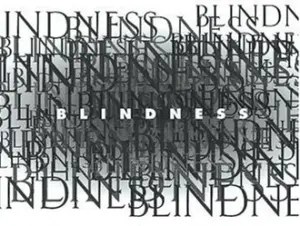
José Saramago received the Nobel Prize in Literature in 1998. Three years earlier, he had published *Blindness*, a novel in which an inexplicable epidemic deprives much of the population of sight. The rules of coexistence disappear, institutions lose their authority, and human beings discover how far they can go when social restraints vanish. Saramago did not need to invent a world war to examine human brutality. All he had to do was take away his characters’ sight.
Thirty-one years after that publication, the world possesses satellites capable of observing entire territories, computer systems that process extraordinary amounts of information, and technologies that make it possible to identify populations threatened by hunger. Governments know about human displacement, the consequences of wars, and the food needs of millions of people. Ignorance is no longer a sufficient explanation to justify indifference.
“Saramago’s blind people had an excuse. The powerful of the 21st century have intelligence departments.”
Humanity has built a civilization capable of sending scientific instruments to other planets and developing medical treatments unimaginable a century ago. Yet populations still exist without drinking water, sufficient food, or basic healthcare. We are not confronting a technological contradiction. We are confronting an economic, political, and moral contradiction that statistics carefully record without managing to resolve.
Saramago died in 2010. He did not witness the current transformations brought about by artificial intelligence or the wars that followed. But his question remains. What happens when a society begins to regard the suffering of those who cannot defend themselves as normal? The answer could determine the future of the 21st century.
II. THE WEALTHIEST CENTURY IN HISTORY
The global economy produces a quantity of goods and services that no previous generation could have imagined. Agricultural productivity, industrialization, telecommunications, and international trade have made it possible to improve the material living conditions of billions of people. They have also created enormous fortunes and new concentrations of power. Growth exists. The uncomfortable question is how its benefits are distributed and who is left out.
The World Bank estimates that in 2026 approximately 811 million people survive on less than three dollars a day, measured in 2021 purchasing power parity. Billions more remain below broader poverty thresholds. This does not mean that all of them literally receive three American dollar bills every morning. It means that their purchasing power is extremely limited, even after adjusting for price differences between countries.
“The global economy is growing. The poor have permission to watch the spectacle from the back row.”
The historic reduction in poverty demonstrates that progress is possible. China, India, and numerous Asian countries have achieved significant improvements over recent decades, although with uneven results. It would be absurd to deny those achievements. It would be equally absurd to turn them into an excuse for ignoring those who remain excluded. Economic growth does not automatically guarantee adequate public services, sufficient wages, or protection against crises.
The concentration of wealth introduces another dimension. One person may own stocks, real estate, and business interests worth billions of dollars, while millions of workers depend exclusively on their monthly wages. Both participate in the same economy, but they do not possess comparable means of confronting a recession, influencing public decisions, or passing opportunities on to their descendants.
The problem is not the existence of private wealth. It is determining when its concentration also begins to become a concentration of political power. A society can tolerate large differences in wealth without necessarily abandoning democracy. But when money buys influence over laws, the media, and public decisions, inequality ceases to be exclusively economic.
“The poor person has one vote. The billionaire does too. The difference begins when the election ends.”
III. THE FIVE LIONS HAVE EXCELLENT EYESIGHT
The United States, China, Russia, the European Union, and India constitute five major centers of international power. Their economic, military, technological, and demographic capabilities differ. So do their political systems and strategic priorities. None can be reduced to a caricature. All participate, to varying degrees, in shaping the international order that will determine the opportunities available to millions of people over the coming decades.
The United States retains extraordinary financial, military, and technological influence. China possesses decisive industrial capacity and a growing presence in international trade. Russia maintains strategic energy and mineral resources, along with military capabilities. The European Union constitutes one of the largest markets on the planet and possesses significant regulatory power. India combines an enormous population, economic growth, and aspirations for greater international influence.
All five understand perfectly well the value of oil, copper, lithium, semiconductors, and trade routes. Their governments develop strategies to secure supplies, protect industries, and expand markets. They also maintain cooperation and development programs that produce real benefits. But their national interests do not necessarily coincide with the needs of the planet’s most vulnerable populations.
“The lions do not need to agree to defend their interests. To defend the poor, however, they always need another conference.”
International competition can stimulate investment, infrastructure, and development. It can also create dependencies, conflicts, and resource exploitation without sufficient benefits for local communities. The governments of poor countries bear their own responsibilities for these outcomes. Domestic corruption and mismanagement do not disappear simply because foreign powers exist. But neither do the power imbalances that shape international negotiations.
By 2050, the five lions will seek to maintain or expand their positions. History does not guarantee that any of them will retain its current influence. Economies change, new technologies emerge, and competitors arise. Nevertheless, there is one continuity that is difficult to ignore. Powerful states tend to plan their own security and prosperity with far greater precision than the protection of populations beyond their borders.
IV. THE OWNERS OF THE FUTURE
For centuries, land ownership made it possible to concentrate wealth and power. Later, industrialization shifted a considerable share of that influence toward factories, banks, energy companies, and trade networks. The 21st century is adding new sources of concentration. Data, algorithms, processing centers, semiconductors, and digital platforms have become strategic assets.
Artificial intelligence can increase productivity, improve medical diagnoses, optimize industrial processes, and expand access to knowledge. It can also concentrate benefits among those who control the capital, infrastructure, and technologies needed to develop it. No economic law requires those gains to be automatically distributed among displaced workers, consumers, or the societies that supply the resources used.
“In the past, workers needed a factory. Now the factory may need fewer and fewer workers. The owner remains indispensable when it comes to collecting the money.”
Critical minerals offer another example. Chile, Peru, the Democratic Republic of the Congo, Australia, and numerous other countries possess resources essential to the industries of the future. But possessing minerals is not the same as controlling value chains. Extraction, processing, advanced manufacturing, patents, and commercialization may take place in different countries, with benefits distributed in profoundly unequal ways.
The future does not necessarily belong to those who possess natural resources. It may belong to those who control the technologies, financing, and markets where those resources acquire greater value. That difference will determine whether resource-supplying economies manage to industrialize or remain specialized in exporting raw materials.
The central question for 2050 will be who controls the means of production and who receives the benefits of increased productivity. Artificial intelligence capable of multiplying global wealth does not guarantee a less unequal humanity. It could also multiply the distance between owners and workers.
V. BEING BORN POOR IS NOT A CHOICE
No child chooses the country where they are born, their parents’ income, the availability of drinking water, or whether there is a hospital nearby. Yet those circumstances profoundly shape their chances of surviving, studying, and working. Inequality begins long before a person can make economic decisions. It begins when others have already decided, through institutions and public policies, which services will be available in their territory.
In numerous African, Asian, and Latin American countries, millions of children face difficulties related to food, housing, and access to essential services. Conditions vary enormously between countries and regions. There is no single, uniform African or Asian childhood. There are societies making rapid progress and others where conflicts, economic crises, and institutional shortcomings jeopardize the development of entire generations.
“Some children receive an inheritance before they learn to walk. Others inherit a debt no one ever asked them whether they wanted to accept.”
Childhood poverty has consequences that can last for decades. Malnutrition, interrupted education, and preventable diseases reduce future opportunities. A child who leaves school to work loses more than years of education. That child may lose a considerable share of the ability to obtain better-paying jobs later and participate fully in society.
By 2050, millions of the children currently living in precarious conditions will be adults. Some will have managed to overcome those difficulties. Others will remain trapped in cycles of inherited poverty. The outcome will depend on public investment, economic growth, political stability, and real opportunities. It will not be enough to declare that children represent the future. That future will have to be financed.
VI. HUNGER DOES NOT NEED A PASSPORT
Wars destroy homes, hospitals, schools, roads, and supply systems. They interrupt harvests, paralyze economic activity, and force entire populations to abandon their territories. Hunger can become a direct consequence of fighting, blockades, displacement, or the destruction of infrastructure. It can also be deliberately aggravated through restrictions on essential supplies.
Sudan, Gaza, Yemen, Afghanistan, and the Rohingya refugee camps represent different situations, with specific causes and responsibilities. They should not be confused. But there is one common reality. Civilian populations pay consequences they cannot control. Children do not decide military strategies, negotiate borders, or participate in meetings where the political costs of continuing a war are calculated.
“Generals count divisions. Ministers count budgets. Mothers count the children who still come home.”
At the end of 2025, UNHCR estimated that approximately 117.8 million people were forcibly displaced worldwide. The figure includes refugees, internally displaced people, and other categories of protection. Behind it are families who have lost their homes, jobs, social networks, and opportunities to return to a stable life.
Humanitarian organizations work to reduce that suffering, frequently under extremely dangerous conditions. But assistance cannot indefinitely replace peace, reconstruction, and public institutions. A camp can provide temporary shelter. It should not become the permanent horizon of several generations.
The powerful know about these situations. Their diplomatic services, intelligence agencies, and international institutions document them. The question is not how many additional reports they need. It is which decisions they are willing to change to prevent the suffering from continuing.
VII. THE DOLLARS OF POWER AND THE PENNIES OF SURVIVAL
Economic figures allow us to examine part of the global distribution of power without resorting to speculation. The available data correspond to different years and measure different concepts. Military budgets are annual expenditures. Private fortunes are accumulated wealth. Debts represent financial obligations. Poverty thresholds measure purchasing power. They should not be added together as though they belonged to the same pool of money.
According to SIPRI, global military spending reached US$2.887 trillion in 2025, equivalent to US$2,887 billion. The United States spent approximately US$954 billion, China US$336 billion, Russia US$190 billion, and India US$92.1 billion. Europe, considered geographically rather than solely as the European Union, recorded US$864 billion. These amounts reflect security priorities and budgetary capabilities, although not all military spending constitutes money available for other purposes.
“Defense gets multiyear budgets. Hunger always gets another committee to study the funding.”
The concentration of private wealth offers another contrast. Oxfam estimated that the combined wealth of billionaires reached approximately US$18.3 trillion in 2025, after increasing by more than 16% during that year. That wealth is not equivalent to liquid cash and should not be confused with annual income. But it represents ownership rights over economic assets whose magnitude far exceeds the resources available to numerous states.
Meanwhile, the World Bank estimates that approximately 811 million people live below the international extreme poverty threshold of three dollars a day, expressed in purchasing power parity. Nearly half of humanity lives below the broader threshold of US$8.30 a day. These are statistical thresholds, not amounts capable of fully describing the experience of every family.
“Some calculate how much their wealth increased while they slept. Others calculate whether they will be able to eat before going back to sleep.”
Public debt introduces a third dimension. UNCTAD recorded global public debt of US$102 trillion in 2024. Developing countries accounted for approximately US$31 trillion and paid US$921 billion in net interest on their public debt. In addition, 3.4 billion people lived in countries where interest payments exceeded public spending on healthcare or education, according to the relevant comparison.
This does not mean that all debt is harmful. Loans can finance infrastructure, hospitals, and industrial development. But when debt servicing absorbs an excessive share of public revenue, opportunities for social investment diminish. Creditors collect according to contracts and financial terms. Citizens depend on the resources that remain available.
“The creditor knows the due date. The patient also has an urgent need, but the hospital does not always appear in the contract.”
What will happen in 2050? There is no sufficiently reliable projection to establish how much wealth billionaires will possess or what percentage of global wealth the poor will receive. Nevertheless, current mechanisms allow us to identify risks. The accumulation of financial assets, intellectual property, technological concentration, and differences in rates of return can reinforce inequalities if institutions capable of counteracting them do not exist.
The problem is not merely how much money the planet produces. It is who owns the assets, who receives the income, who pays the taxes, who decides where investments go, and who possesses the influence to change the rules.
VIII. DEMOCRACY FOR THE DEFENSELESS
Democracy formally recognizes the political equality of citizens. Each person has one vote, regardless of their wealth. But that legal equality coexists with economic differences that can profoundly influence public participation. Financing campaigns, maintaining organizations, gaining access to the media, or hiring specialized advisers requires resources that are not evenly distributed.
A person who works long hours to support a family has less time and fewer resources to participate in political organizations. A family facing food insecurity may be forced to concentrate its efforts on immediate survival. Poverty does not eliminate the ability to think or the will to participate politically. It limits the material conditions needed to exercise them.
“Democracy guarantees every citizen a ballot. It does not guarantee that everyone can afford the printing press.”
Economic power can influence institutions through legitimate mechanisms, such as interest representation and public participation. It can also do so through corruption, regulatory capture, and unlawful financing. The distinction is fundamental. It would be wrong to condemn all business activity or assume that wealth itself constitutes a democratic threat. But it would also be wrong to ignore situations in which money secures privileges incompatible with equality before the law.
The defenseless need more than declarations of rights. They need institutions capable of protecting them, accessible public services, and economic opportunities. Without those conditions, political equality risks becoming a promise periodically renewed without changing the material relationships of power.
IX. THE BUSINESS OF THOSE WHO HAVE NOTHING
Poverty can create economic opportunities for actors who benefit from inadequate wages, unprotected labor markets, or weak institutions. This does not mean that all companies depend on exploitation or that all commercial activity in poor countries is harmful. Productive investment can create jobs and improve incomes. The decisive question is under what conditions it takes place and how its benefits are distributed.
International supply chains connect consumers, producers, transporters, intermediaries, and owners of capital. A product may incorporate raw materials extracted on one continent, components manufactured on another, and technology developed on a third. Its final value is not necessarily distributed according to the physical effort, occupational risks, or environmental damage borne by each participant.
“The worker knows how much the merchandise weighs. The owner knows the selling price. They do not always discuss the difference.”
Informal employment leaves millions of people without sufficient protection against illness, accidents, or loss of income. The absence of independent unions, effective inspections, and bargaining mechanisms can worsen that vulnerability. Some governments also use precarious working conditions as a tool to attract investment, shifting part of the cost of international competition onto workers.
Household debt introduces another problem. When income is insufficient to cover essential needs, families may depend on expensive loans. A medical emergency, a poor harvest, or the loss of a job can turn a temporary difficulty into a prolonged obligation.
Poverty is not universally profitable as a business. It also destroys markets, reduces productivity, and limits growth. That is precisely why its persistence is so difficult to justify. It harms the people who experience it and restricts the economic potential of entire societies.
X. THE YEAR 2050 IS ALREADY BEING CONTESTED
The world of 2050 will have a different demographic structure. Africa will account for a growing share of the global population, numerous Asian and European societies will face aging populations, and cities will continue to play a central role in the economy. Water availability, climate adaptation, and technological transformations will shape development opportunities.
Artificial intelligence will change numerous occupations. Some will disappear, others will be transformed, and new activities will emerge. There is no certainty about the final balance of jobs or the distribution of benefits. It will depend on productivity, education, investment, and institutional decisions. Technology can expand opportunities, but it can also concentrate them.
“By 2050, machines may perform much of the work. Someone will still have to decide who gets paid for it.”
We can examine three scenarios. In the first, technological and financial concentration increases, while a considerable share of the population remains tied to precarious jobs. Global wealth grows, but its distribution becomes more unequal. Social tensions and migration increase in regions unable to provide sufficient opportunities.
In the second scenario, economic growth reduces extreme poverty, although significant wealth disparities remain. Advances in education, healthcare, and industry make it possible to improve material conditions without profoundly changing the international structure of power. It would represent real progress, but it would be insufficient to eliminate the principal inequalities.
In the third, states succeed in combining innovation, growth, effective institutions, and distributive policies capable of expanding opportunities. International cooperation improves financing conditions and allows more countries to participate in higher-value-added activities. It would not be a society without economic differences. It would be a society in which birth circumstances determined destiny less.
None of these scenarios is guaranteed. Future concentration will depend on decisions concerning competition, taxation, education, intellectual property, collective bargaining, and access to infrastructure. Current trends justify concern, but they do not warrant presenting 2050 as an inevitable sentence.
“The powerful are already preparing their strategies for 2050. The defenseless would appreciate knowing what share of the budget has been set aside for them.”
XI. SARAMAGO OPENS HIS EYES
Let us return to Saramago. In *Blindness*, the loss of sight reveals behaviors that ordinary social coexistence had kept in check. The novel is not an economic treatise, nor does it offer a complete explanation of contemporary inequality. Its power lies in forcing us to examine what happens when institutions and human relationships cease to protect those who need them most.
The 21st century possesses sufficient scientific, technological, and productive resources to profoundly improve the living conditions of millions of people. But those resources do not distribute themselves. They require political decisions, investment, institutions, and agreements that inevitably affect economic interests.
The five lions will continue defending their positions. Large corporations will seek profitability. States will pursue security and growth. None of that is surprising. What must be examined is whether societies will succeed in establishing effective limits when those objectives conflict with fundamental human needs.
“The powerful do not need to justify defending their interests. The defenseless still have to prove that they deserve to survive.”
We do not know how many poor people there will be in 2050 or what proportion of wealth will be concentrated in the largest fortunes. Claiming exact figures would mean inventing the future. What we do know is that today’s inequalities can be passed down for generations and that decisions made now will influence people who have not yet been born.
The defenseless should not be portrayed as a humanity incapable of acting. They have organized social movements, transformed governments, created communities, and won rights. History demonstrates that power structures can change. It also demonstrates that they rarely change solely through the generosity of those who benefit from them.
Saramago imagined a society that lost its sight. Our society possesses enough information to understand the human consequences of many of its decisions. The question is no longer merely determining who can see.
“It is determining who is willing to act on what they see.”
WHO WILL COUNT IN 2050?
By 2050, the United States, China, Russia, the European Union, and India will have spent decades protecting their interests. Their governments will have developed military, commercial, technological, and energy strategies. Major corporations will have invested extraordinary amounts of capital. Financial markets will have assigned values to companies, natural resources, and technologies that are still under development today.
Millions of children currently living in poverty will be adults. Some will have managed to study, work, and build dignified lives. Others will have endured conflicts, displacement, and deprivation. Their destinies will not have been determined solely by their personal efforts. They will also depend on decisions made over decades by governments, corporations, and institutions over which they had little influence.
Humanity does not need to choose between economic growth and human dignity. It needs to establish conditions under which the former effectively contributes to the latter. Nor does it need to deny national interests. It needs to prevent those interests from permanently turning the most vulnerable into a secondary consideration.
The powerful will continue managing resources. The question is whether they will also be willing to assume responsibilities proportional to their influence.
And when 2050 arrives, there will be a simple way to examine the results. It will not be enough to count billionaires, military budgets, data centers, and new technologies. We will also have to count those who still lack sufficient food, housing, education, or healthcare.
“In 2050, the powerful will probably still be debating how to divide up the world.”
“The defenseless would appreciate it if, for once, they were not included among the things being divided.”
Author: Mauricio Herrera Kahn
BIBLIOGRAPHY
1. José Saramago (1995). *Blindness. Editorial Caminho; Spanish edition, Alfaguara, 1996. A reflection on collective indifference, the loss of solidarity, the abuse of power, and societies’ inability to recognize human suffering.
2. United Nations Development Programme (UNDP, 2025). Human Development Report 2025. An analysis of inequalities, human opportunities, and development challenges in an era marked by artificial intelligence and economic transformation.
3. UNHCR (2025). Global Trends: Forced Displacement in 2024. A report on refugees, internally displaced people, and stateless persons. It documents the human consequences of wars, persecution, and violence, especially for the most vulnerable populations.
4. UNICEF (2025). The State of the World’s Children 2025: Ending Child Poverty, a Universal Imperative. An analysis of child poverty, inequality of opportunity, and the consequences of conflicts, economic crises, and inadequate protection for future generations.
5. SIPRI Report on Military Expenditure 2025.
6. World Bank Poverty Report 2026.
7. Oxfam Report on Wealth Concentration 2026.
8. UNCTAD Report on Public Debt.