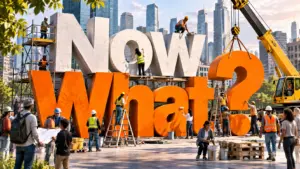
Part of “The World as a Nuclear-Free Zone” — Moving beyond the recognition of the nuclear threat to the construction of an alternative.
Could we please move beyond explaining why nuclear weapons are dangerous?
For decades, humanity has recognized in many different ways the threat that nuclear weapons represent to its future. Scientists have demonstrated their destructive consequences, religious leaders have condemned them, millions of people have mobilized against them, and even leaders of nuclear-armed countries have acknowledged the catastrophic consequences of nuclear war.
In 2017, 122 countries voted at the United Nations to adopt the Treaty on the Prohibition of Nuclear Weapons (TPNW), which entered into force in January 2021.
In January 2022, the United States, Russia, China, France, and the United Kingdom jointly declared that a nuclear war cannot be won and must never be fought.
An enormous amount of work has been accomplished in establishing scientific, moral, political, and legal recognition of the problem.
It is time to open a new stage. Can we concentrate our collective intelligence, creativity, and resources on developing the conditions that would make nuclear weapons obsolete?
Breaking the Dependency
There is an interesting parallel between our dependence on nuclear weapons and other forms of human dependency such as alcoholism. Knowing the destructive consequences of alcohol does not necessarily help someone overcome their addiction. Prohibiting alcohol does not automatically resolve the problem, as the American experience with Prohibition demonstrated.
Addiction is complex. It is connected to many aspects of a person’s existence: their relationships, community, health, habits, fears, and circumstances. Overcoming alcohol addiction involves more than giving up drinking. It also means finding healthier ways to respond to one’s needs, developing new ways of relating to oneself and others, and building a meaningful and inspiring vision of one’s future.
Something similar can be observed in our relationship with nuclear weapons. Governments maintain nuclear arsenals not simply because they believe these weapons provide security, but because nuclear weapons have become part of their way of functioning. Over decades, entire military doctrines, scientific institutions, industrial infrastructures, economic interests, and political relationships have developed around them. How do we transform that system and develop a new vision of our common future?
Asking a Different Question
Instead of repeatedly asking military professionals whether nuclear weapons are dangerous, we should be asking them a different question:
“What would you need to see in place before you could confidently advise your government that it no longer needs nuclear weapons?”
What would international security look like without nuclear weapons? What would become of the factories, laboratories, and infrastructure currently dedicated to nuclear weapons? Toward what new objectives could we redirect the knowledge and capabilities of the scientific and manufacturing community?
These are not secondary questions to be addressed after disarmament. They are part of making disarmament possible.
Scientists, military professionals, engineers, diplomats, the international business community, technology specialists, politicians, educators, and artists should be invited to contribute to this undertaking.
We have reached a moment in history when we have both the opportunity and the moral obligation to remove the sword of Damocles hanging over humanity and open a different future for generations to come. This requires bringing together the world’s collective intelligence to develop a new vision of international security and human development for all.
Opening a New Field of Human Endeavor
What if the construction of a world without nuclear weapons became a field of human endeavor in its own right?
Over the past eight decades, humanity has mobilized extraordinary intellectual, technological, organizational, and financial resources to develop and maintain nuclear weapons. Could we mobilize comparable resources to develop the conditions that would make them unnecessary?
This would require more than negotiations between governments. It would involve opening spaces in which people from different disciplines, countries, cultures, and political perspectives could work together on questions for which we do not yet have satisfactory answers.
We are not starting from zero. Existing international treaties, institutions, and scientific networks provide a foundation upon which broader international cooperation could be built.
Rather than requiring everyone to agree in advance on what a nuclear-free world would look like, we could invite them to participate in its construction. The very process of working together on such a project could begin to transform the relationships of distrust, competition, and confrontation that sustain our dependence on nuclear weapons. International cooperation would become not only a feature of the world we aspire to build, but also a means of getting there.
The objective is to move from a security system based on the capacity for mutual destruction to one based on the collective capacity to protect human life.
Such a transformation would have implications well beyond nuclear disarmament. We should not eliminate nuclear weapons only to find ourselves confronted with other technologies capable of threatening the future of humanity. The rapid development of artificial intelligence and its potential to amplify chemical, biological, and other emerging threats make the development of new forms of international cooperation all the more urgent.
An inspiring vision of the future can orient human activity in the present. It can give new direction to existing knowledge and capabilities, stimulate creativity, and bring together people who previously saw little common ground.
The work of generations of nuclear disarmament advocates has brought us to a point where we can pose this challenge. Building upon their achievements, we can now invite a much broader segment of humanity to participate in the construction of an alternative.
It is time to devote as much imagination to a world without nuclear weapons as we have devoted ingenuity to their creation.