-
Children of Returned Migrant Mothers: Birth Registration and Education Halted Without Paternal Identity
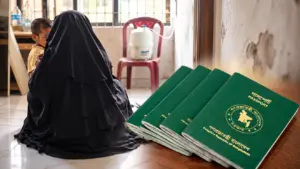
Going abroad carried the dream of changing their family’s fortunes. However, after falling victim to abuse, fraud or unwanted pregnancies and returning home with children, these women face another difficult battle. Alongside the negative attitudes of family, relatives and society, they encounter various hurdles when attempting to register their children’s births. And without a birth…
-
Kingston, NY: International Day of Nonviolence

Every October 2, the world honors the power of nonviolence. The International Day of Nonviolence is observed annually on October 2, coinciding with the birth anniversary of Mahatma Gandhi. Mahatma Gandhi defined nonviolence (Ahimsa) not as mere passivity or the absence of physical harm, but as an active, dynamic force of universal love and soul…
-
Islamic Movements Must Move From Survival to Contribution
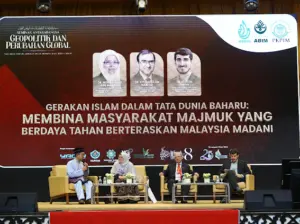
An international conference on “Islamic Movements in the New World Order: Building a Resilient Pluralistic Society Based on Malaysia Madani” was jointly organized by WAHDA, ABIM and PKPIM on September 26, 2026, bringing together the three organizations in a united effort that contributed significantly to the success of the conference. By Dr. Ghulam Nabi Fai,…
-
Venezuela’s Battle for Sovereignty Continues
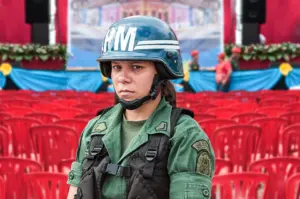
Underneath the appearance of “normalcy” in the ongoing relationship between Venezuela and the US lies a manifest asymmetry of power. Even commentators from mainstream international news outlets frame their analyses by drawing attention to the proverbial US gun held to acting President Delcy Rodríguez’s head and, by implication, to the whole Chavista movement. That movement,…
-
Bangladesh Prime Minister Tarique Rahman Calls for Urgent Action to Address Rising Sea Levels
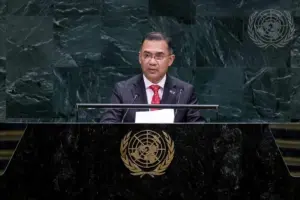
by Maksuda Lisa (Dhaka Bureau) NEW YORK, September 24: Bangladesh Prime Minister Tarique Rahman has called on the international community to take urgent and effective action to address the growing threat of rising sea levels. He said the crisis is not only a threat to coastal land and the environment, but is also linked to…
-
From Unlimited Love to Seeds of Change: Kibos Maximum Security Prison joins the world in a celebration of Peace
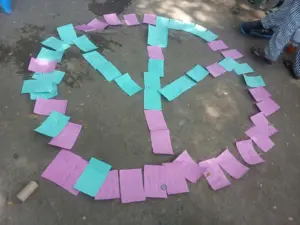
As the 4th World March for Peace and Nonviolence moved across cities and communities around the world, a different kind of movement was taking place within the walls of Kibos Maximum Security Prison in Kisumu, Kenya. The journey at Kibos began with #UnlimitedLove, a program on Valentine’s Day seeking to promote the internal renewal of…
-
Youth voices must shape Bangladesh’s COP31 workers’ position: Speakers
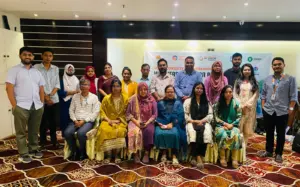
Dhaka, 30 September 2026: Youth representatives and young workers have called for their concerns, experiences and demands to be reflected in Bangladesh’s climate policies and national position for COP31, saying that climate change, automation and the green transition are already affecting employment, workplace safety, skills and livelihoods. They made the call at a consultation workshop…
-
Dhaka WASA Moves to Ensure Tobacco-Free Workplace
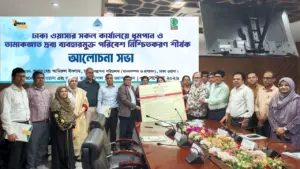
DHAKA, Sept 30, 2026: Dhaka WASA has pledged to ensure a smoke- and tobacco-free environment across all its offices, with emphasis on implementing relevant provisions of the Smoking and Tobacco Products Usage (Control) Act, 2005, as amended in 2026. A K A M Fazlul Haque, Deputy Managing Director (Human Resources and Administration) of Dhaka WASA,…
-
Philippines Launches Circular Electronics Initiative under the Global Electronics Management Program
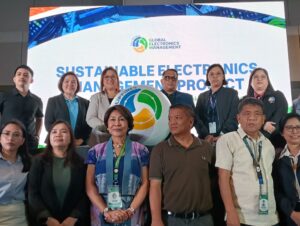
30 September 2026, Quezon City, Philippines. The Philippines today launched a new national project, ‘Sustainable electronics management in the Philippines, ’ to advance circular electronics under the Global Electronics Management (GEM) Program, a Global Environment Facility (GEF)-funded, global initiative supporting the transition towards more circular and sustainable electronics value chains across 16 countries. Led nationally…
-
Regional Leaders, Waste Workers, and Cities Urge COP31 Negotiators to Defund Incineration and Finance Community-Led Methane Solutions
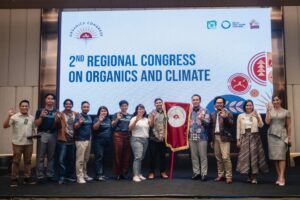
Frontline municipalities, worker cooperatives, and civil society prove decentralized organic waste systems are ready for immediate scale as climate finance continues to favor capital-intensive disposal Jakarta, Indonesia 29, September 2026 — At the conclusion of the Second Regional Congress on Organics and Climate held on September 23-24, city and municipal leaders, civil society organizations, researchers,…