by Asif Showkat Kallol (Dhaka Bureau)
Bangladesh has mounted a robust defence of its newly concluded trade understanding with the United States, presenting the agreement as a transparent, reciprocal arrangement rooted in national interest rather than a concession to Washington.
The government’s position follows high-level meetings between Commerce Minister Abdul Mutadir, Foreign Minister Dr. Khalilur Rahman, and US Assistant Secretary of State Paul Kapur. Discussions spanned trade, elections, migration, regional security, and the broader geopolitical environment.
At the heart of the engagement is a proposed reciprocal tariff arrangement aimed at addressing trade imbalances while safeguarding Bangladesh’s export competitiveness. The United States remains Bangladesh’s largest single-country export destination, with exports reaching approximately $7.5 billion in the last fiscal year, compared with imports of just under $3 billion. Officials argue that this asymmetry highlights both the opportunity for expansion and the need for structured economic cooperation.
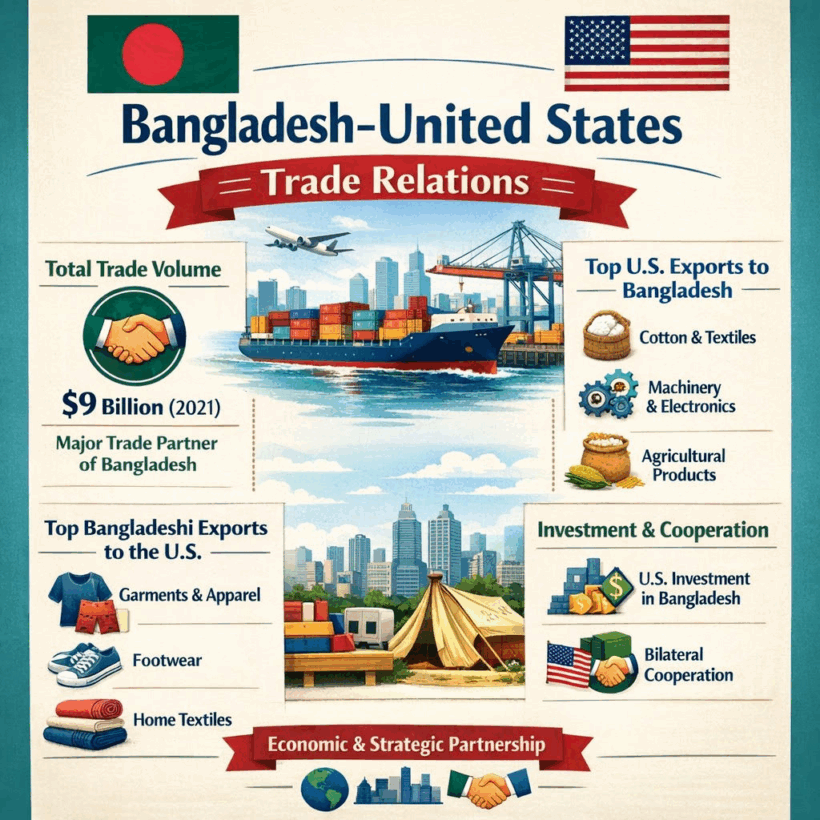
The image was created by Asif Showkat Kallol with the help of AI-Arena.
Addressing domestic criticism, Dr. Rahman rejected claims that the deal was hurriedly finalised ahead of national elections. He said negotiations began in February 2025 over trade deficit concerns and intensified between April and July, with most provisions substantially settled well before the election period. He further emphasised that the reciprocal arrangement was made ‘in broad daylight, not in the dark,’ underscoring the government’s insistence on transparency.
A central element of Dhaka’s defence is the agreement’s legal safeguards. The deal contains both entry and exit clauses: it will only take effect after formal notification procedures are completed, and either party may withdraw with 60 days’ notice. Officials say these provisions prevent Bangladesh from being locked into unfavourable or inflexible commitments.
Among Bangladesh’s key demands is zero reciprocal tariff treatment for garments produced using American cotton or man-made fibres. The government argues that this measure would strengthen the competitiveness of Bangladesh’s ready-made garment sector while increasing US cotton exports- a move framed as mutually beneficial.
Officials have also noted that the language of the agreement aligns with similar US trade frameworks involving Vietnam, Cambodia, and Indonesia. However, Dhaka maintains that it has preserved strong sovereign safeguards, particularly in relation to border measures and domestic regulatory authority.
US officials have reportedly raised concerns about regulatory and non-tariff barriers affecting American investment. Bangladeshi authorities acknowledge ongoing reviews of tariff and non-tariff structures but stress that reforms will reflect domestic priorities rather than external pressure.
Dr. Rahman has described the broader diplomatic approach as a ‘Bangladesh First’ doctrine- prioritising national economic and strategic interests while maintaining balanced relations among global powers. While discussions touched on regional instability, the Rohingya crisis and migration issues, Bangladesh reiterated that it would not enter formal military alliances.
For now, the government is betting that transparency, legal safeguards, and a clearly articulated national-interest framework will ease domestic scepticism while deepening economic ties with Washington.
————————————————————————————————————————————————————————
The Author:
 Asif Showkat Kallol: Works for a German-based online outlet, The Mirror Asia, and as Head of News and Contributor, Pressenza- Dhaka Bureau.