BAGUIO CITY – On October 17, 2025, the DepEd Teachers’ Camp served as the venue for the assembly and talent fest of over 700 high school student leaders from the Association of Philippine Private School Administrators and Mentors (APPSAM) who gathered for their 13th National Student Leadership Assembly, themed “Servant Leadership: Leading with Empathy, Purpose and Integrity.” Beyond the vibrant energy distinctive of such youth gatherings, this assembly delivered a revolutionary message: in the fight for a just society, purpose and integrity, anti-corruption advocacy is essential peacework.
The session, “Youth in Peacebuilding and Conflict Resolution,” facilitated by Dr. Genevieve Balance Kupang, began by confronting a difficult truth. Images of global and local conflicts—rubble-strewn streets, displaced families, the tears of children, DPWH ghost projects, Gen Z protesting—filled the hall. Dr. Kupang posed a challenging question to the assembly: “How did those images make you feel? Is our topic today relevant?”
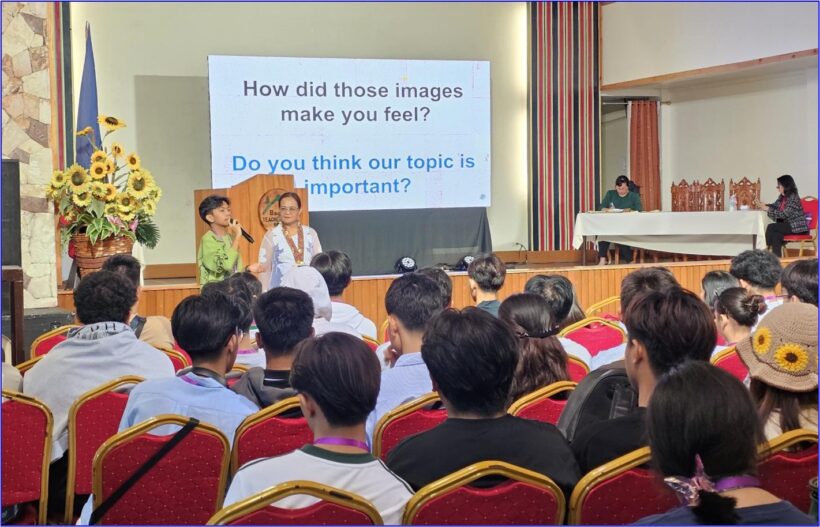
Speaking with conviction, a student leader articulates his response to images of war and violence, critiquing leadership failures that prioritize power over people’s welfare.
The responses from the young leaders were substantive and thoughtful—indicative of a generation already grappling with complex realities. Dr. Kupang reminded them of their privilege: “You are blessed to be here in Benitez Hall, where you have the liberty to exchange ideas and learn from one another about becoming young peacebuilders and working toward peaceful conflict resolution.” She drew a sobering contrast, explaining that children and youth in war-torn regions—living in refugee camps or displaced across borders—often see their education disrupted or entirely denied by ongoing violence.
The session then bridged global conflicts with pressing domestic challenges. Dr. Kupang highlighted how, even in the Philippines, the pursuit of justice and accountability can disrupt normal life. Recent student protests at universities, sparked by allegations of multi-billion peso ghost projects involving contractors and government officials, demonstrate how corruption undermines public trust and diverts resources meant for essential services. “When public funds intended for classrooms, infrastructure, healthcare, and social services are stolen,” she explained, “it doesn’t just harm the economy—it erodes the social fabric and creates conditions for conflict.”
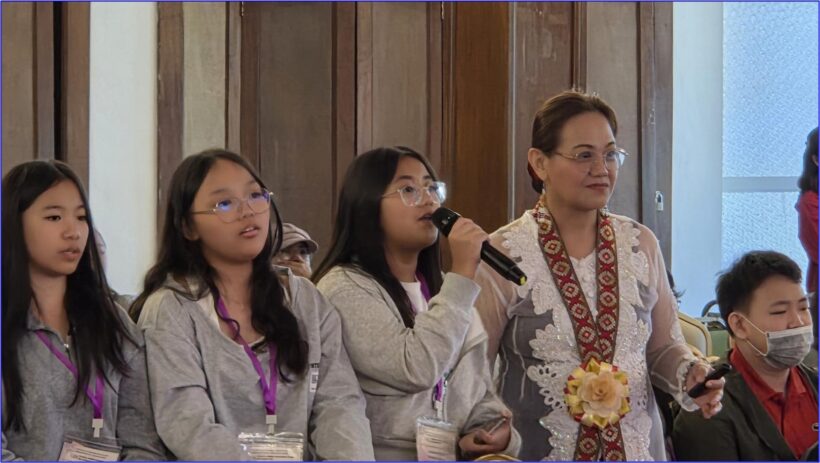
A covenant for peace: APPSAM youth declare in chorus, ‘I am a servant leader of the Philippines. I will lead with empathy, purpose, and integrity. I will not steal. I will not lie. I will not betray the trust of those I serve’ affirming that anti-corruption is peace work.
She challenged the students to see the connection: systemic corruption is a governance failure and it is a barrier to a just and peaceful society. The outrage visible on social media and in public demonstrations reflects citizens demanding integrity from their leaders—the same integrity these young leaders were being called to embody. “Anti-corruption advocacy,” Kupang emphasized, “is peacebuilding work. When you stand for transparency and accountability, you are standing for a society where resources serve the people, not private interests—and that is how lasting peace is built.”
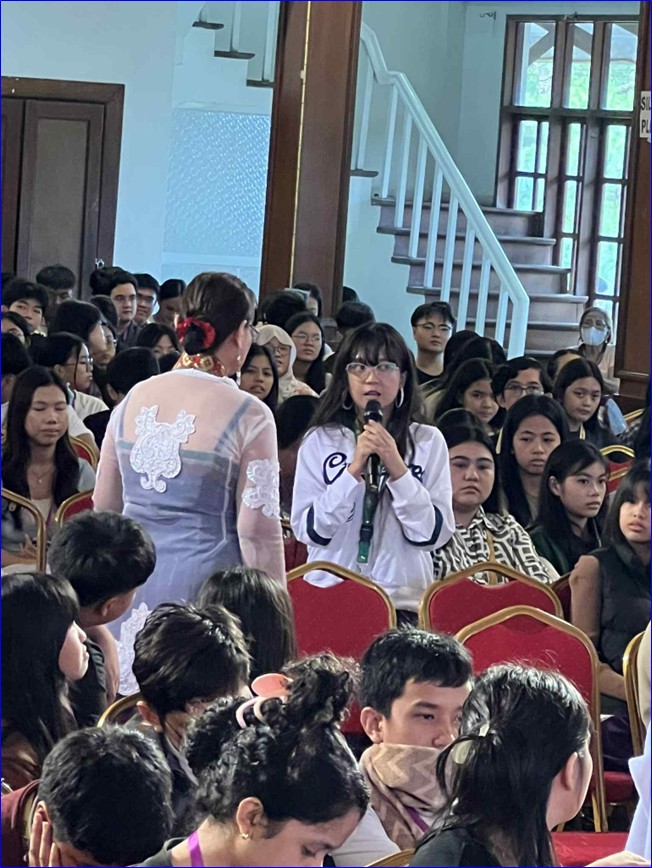
“It made me realize that peace isn’t automatic—someone has to work for it,” one student reflected. Another added, “Those images show what happens when leaders fail their people.” A clear-eyed consensus emerged as a student leader declared, “Corruption and greed often cause these conflicts. If we want peace, we need to fight corruption.”
Dr. Kupang affirmed their insights. “There is hope—because of the way you think. You know what true leadership is.”
From Classroom to Community: The Foundations of Peace
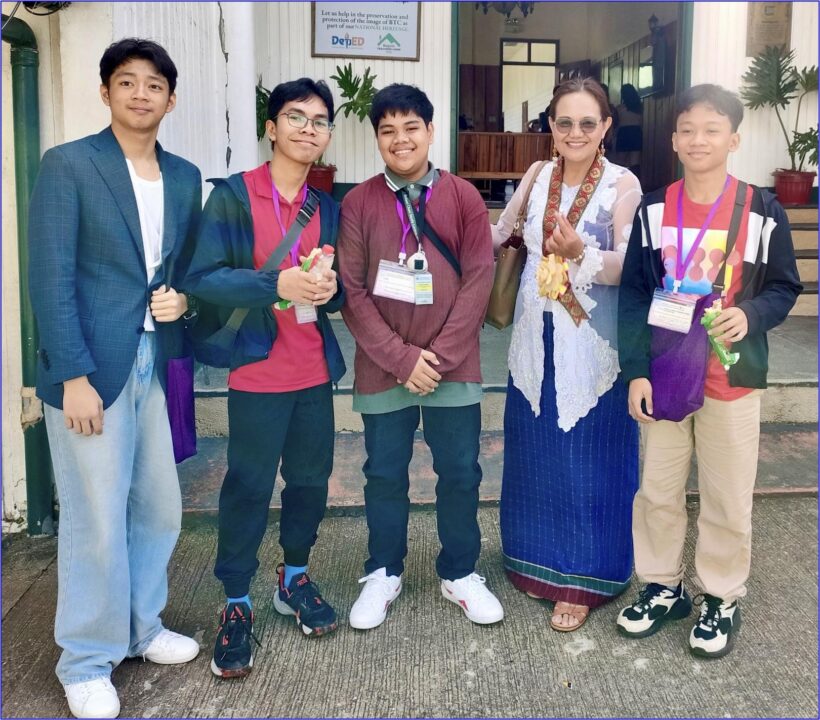
“The youth is the fair hope of the fatherland.” — José Rizal. Today, we are investing in that hope. Empowering the next generation of leaders, our APPSAM youth had an inspiring session on peacebuilding and conflict resolution with Dr. Genevieve Kupang. This is how hope is turned into action.
The assembly moved from diagnosing the problem to empowering the participants with a powerful reframing of their existing capabilities. “You are not just preparing to be leaders someday. You are leaders right now,” Dr. Kupang stated. “When you mediate a conflict between classmates, you are doing peacebuilding. When you stand up against bullying, you are practicing conflict resolution. When you advocate for fairer rules or stand against discrimination, you’re building peace.”
This concept of peacebuilding was defined as the active creation of conditions where justice, respect, and opportunity can thrive. The session equipped students with a practical toolkit for conflict resolution: listening to understand rather than to respond, seeking root causes over surface problems, creating safe spaces for dialogue, and pursuing win-win solutions that address the needs of all parties.
The conversation then turned to integrity in action. Through an interactive exercise, students identified the hallmarks of ethical leadership, with real-world examples like Pasig City Mayor Vico Sotto, who serves with “honest hands,” presented as tangible proof that integrity in public service is both possible and powerful.
The Interconnected Web of Community
A pivotal moment of the assembly was “The Community Web” activity. As a ball of yarn was passed between students, each participant shared a story of someone who helped them grow, physically holding onto the string before tossing it to another. Slowly, a intricate web materialized across the circle, visually demonstrating their interconnectedness.
“The strongest trees in the forest don’t grow alone,” Dr. Kupang explained, using the powerful metaphor. “Their roots touch. They share nutrients. They hold each other up when storms come.” The lesson was clear: individual achievement is secondary to collective flourishing. Resilient communities are built when people grow together.
This theme of co-creation continued in the “Our Brighter Future” art activity. In small groups, students collaborated to illustrate their vision for a better Philippines. Their artwork depicted classrooms where every student feels safe, communities where people help each other across differences, and a nation characterized by justice and inclusion. The collaborative energy in the room was itself a testament to their innate capacity for building a better world.
The Covenant: A Generation’s Pledge
The assembly culminated in a call to action, connecting the day’s lessons to a growing global youth movement. The students learned about their counterparts in Nepal and Indonesia who are rising against systemic graft, understanding that tragedies like landslides, road deaths, and devastating floods are often exacerbated by corruption.
They were then presented with a month-long mission: to learn something new by listening to someone different from themselves; to lead with kindness by including those on the margins; and to grow together by actively lifting up another person.
The session concluded not with a final lecture, but with a collective pledge. With fists over their hearts, the 700-plus youth leaders recited the Youth Covenant Against Corruption, their voices united in the hall: “I am a servant leader of the Philippines. I will lead with empathy, purpose, and integrity. I will not steal. I will not lie. I will not betray the trust of those I serve.”
This was more than a recitation; it was a public commitment to embody the principles of servant leadership and to recognize that personal integrity is the foundational block of national peace.
Conclusion: Planting the Seeds of a Brighter Future
As the young leaders departed the cool climate of Baguio, they carried with them more than certificates. They carried a renewed sense of agency, the understanding that they possess the power to effect change now—in their classrooms, their friend groups, and their communities.
Under the leadership of APPSAM President Dr. Sining Kotah and Managing Director Dr. Lorelie Carreon Siy, the organization continues to cultivate spaces where students learn that authentic leadership is not about wielding power, but about empowering others.
The question posed in international forums—”Can Generational Movements End Systemic Corruption?”—found a resounding answer in the DepEd Teachers’ Camp. The answer is a generation that is already choosing light, already leading with empathy, and already building peace through the daily, courageous practice of integrity. The seeds have been planted; the future of the Philippines is in conscientious hands.
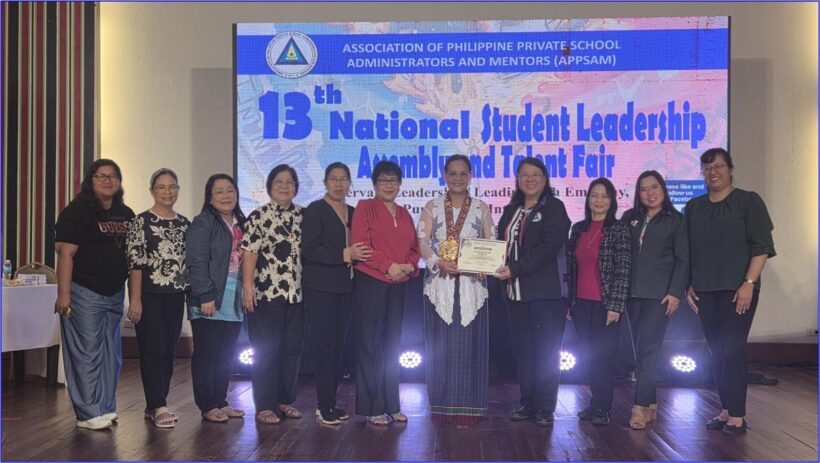
Building a more peaceful future starts with our youth. Today, the APPSAM Officers engaged in a powerful dialogue on “Youth in Peacebuilding and Conflict Resolution” with the incredible Dr. Genevieve Balance Kupang. The session equipped us with new frameworks and strategies to guide the next generation in becoming agents of change and harmony. The passion in the room was palpable! Grateful to all who made this possible: Ma’am Marinel Bagasala, Ma’am Nacy Samaniego, Dr. Resa Pestano, Dr. Jacinta Corpuz, Ma’am Flora Aurea, Dr. Helen Losbanes, Dr. Genevieve Kupang, Dr. Sining Kotah, Ma’am Fatima Estacio, Ma’am Socorro Arcillas, Ms. Natasha Francisco.
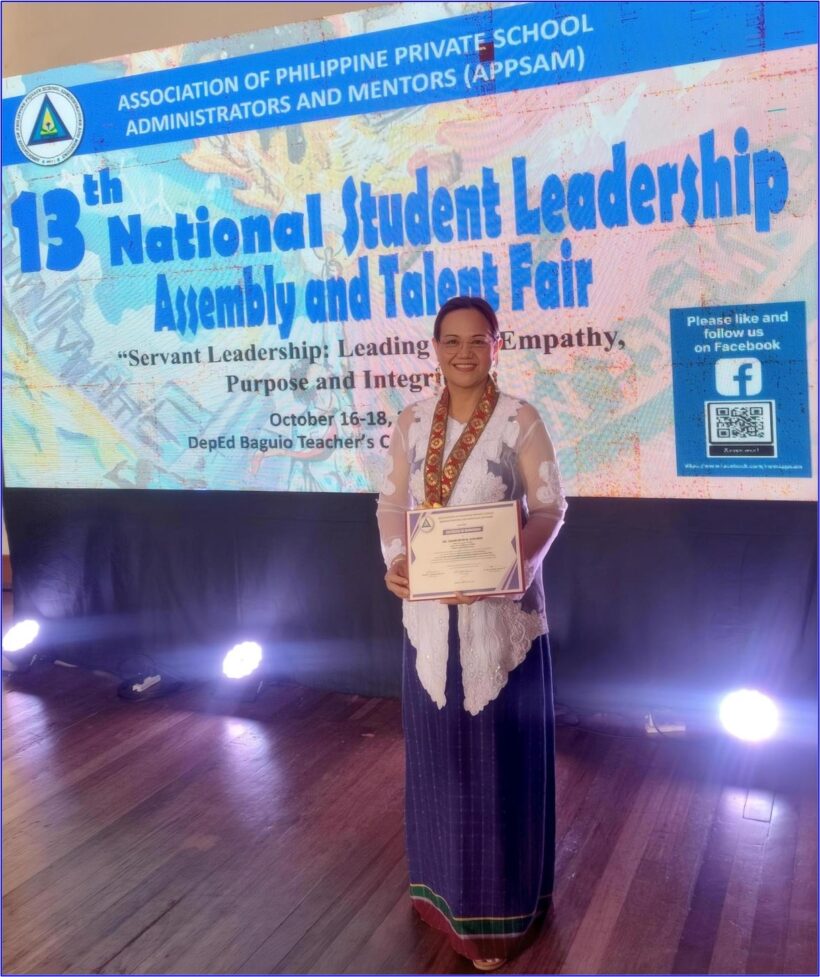
The Association of Philippine Private School Administrators and Mentors (APPSAM) is proud to present a Certificate of Recognition to Dr. Genevieve B. Kupang. This award celebrates her invaluable contributions and exemplary leadership in the field of peace education and conflict resolution. Congratulations, Dr. Kupang!
Photo credits: Dr. Sining Kotah, APPSAM President, Dr. Lourelie Siy, APPSAM Managing Director, and Matthew Henri Kupang
#BCUEducationLeader
#BCUCultureofPeace
#APPSAMempowers
#CollaborationofBCU&APPSAM