By Taskina Yeasmin (Dhaka Bureau)
Life in Old Dhaka three or four decades ago was defined by serene homes, courtyard gardens, meticulously arranged rooms, and the delicate touch of women’s needlework. ‘Choukhat’ (Threshold), the second solo art exhibition by visual artist Sarah Zabin- who emerged from that very cultural matrix- concluded today. Having opened on July 31 at the gallery of Alliance Française de Dhaka, the exhibition immersed visitors in a deeply nostalgic experience, bridging the gap between past and present.
The exhibition served as a poignant narrative of female creativity, the fragility of memory, and generational transition- offering a unique reflection on human rights, female identity, and social evolution.
Inheritance of Memory Unveiled in Four Acts
Zabin’s collection employs unconventional mediums, including muslin, copper wire, and soap powder. Using soap powder, she sculpted stairs, minarets, walls, and architectural textures evocative of Old Dhaka’s heritage. On transparent muslin canvases, she intertwined fine copper wire and threadwork to symbolize the often invisible lives of women.

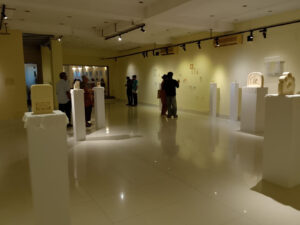
This exhibition exquisitely portrays female creativity, the erosion of memory, and the inner turmoil accompanying generational shifts, serving as a unique document viewed through the lenses of human rights, female identity, and social transformation. Photo: Taskina Yeasmin
The exhibition was structured into four distinct series:
1. Bon Void: Utilizing linocut prints, the artist traces her mother’s journey from childhood to marriage, subtly illustrating how a woman’s autonomy and confidence undergo transformation through different stages of life.
2. Sharshi (Glass Pane): Centered on the symbolism of window panes, this series integrates intricate embroidery onto translucent muslin. It highlights lives that remain only partially visible to society- where identity emerges through moments of light, shadow, disclosure, and privacy.
3. Soap Sculptures: To capture Old Dhaka’s architectural legacy, the artist chose impermanent soap sculptures. Depicting stairs, pillars, and ornaments, the works contrast the distinct character of traditional homes with the monotony of modern high-rises. Much like soap erodes upon touch, these sculptures reflect the gradual fading of memory.
4. Copper Wire Formations: Intricate patterns formed by bending copper wire draw inspiration from traditional household rituals. Through this series, the artist poses a fundamental question: while the external forms of these traditions persist, has their true spirit been lost to time?
Replanting Memories: Albums, Anecdotes, and Maternal Legacy
The artist’s personal commentary accompanied the artwork, deeply moving visitors. In the piece titled ‘Harrowing’ (Punropon), Zabin revives the lost significance of family photo albums. Images once cherished in albums- now relegated to the corners of closets in the digital age- are brought back to life through embroidery and canvas.
In the series ‘Anecdote’ (Onulipi), she pays homage to her mother’s craft. Recalling her mother’s pursuit of matching thread shades and unfinished embroidery, Zabin blends her mother’s favorite song lyrics and artistic style with her own needlework on muslin. Furthermore, through ‘Elapse’ (Otikranto) and ‘Anecdote Rosary’ (Opyakhyan Jopamala), she captures the stories and spatial transformations of her ancestors.
Inaugurated on July 31 in the presence of artist and writer Mustafa Zaman alongside the Cultural Affairs Officer of the French Embassy, ‘Choukhat’ drew to a close on Friday evening, August 7, at Alliance Française.
Beyond a yearning for the past, Sarah Zabin’s portrayal of fading heritage, maternal memory, and the quiet artistic expressions of women serves as a powerful call to reconnect with one’s roots in a rapidly modernizing world.

Taskina Yeasmin: Senior Reporter, Pressenza- Dhaka Bureau