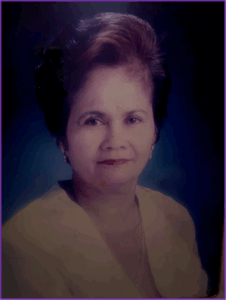
By: Genevieve B. Kupang and Ma. Ditas A. Fernandez
Calasiao, Pangasinan, July 12, 2026. In the fertile plains of Pangasinan, one name has come to stand for resilience translated into an institution: Dr. Lourdes S. Fernandez, founder and President of the Philippine College of Science and Technology (PhilCST) in Calasiao, Pangasinan, Philippines, now a first-class municipality at the heart of the province. Her story began in the rubble of Dagupan’s devastating 1990 earthquake. Before she became an educational leader, she was a hotelier and a devout follower of St. Joseph. When the earthquake left Dagupan in ruins, Dr. Fernandez looked at the devastation surrounding them and saw an opening, a chance to build something new for Dagupan City’s displaced students, parents, and professionals just outside Dagupan.
Rising from an Earthquake

The wreckage of the Magsaysay Bridge is a stark reminder of the destruction the 1990 earthquake left across Luzon, including in Dagupan City. Photo credit: Edwin Tuyay.
On July 16, 1990, a powerful earthquake tore through Dagupan City and many parts of Luzon, reducing schools, businesses, and homes to ruins in a matter of moments. The destruction was so severe that the city reportedly resembled a war zone in the earthquake’s immediate aftermath (Sotelo, 2016). For three years, Dagupan City rebuilt itself slowly, sustained by the bayanihan spirit of communities determined to recover what the earth had taken.
It was in the shadow of that devastation that Dr. Fernandez made a decision that would alter the educational landscape of the region. Rather than wait for Dagupan’s institutions to recover fully, she resolved to build something new, a few kilometers away, for those whose education and livelihoods could not simply pause. Her vision was further shaped by then-President Fidel V. Ramos’s national program “Philippines 2000,” a call to transform the country into a modernized, globally competitive nation by the turn of the century. Where others saw only earthquake aftermath, Dr. Fernandez saw an opening to build something new in Calasiao, even as Dagupan was still rebuilding what the quake had destroyed.

PhilCST’s first building was constructed in 1993 in Nalsian, Calasiao. Pangasinan. Photo credit: PhilCST.
In 1993, she constructed a four-storey building in Nalsian, Calasiao, Pangasinan, the first college institution ever established in that municipality. On June 4, 1994, PhilCST formally opened its doors, becoming a beacon in a town still finding its footing five kilometers from a city in recovery.
Building Beyond the First Foundation

What began as a single structure grew, year by year, into an institution defined by expansion matched with intention. In 2008, PhilCST added a second four-storey building along the southern edge of its campus, housing twenty-eight classrooms, an amphitheater, and a fully computerized speech laboratory, along with dedicated space for the Mother Lourdes Learning School’s (MLLS) youngest learners. A 150-meter multi-purpose gymnasium soon rose between the two structures, built to hold everything from sporting events to graduation ceremonies, evidence of a founder who understood that a college is not only classrooms but a community that needs an edifice to gather and celebrate.
By the start of the 2009-2010 academic year, Lourdes Building IV opened its doors, a three-storey structure adding sixteen more classrooms, an indoor firing range, a TLE simulation room, an accreditation room, a chemistry laboratory, and the Office of the Research Director. Each addition traced the same throughline: a founder building for scale and what her students and faculty would need next.
A Mission Rooted in Human Dignity

Dr. Lourdes S. Fernandez, the beloved founder-president, with administrators and faculty after a Baccalaureate Mass.
At the core of PhilCST’s identity is a mission that Dr. Fernandez embedded from its earliest days: the recognition of every human being as a potential agent of positive change. It is a philosophy that reads less like a slogan and more like a founder’s personal conviction translated into institutional policy. Under her leadership, PhilCST has grown into what its community now calls a premier higher education institution in the North, known for academic programs spanning engineering, criminology, business, education, and the sciences, alongside a track record of graduates who have gone on to pass licensure examinations administered by the Professional Regulation Commission and technical assessments under the Technical Education and Skills Development Authority.
A Leader Who Still Shows Up
Dr. Fernandez’s leadership has never been confined to the boardroom. In the aftermath of severe flooding that placed Calasiao under a state of calamity, she and the Gironella family, PhilCST’s senior officers, personally coordinated the donation of one hundred sacks of rice to the Local Government Unit of Calasiao, standing alongside Mayor Patrick A. Caramat in a gesture of bayanihan that echoed, three decades later, the very spirit that led her to found the school in the first place (O. F. Gironella III, personal communication, July 3, 2026). It is a small but telling detail: the woman who built an institution out of the ashes of one disaster was still, decades on, the first to respond when disaster struck again.

Dr. Fernandez leads by example, instilling the values of empathy and leadership in her children, son-in-law, and grandchildren. Together, they stand on the front lines of the university’s relief and gift-giving missions, ensuring that care reaches the community when it matters most.
Her leadership is, in essence, a masterclass in turning a founding story into lived impact. More than thirty years in, she remains a president still hungry to bring new ideas home to her faculty.
A Legacy Still Being Written

The PhilCST academic community during the 32nd Moving-Up Ceremony and Commencement Exercises, June 25 and 27, 2026. The theme: “Beyond the Degree: Advancing Communities Through Academic Excellence”.
Unlike institutions whose founding stories fade into archival footnotes, PhilCST’s history remains visibly, tangibly alive in Dr. Fernandez’s continued presence at the helm. Dr. Lourdes Fernandez continues to write her own chapter in real time, still walking her campus, still receiving her faculty’s gratitude in person, and still, evidently, unwilling to let disaster have the final word in Pangasinan.
Hers is a story that deserves to travel beyond Calasiao’s borders: of an earthquake that could have ended possibility, and of one woman who chose, instead, to build a four-storey answer to it. Three decades later, that answer has become a college, a community, and a continuing act of faith in what education and one determined founder can do for a province still growing into everything Fidel Ramos once imagined for a nation entering a new century.
To us, as the authors, she is an exceptional woman of peace, grit, and love!
#TatakPhilCST #TatakUbe #YourFutureStartsHere
##########
References:
Philippine College of Science and Technology. (2026). About us. https://philcst.edu.ph/
Sotelo, Y. (2016, July 16). Rising from the 1990 quake, Dagupan shows toughness. Inquirer.net. https://newsinfo.inquirer.net/796321/in-rise-from-1990-quake-dagupan-shows-toughness
About the Authors:
 Genevieve B. Kupang, PhD, is an applied cosmic anthropologist and cultural mapper whose work bridges ancient wisdom and postmodern innovation, from AI to peace scholarship and global higher education. She serves as Dean of the Graduate School and International Relations Officer of Baguio Central University, WURI Historian, and Secretary of the World University Network of Innovation for Leaders. She is a member of the selection committee and leadership team of the Exceptional Women of Peace Awards under Pathways to Peace, Minnesota, USA, and Peace Education Chair of the World Council for Curriculum and Instruction. As a regular contributor to Pressenza, the international press agency for peace and nonviolence, she has documented the stories of empowered women leaders and others whose work has made a significant impact on society
 Ma. Ditas A. Fernandez, EdD, serves as the Director of Research and Educational Programs at Philippine College of Science and Technology, where she inspires innovation in teacher training, inclusive education, and lifelong learning. Her honors include Outstanding Educator of the Year, Outstanding Professional, Boy Scout of the Philippines Service Award, JCI Philippines Outstanding Student, and CUM LAUDE – Civil Service Eligibility. Through educational visits across ASEAN, she has strengthened her expertise in classroom supervision and educational leadership. As former Ambassador for T4 Global Teachers and Tech and Kids for Peace, she continues to advance her institution’s mission and create a lasting difference for students and faculty, both locally and abroad.