21 December 2025, Quezon City. The environmental health and justice groups EcoWaste Coalition and International Pollutants Elimination Network (IPEN) renewed their call for the Government of the Philippines to join the growing number of countries seeking the inclusion of lead chromates as hazardous chemicals in the Rotterdam Convention.
Environmental health and justice groups push for stricter rules to control global trade of lead chromates and paints containing them.
The Rotterdam Convention, which the Philippines ratified in 2006, is a UN treaty for managing hazardous chemicals by promoting shared responsibility and cooperation in their trade, primarily through a Prior Informed Consent (PIC) procedure to assist countries in making informed decisions on accepting industrial chemicals and pesticides banned or restricted for health and/or environmental reasons.
The EcoWaste Coalition and other participating organizations of IPEN from low- and middle-income countries are advocating for the listing of lead chromates, which are lead-based chemical compounds used as pigments in paints, as an essential measure to control their trade and the paints containing them.
The groups reiterated their appeal for the government, the Department of Environment and Natural Resources (DENR) in particular, to file the necessary notification to the Secretariat of the Rotterdam Convention as the country’s regulation banning lead in all paints entered its 12th year of implementation.
DENR Administrative Order No. 2013-24, or the Chemical Control Order (CCO) regulating lead and its compounds, was promulgated on December 23, 2013. Among its salient provisions were the establishment of 1) a mandatory 90 parts per million (ppm) limit on lead in paints (the strictest legal limit for lead used in various paint applications), and 2) the phase-out of lead-containing decorative and industrial paints, which were completed on December 31, 2016 and December 31, 2019, respectively.
The landmark regulation, which won the Future Policy Award (special category on lead in paint) in 2021, was adopted through a consultative process led by the Environmental Management Bureau (EMB) and with the active engagement of stakeholders from the industry (i.e., Philippine Paint & Coatings Association, Inc. or the PPCAI; known before as the Philippine Association of Paint Manufacturers) and the civil society (i.e., EcoWaste Coalition and IPEN).
The PPCAI, the industry champion for lead paint elimination, had signified “no objection” to the Rotterdam Convention listing of lead chromates, noting that 1) PPCAI-member paint manufacturers have phased out the use of lead chromates in compliance with the CCO; 2) PPCAI-affiliated manufacturers, importers, and distributors of raw materials no longer produce or market lead chromates; 3) PPCAI-associated manufacturers and raw material suppliers have readily adopted commercially available alternatives to lead chromates; 4) ongoing concerns raised by the EcoWaste Coalition and IPEN regarding the importation and sale of finished paint products with high lead concentrations highlight the necessity for stringent control measures; and 5) governments, including the Philippines, should be equipped with legally binding tools, such as those provided by the Rotterdam Convention, to control the entry of lead chromates into their ports and prevent the importation of unauthorized chemicals and paint products.
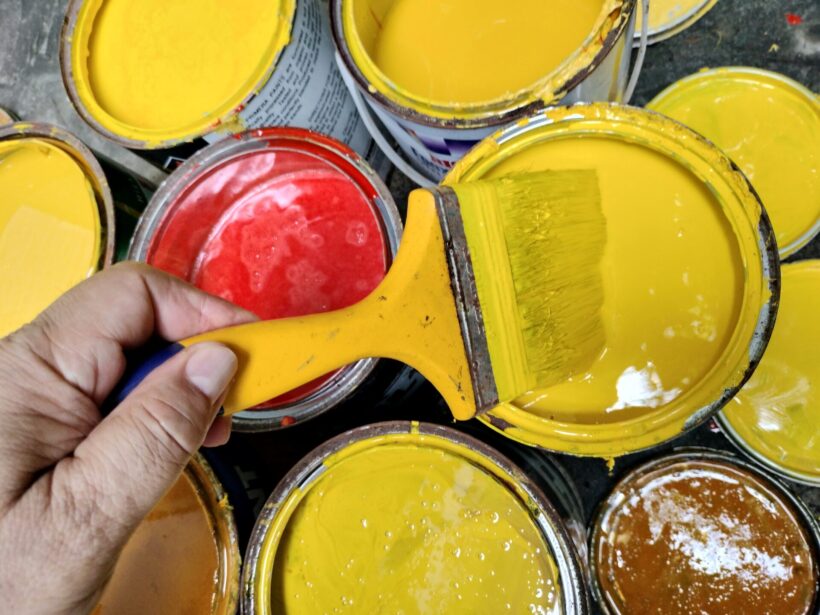
These paints contain high concentrations of lead, a highly toxic chemical banned in the production of decorative and industrial paint products as per DENR A.O. 2013-24.
“IPEN calls on countries like the Philippines with lead paint bans to support listing lead chromates under the Rotterdam Convention as this will give importing countries the right to know and refuse imports of these common pigments in lead paint and finished paint products containing lead chromates to protect their market and people,” said Jeiel Guarino, Global Lead Paint Elimination Campaigner, IPEN.
The EcoWaste Coalition and IPEN have consistently advocated for stronger measures to fix the gaps in the enforcement of the CCO as exemplified by the influx of imported paints with high lead content, including tightening customs controls, intensifying compliance monitoring, charging and penalizing violators, and nominating lead chromates for listing in the Rotterdam Convention.
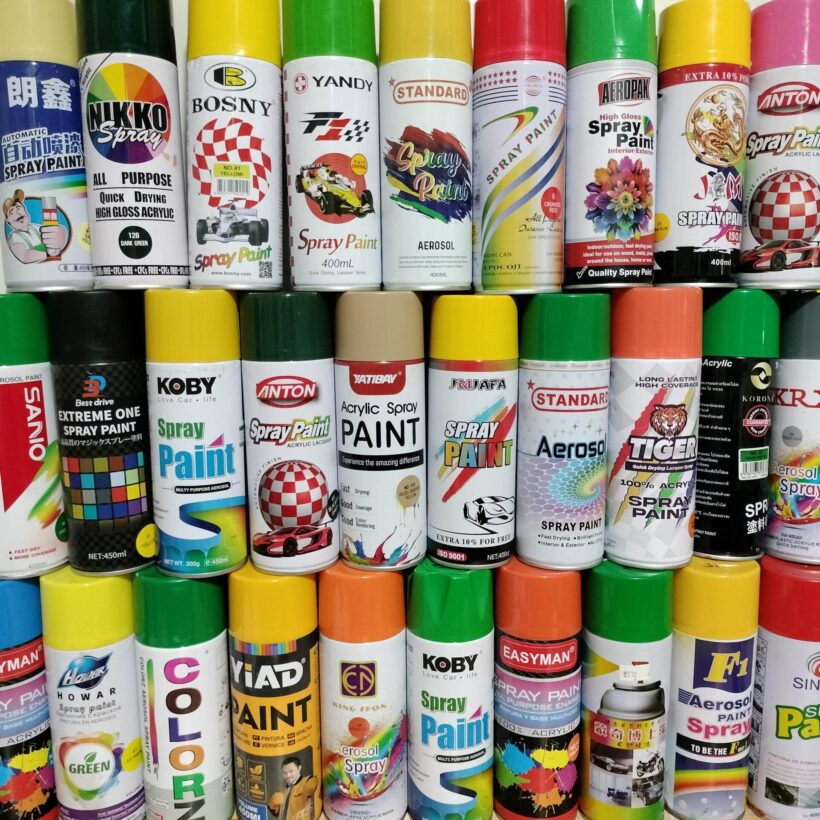
Imported spray paints with lead content in excess of 90 ppm proliferates in the local market, threatening public health.
In October 2025, for instance, the EcoWaste Coalition, IPEN and the PPCAI released the updated “Public Notice on Lead-Containing Paints” in conjunction with the International Lead Poisoning Prevention Week. It contains a list of 228 imported lead-containing spray paints representing 45 brands that are sold to Filipino consumers through physical and online stores. Of these 228 paints, 158 contain high concentrations of lead above 10,000 ppm. Moreover, 75 of these paints have lead levels ranging from 50,000 ppm to 212,000 ppm of which 14 products exceeded 100,000 ppm.