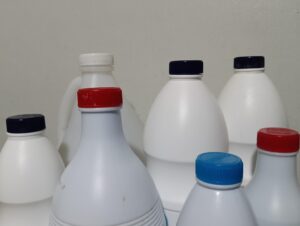
Child-resistant packaging can help in reducing poisoning incidents, group says
13 July 2026, Quezon City. The environmental and health watchdog group EcoWaste Coalition urged the government to require child-resistant packaging (CRP) for bleach and other household cleaning products that may pose a risk of illness or injury to young children.
In a proposal submitted to the Food and Drug Administration – Center for Cosmetics and Household/Urban Hazardous Substances Regulation and Research (FDA-CCHUHSRR), the group proposed CRP for household cleaning products containing sodium hypochlorite, sodium hydroxide, hydrochloric acid, and other corrosive chemicals to reduce the risk of poisoning among children.
CRP is special, safety-tested packaging designed to prevent children from easily accessing or opening potentially hazardous items, such as bleach and other household chemicals. Child-resistant closures, such as push-down-and-turn caps, squeeze-and-turn caps, and other mechanisms, can help ensure that even if a child finds a bleach bottle, she or he cannot easily open it.

The group’s policy proposal followed the issuance of FDA Advisory No. 2026-0708, which provided information on preventing bleach poisoning. Sodium hypochlorite, an active ingredient of bleach, is one of the leading causes of poisoning among children, as well as adults, according to the UP-PGH National Poison Management and Control Center (NPMCC).
Improper use, storage, or disposal of bleach leads to poisoning incidents. When sodium hypochlorite – a corrosive substance — makes direct contact with skin or eyes, is inhaled through toxic fumes, or is swallowed, it chemically breaks down and damages body tissues, the EcoWaste Coalition said.
“We thank the FDA-CCHUHSRR for issuing the said advisory, guiding the general public on the proper usage and storage of bleach products to promote awareness on bleach poisoning prevention,” said Aileen Lucero, National Coordinator, EcoWaste Coalition. “We are one with the FDA and other agencies in the ongoing efforts to educate our people about toxicants and toxins lurking in our homes, schools, workplaces and communities, which may pose severe health risks, especially to young children.”
“Considering the high number of bleach poisoning cases in the Philippines, we find it essential for bleach to adhere to CRP, as this will help in preventing accidental poisoning and serious chemical injuries, especially for children who may mistake bleach for drinking water,” she said.
As pointed out by the World Health Organization (WHO), “CRP is one of the best-documented successes in preventing the unintentional poisoning of children.”
To prevent ingestion, inhalation, or contact with other household cleaning agents —especially corrosive cleaners, acids, and degreasers containing hydrochloric acid, sodium hydroxide and other hazardous compounds — the EcoWaste Coalition further recommended CRP for such products.
The group also urged the FDA to regulate shops selling unbranded or DIY bleach products to ensure compliance with product quality and safety requirements, including mandatory labeling information. According to the group, it is not uncommon for a one-gallon inadequately labeled bleach sold in these shops to be transferred to smaller, unmarked containers, such as water bottles, posing a poisoning risk for young children
In the meantime, the EcoWaste Coalition reiterated the following bleach poisoning prevention tips as per FDA Advisory No. 2026-0708:
1. Follow instructions on the label. Always strictly adhere to product label directions, including guidelines for dilution, storage, and disposal. For optimal safety, wear recommended protective gear like gloves or masks.
2. Use in well-ventilated areas. Bleach emits a strong odor and may emit fumes. Exposure to fumes may lead to respiratory irritation, allergic reactions, and other health complications.
3. Store bleach away from children. Keep bleach in a cool, well-ventilated space out of direct sunlight. Simply keeping chemicals out of reach is insufficient; always secure them in locked cupboards or cabinets with childproof latches. Whenever possible, purchase products in CRP, and never leave open or in-use chemicals unattended
4. Store bleach in its original container with an appropriate cover and label. Never store chemicals in food packaging or beverage bottles to prevent accidental poisoning. Always leave original labels attached to their containers. These labels provide critical details, including usage instructions, hazard warnings, proper disposal methods, and first-aid protocols.
5. Do not mix bleach with other chemicals. Bleach is a reactive agent. It emits toxic gas when mixed with other acids and ammonia.
The EcoWaste Coalition likewise urged consumers to consider safer non-bleach alternatives for disinfecting, whitening laundry, and removing mold and stains, which pose no significant risks to health and the environment.
##########
Reference:
https://www.fda.gov.ph/fda-
https://www.who.int/