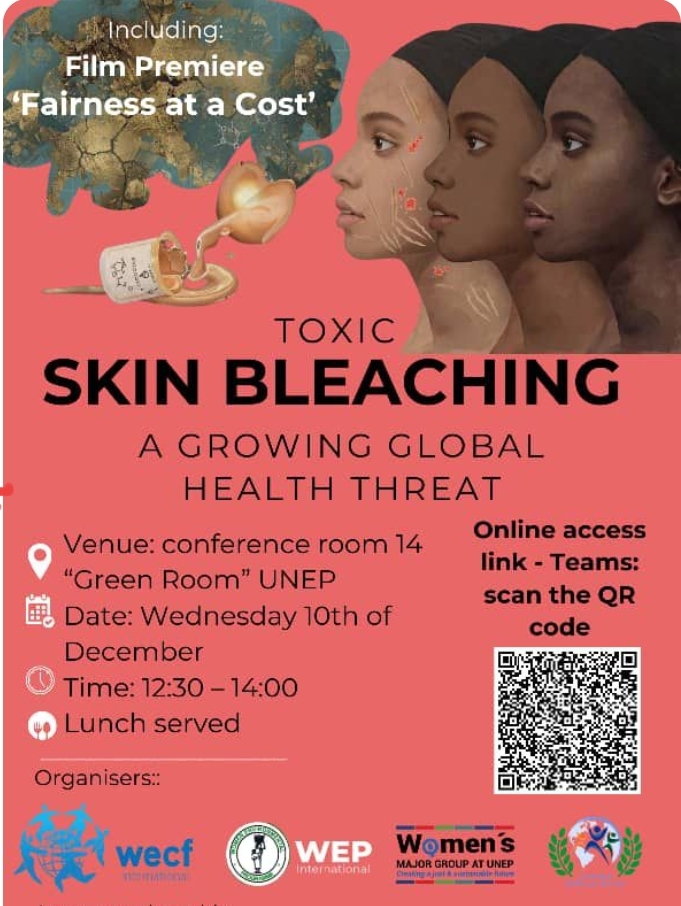
11 December 2025, Quezon City. On December 10, Human Rights Day, the EcoWaste Coalition had the opportunity to share its advocacy campaign on mercury in skin lightening products at a side event on “Toxic Skin Bleaching: A Growing Global Health Threat” held in conjunction with Seventh Session of the United Nations Environment Assembly (UNEA7), the world’s top decision making body on environmental matters, in Nairobi, Kenya.
Oplus_131072
Speaking on behalf of the EcoWaste Coalition, environmental health advocate Chinkie Peliño-Golle highlighted the group’s efforts to track and test skin lightening products with mercury content, alert consumers on the harmful effects of mercury exposure through mass and social media, and push regulatory bodies in the Philippines and neighboring countries to act. EcoWaste Coalition is the regional hub of the International Pollutants Elimination Network (IPEN) in Southeast and East Asia (IPEN-SEA) and Peliño-Golle serves as its regional coordinator working with 59 participating organizations in 10 countries
The event was organized by the Women Engage for a Common Future (WECF), Women Environmental Programme (WEP International), Women’s Major Group at UNEP, Juventud Unida en Accion, and WEP Nigeria, in cooperation with the European Environmental Bureau (EEB), Zero Mercury Group, Global Mercury Partnership, IPEN, and the UN Environment Assembly.
EcoWaste Coalition in the Philippines actively monitors and exposes mercury‑containing products marketed to lighten the skin tone and remove signs of aging. Test buys are periodically undertaken to check on the mercury content of items sold in retail stores, online shopping sites, and social media platforms. Purchased items are screened for mercury using a handheld X-Ray Fluorescence (XRF) analyzer, and the results are then used to create media stories and to notify concerned local and national authorities.
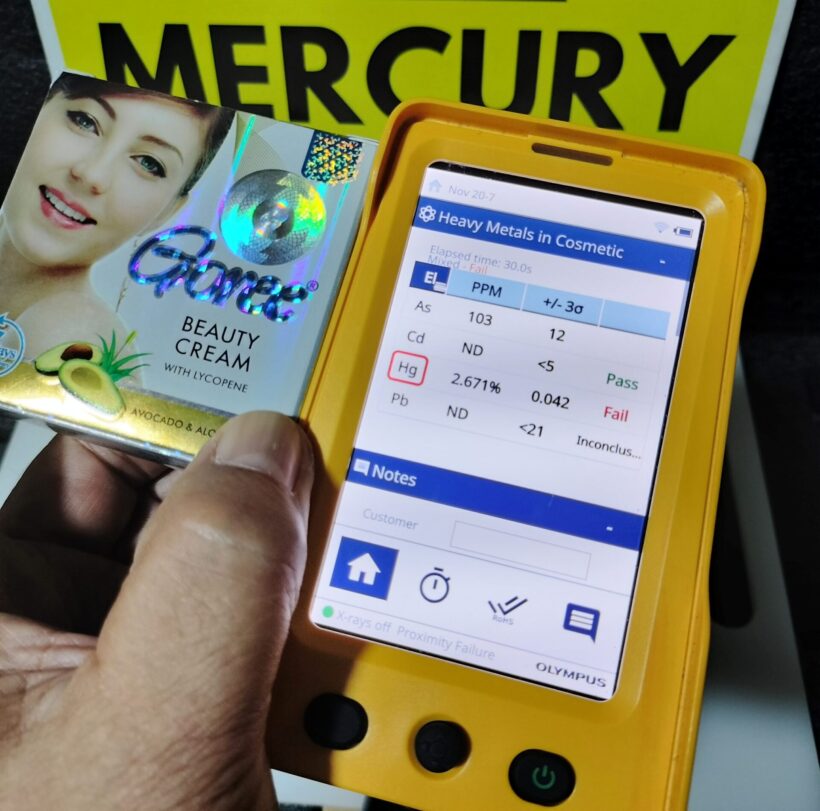
As per XRF screening, this Goree Beauty Cream with Lycopene manufactured in March 2024 is laden with 26,710 parts per million (ppm) of mercury, way above the 1 ppm limit.
The group collaborates with non-government organizations in Southeast Asia, including Thailand, Indonesia, and Malaysia, through IPEN‑SEA, to flag dangerous products and urge governments to enforce the ban on mercury use in cosmetics under the ASEAN Cosmetic Directive and the Minamata Convention on Mercury, Peliño-Golle pointed out.
For example, the Food and Drug Administration (FDA-Thailand) banned 12 of the 14 Thailand-made skin lightening products contaminated with mercury that are sold to Filipino consumers and subsequently reported to the agency by the EcoWaste Coalition, together with the Ecological Alert and Recovery – Thailand (EARTH), Foundation for Consumers (FFC) and IPEN-SEA.
The Philippines ratified the Minamata Convention on Mercury in July 2020, committing itself to the advancement of the treaty objectives of protecting public health and the environment from human-caused mercury releases and emissions. Among other provisions, the treaty provides for a global phase-out of mercury-added products such as skin lightening creams and soaps. This international obligation is supported by existing national laws, particularly the Consumer Act (RA 7394) and the FDA Act (RA 9711), which prohibit adulterated and hazardous cosmetic products.
Despite this strong legal and policy framework, enforcement remains difficult as the smuggling of unauthorized cosmetics with mercury persists, noted Peliño-Golle.
“Mercury-added skin-whitening products—often marketed to women—continue to circulate in informal markets and online platforms, sometimes with extremely high mercury levels. This gap between regulation and practice highlights ongoing challenges in monitoring, enforcement, and public awareness, underscoring the need for stronger implementation of the Philippines’ commitments under the Minamata Convention,” she said.
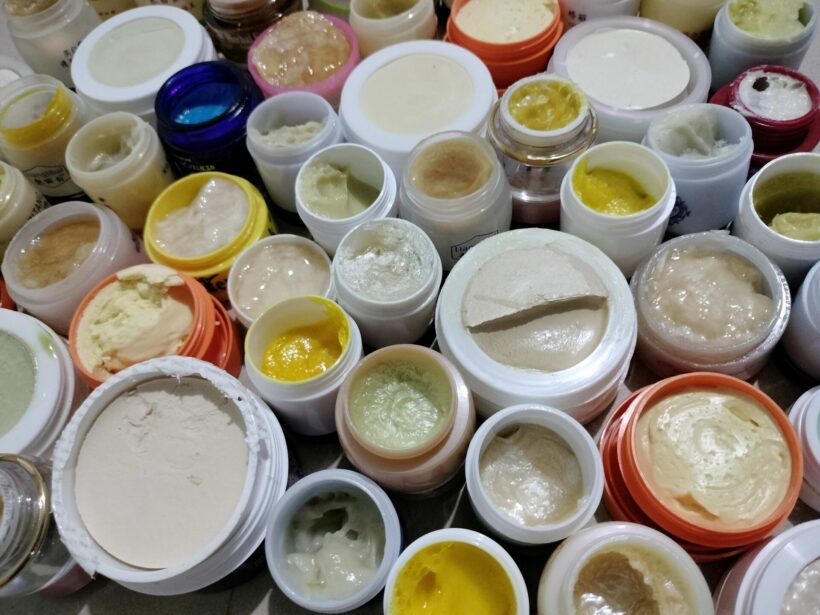
Skin-lightening creams may contain mercury, a highly toxic substance not allowed in cosmetics.
“Ultimately, addressing mercury in cosmetics requires not only regulatory enforcement but also cultural change. Promoting the message that “natural skin color is beautiful” can help dismantle colorism, reduce demand for toxic whitening products, and celebrate natural skin tones—protecting both women’s health and self-esteem,” Peliño-Golle concluded.
The said side event also featured distinguished resource persons from the Ministry of Environment, Forest and Climate Change, Bangladesh (Dr. Farhina Ahmed), Secretariat of the Minamata Convention on Mercury (Atty. Richard Gutierrez), Environment and Social Development Organization (Siddika Sultana), and EEB (Patrizia Heidegger).