by Geri Matthew Carretero, Jhpiego Philippines
Marie Lea Aragon takes her role in cervical cancer prevention very personally. For her, every woman who walks into a health center in Parañaque City represents a responsibility and a promise: to provide timely, respectful care and to ensure no one is lost in the system.
“Many women were afraid before,” Lea says. “They did not know what cervical cancer was, what the cervix was, or why screening was important.” One program and a concerted effort helped change that.
A coordinator at the heart of the program
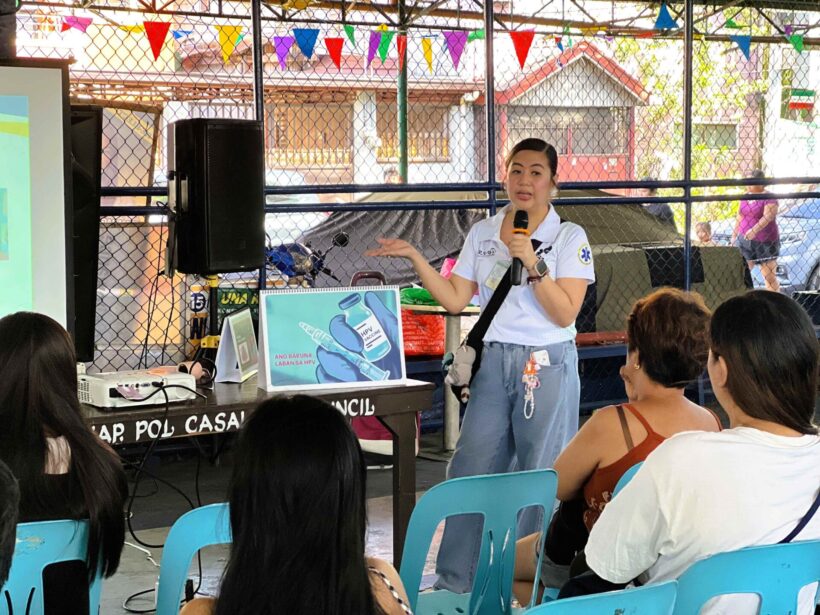
Jhpiego supports health workers like Marie Lea Aragon in helping women through every step of cervical cancer screening, from education to self-sample collection.
Lea is the nurse coordinator for Parañaque City’s Cancer Control Program, coordinating screening and treatment across the city’s primary care facilities. Parañaque is a highly urbanized city, located in Southern Metro Manila along the western coast of Luzon in the Philippines. Lea also manages program data and oversees the release of results. During Phase 2 of the Unitaid-funded Scale Up Cervical Cancer Elimination with Secondary Prevention Strategy (SUCCESS) project, she assumed the additional role of focal point for data, ensuring the smooth management of patient and community-based screening data across health centers, laboratories, and treatment facilities.
Paranaque City works closely with Jhpiego, which led SUCCESS in the Philippines, to increase women’s community access to HPV testing and treatment of precancerous lesions through thermal ablation, supporting with the introduction and preparation for country expansion.
Before SUCCESS, the gaps were clear
Lea began managing the City’s cervical cancer screening in 2015. At that time, awareness was low, and misinformation was common. Encouraging women to get screened was difficult, especially when procedures felt unfamiliar. Using IEC materials later developed through the SUCCESS Project, she conducted community sessions with simple language and visuals to explain cervical cancer and emphasize the importance of early detection.
Data management was entirely via pen and paper methods. Screening lists were written on paper, and treatment required referrals to tertiary hospitals. Follow-ups were inconsistent.
“Because we were using manual reporting, some women were lost during follow-up,” Lea explains. “We no longer knew what happened to them after referral.”
A turning point with the SUCCESS Project
During Phase 2, Jhpiego introduced a client monitoring tool (CMT), a live worksheet accessible to providers and navigators. For Lea, the change was immediate.
“When the CMT was introduced, we immediately saw how advanced and innovative it was,” she recalls. “The data was real-time, and we could see whether the laboratory, nurse, or health provider had already acted on the case.”
Referrals became easier to track; follow-ups became visible, and information was no longer fragmented.
“Coming from manual (pen and paper) recording and reporting, the relief this digital monitoring tool gave us was huge,” Lea says.
Confidence built through data and training
Lea’s confidence in managing services grew alongside the system.
“I became more confident because the data is real-time and complete. You know it is not manipulated, and nothing is missing,” she shares.
The tool was later modified to be QR-based and paperless. Screening results are uploaded as PDFs and linked to each client’s record, including treatment details and before-and-after images of the cervix.
“This is very helpful for women like hotel workers who only have about 20 minutes during their break,” she says.
What changed on the ground
Health workers across barangays were trained in screening and treatment, strengthening coordination.
“All health workers in the barangays are trained,” Lea says. “They can see in the system if a woman has been screened, treated, or followed up.”
Patients noticed the difference. “The feedback from patients has been very positive. There is now a continuity of services,” she adds.
Capacity strengthening also extended to data analysis. Through Jhpiego, Lea was trained in using a statistical software for data management, data analysis, visualization, and reporting—which enabled her to analyze program data and prepare accurate reports for the Department of Health and the city health office.
“The training was very useful in analyzing data and providing accurate information,” she says.
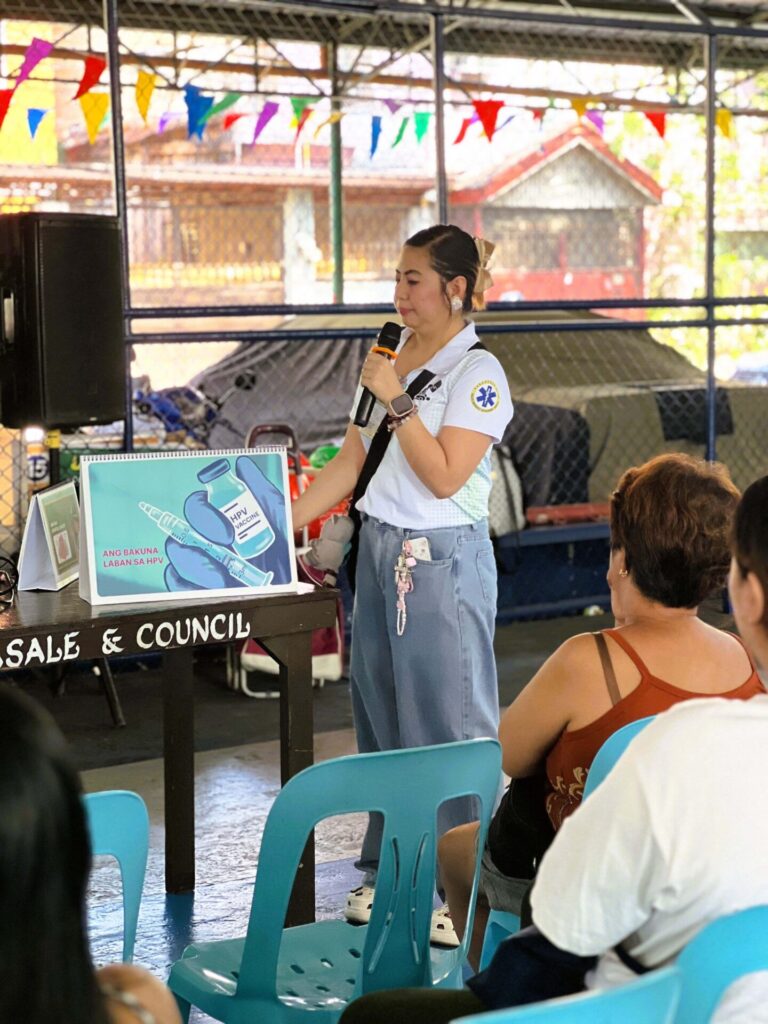
Marie Lea Aragon explains the HPV self-sample collection process, making screening more accessible, private, and woman-centered.
Closing gaps and expanding services
Phase 1 of SUCCESS revealed gaps in the manual release of results and data management. Simple data management solutions during Phase 2 addressed these problems in real-time systems. Lea also received clinical training in cryotherapy and worked with the use of a point-of-care DNA testing platform machine and a thermal ablation device.
“With HPV testing and the thermal ablation device, our work became much easier,” she says.
Scaling up HPV testing and looking ahead
Even after Phase 2, Parañaque City continues to build on these gains. HPV DNA test kits have been budgeted, and self-collection options allow women to collect samples themselves, reducing discomfort and protecting privacy.
“With the improved process, women no longer need to be afraid,” Lea says. “Self-collection is very empowering because they do not have to undergo a procedure that causes discomfort or privacy concerns.”
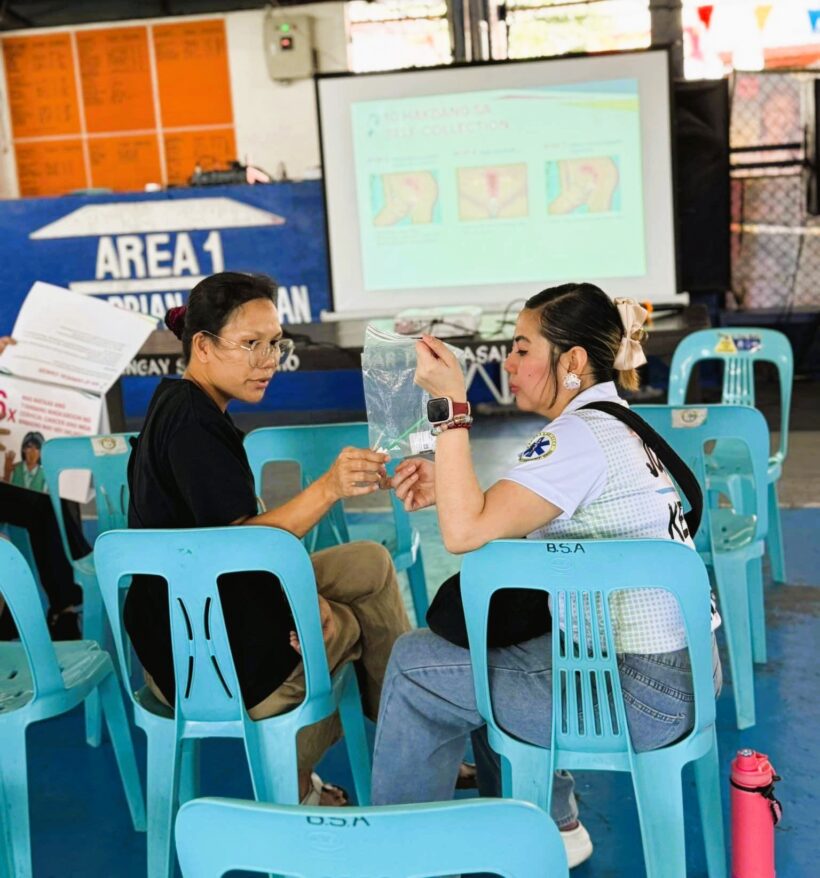
Through self-collection and clear guidance, women are empowered to take an active role in cervical cancer prevention.
Pride, purpose, and a call to action
Lea is proud of how far their program has come.
“I am very proud to be part of the SUCCESS Project because we gained lessons, experiences and insights that enable us to help many women prevent and treat cervical cancer,” she says.
She emphasizes early detection. “I always tell women who come for screening that our goal is for no one to develop cervical cancer because of strong awareness, systems, and the support provided through SUCCESS and Jhpiego. Through screening and early treatment of HPV, we can achieve this.”
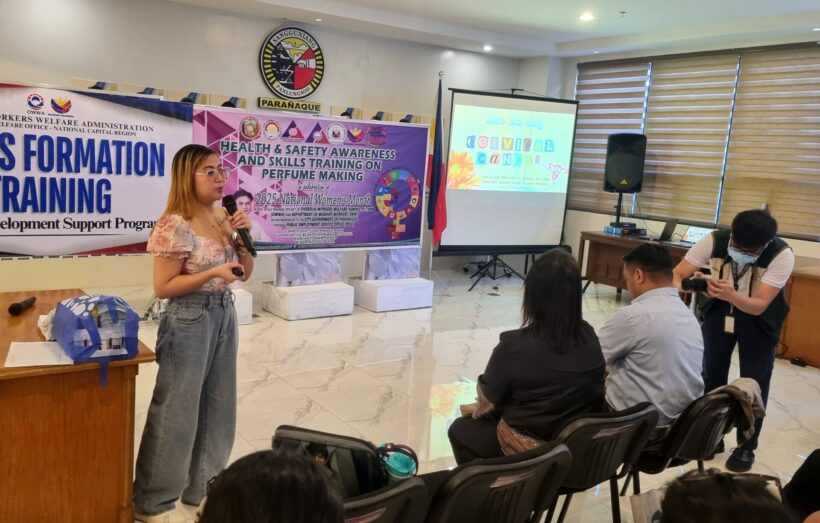
Marie Lea Aragon leads a community session on cervical cancer prevention in Parañaque City, helping women understand the importance of early screening.
For Lea, sustainability is key. She calls on local governments to invest in long-term cervical cancer prevention programs.
“It is important to have policies that make this program sustainable and continuing,” she says. “I call on other cities to ensure that there is a dedicated program for women.”
As Parañaque City scales up, Lea remains hopeful. “It has been an honor to collaborate throughout Phase 1 and Phase 2,” she reflects. “The project has been instrumental in strengthening services and supporting our plans to scale up HPV testing.”
For Lea and the women she serves, the journey continues, grounded in stronger systems, empowered health workers, and the belief that cervical cancer is preventable.
####
Geri Matthew Carretero is a communications specialist and multidisciplinary artist, serving as the communications and KM officer for Jhpiego in the Philippines. Photos by: Geri Matthew Carretero, Jhpiego