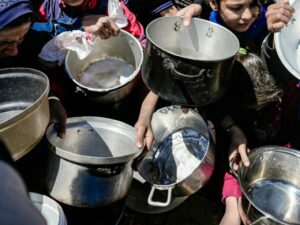
In a statement released on the occasion of World Food Day, observed annually on October 16, the agency warned of the impact of food shortages on children, pregnant and breastfeeding women, older adults, and other vulnerable groups.
According to official figures, 189 of the victims were elderly, accounting for 40.5 percent of all deaths from hunger-related causes.
The Ministry also reported that between 2024 and August 2026, it recorded 158,001 cases of acute malnutrition in children under five years of age. Of these, 28,716 suffered from severe acute malnutrition, a life-threatening condition, while 12.2 percent exhibited stunted growth.
The agency noted that mortality among children under five rose from 13.6 to 33.4 deaths per 1,000 live births between 2022 and 2025. It also projected that 74,200 children will require treatment for acute malnutrition by April 2027.
According to the health warning, more than 1.4 million Palestinians—approximately 67 percent of Gaza’s population—could face critical levels of food insecurity or worse conditions before the end of 2026.
The crisis is unfolding against a backdrop of restrictions on the entry of aid, destruction of infrastructure, and repeated displacements.
Palestinian authorities maintain that the restrictions imposed by Israel have exacerbated food shortages and hindered the population’s access to basic goods.
On August 22, 2025, the Food and Agriculture Organization of the United Nations (FAO), the United Nations Children’s Fund (UNICEF), the World Food Program (WFP), and the World Health Organization (WHO) declared a famine in the Gaza Strip.
According to the Gaza government’s Media Office, the number of humanitarian aid trucks entering the Strip remains below agreed-upon levels, with compliance not exceeding 34 percent.
Palestinian authorities assert that the supplies entering the Gaza Strip are insufficient to meet the population’s needs. The Ministry of Health urged the international community and the United Nations to take urgent measures to ensure the safe, continuous, and unrestricted entry of food, medical supplies, and medications.
It also called for prioritizing care for children, pregnant and breastfeeding women, and the elderly.
The ministry also called for support to restore local food production, which has been affected by damage to farmland, production facilities, and water supply networks.
The destruction of infrastructure and health facilities, coupled with the loss of household income and rising prices, has increased dependence on humanitarian aid in the Palestinian territories, where regular access to supplies remains a challenge.