by Irshad Ahmad Mughal
The world I live in is a cacophony of conflict. It is a landscape scarred by wars and proxy wars, punctuated by the deafening rhythm of violence, strikes, and protests. We have become so accustomed to the turmoil that we can smell the violence in the air. It is a metallic tang of fear that settles over our cities like smog. In this environment of intellectual suffocation, the space for nuance has vanished. We are trapped in a cycle of aggression where the loudest voices advocate for destruction, and hardly a whisper is spared for peace or non-violence.
The traditional avenues for change have failed us. I have lost all hope in the hallowed halls of academia and among the pseudo-intellectuals who dominate our discourse. In the age of social media, the pursuit of truth has been replaced by the pursuit of algorithms. Our thinkers are preoccupied with high rankings and maximum views, their egos tethered to digital validation, rather than thinking deeply to uproot the disease of hatred. They offer band-aids of rhetoric to wounds that require surgery. In this vacuum of genuine leadership, the intellectual elite have become spectators to the very violence they claim to abhor.
Yet, amidst the rubble of these broken institutions, a small, persistent effort flickers. It is a hope that does not come from a lecture hall, but from the playing field. It is the hope embodied by the “4th March for Peace” in my city—an initiative driven not by politicians or professors, but by young kids, friends, and sports-loving people. It is a reminder that the future does not belong to those who argue in air-conditioned studios, but to those who sweat together on the pitch.
Sports is the only universal language left when words fail, and guns speak. It is the antidote to the “intellectual suffocation” of our times. When the world is in turmoil, sports offers a structured form of rebellion—a rebellion of joy against sorrow, and of cooperation against division.
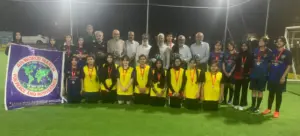
This philosophy of “diplomacy through sports” was vividly demonstrated this time as Karachi and Lahore hosted friends from Bangladesh. These distinguished guests arrived not with political manifestos, but with a shared passion for the beautiful game. In Karachi, Peace Activites and the indefatigable Akhtar Khan hosted the delegation, organizing a series of meetings and events tailored to the Sind Olympics and other educational institutions. The focus was clear: inclusion, activity, and interaction.
The momentum carried on to Lahore, where the spirit of collaboration was hosted by a coalition of the willing: the Future Kick Football Academy, Saleem Khan Soccer School, Ali Garh Degree College, and the Punjab Football Association. These were not just games; they were acts of diplomacy. In a region where borders often mean barbed wire and hostility, the arrival of our Bangladeshi brothers to play Walking Football and Football was a powerful statement. Walking Football, with its emphasis on participation over competition, is perhaps the perfect metaphor for the peace we seek—slowing down the pace of aggression, ensuring everyone is included, and valuing the community over the ego.
This initiative proves that we do not need the permission of the pseudo-intellectuals to create peace. We do not need the validation of academics who are too busy tweeting to notice the world burning. We need the resilience of the sportsman. We need the discipline of the athlete.
The World March for Peace is not just a date on a calendar; it is a mindset. It is the recognition that while the world around us smells of violence, our youth smell of grass, mud, and sweat. These young kids and sports enthusiasts are the true diplomats of the future. They are building bridges that tanks cannot knock down. In a world that teaches children to hate, teaching them to play together is the most radical act of love possible.
If we want to nurture peace, we must look to the sports field. It is there, in the spirit of the game, that we learn to shake hands with our opponents, to accept defeat with grace, and to celebrate victory without arrogance. That is the lesson our leaders and intellectuals have forgotten. Let the stadiums be our parliaments, and let the match whistle be our call to prayer for a better world.
And yet, for all the symbolism of the footballs and the marches, the most luminous image of this peace effort came from Pakistani sports girls. This time, it was they who took the Olympic torch and lit it. In a society that often tells girls to stay in the shadows, they stepped forward, carrying the flame with steady hands and unshakable dignity. They did not wait for the academics or the pseudo-intellectuals to permit them; they simply ran, walked, and played, turning the torch into a beacon that cut through the smell of violence. When a Pakistani sports girl lifts the Olympic flame, she is not just lighting a ceremony—she is announcing that the future of peace will not be male, not sectarian, not violent, but inclusive, youthful, and alive. That is the light we must follow.