By: Salah Uddin Shoaib Choudhury
American conservatives have long warned about the dangers of unaccountable global NGOs – organizations that operate across borders, influence policy, absorb billions in donor funds, but face minimal oversight. Few cases illustrate this danger more clearly than the growing scandal around Nobel laureate Muhammad Yunus and his internationally celebrated “Grameen” empire.
‘Grameen’, the global corporate empire headed by Nobel laureate Muhammad Yunus and long admired by influential international figures such as Bill Clinton, Hillary Clinton, and George Soros, may now face heightened scrutiny from counterterrorism agencies worldwide for its disturbing connections to Osama bin Laden and Al Qaeda.
In March 2003, The Wall Street Journal published a list of Al Qaeda donors based on CIA information, where the name of Mohammed Abdul Latif Jameel – a Saudi businessman and board member of Grameen-Jameel Microfinance – appeared prominently. The report noted that Jameel was one of the key funders of Osama bin Laden, the notorious mastermind behind the September 11 terrorist attacks.
Online corporate records describe “Grameen-Jameel” as a social business established in 2007 as a joint venture between the Grameen Foundation and Grow Well Limited, a subsidiary of the Abdul Latif Jameel Group. According to these records, the company’s mission is to “alleviate poverty in the Arab world” through partnerships with microfinance institutions, providing technical and financial support.
On its LinkedIn page, Grameen-Jameel states that it “was established in 2003 and incorporated in 2007 as a joint venture between Grameen Foundation and ALJ Foundation, a subsidiary of the Abdul Latif Jameel Group”. The company claims to be the first social business in the Middle East, North Africa (MENA), and Turkey devoted to expanding microfinance. As of December 2013, it facilitated more than USD 65 million in financing, reaching over 2.2 million clients through partner institutions across 10 countries in the MENA region and Turkey.
The company is incorporated in Cyprus and headquartered in Dubai’s International Humanitarian City. Its website is currently inactive, and its Facebook page has been suspiciously deactivated.
Cyprus is notorious for shell companies, offshore accounts and shielding the illegal wealth of oligarch and corrupt individuals. It is also known as the gateway of dirty cash to Europe.
Further strengthening the Grameen-Jameel connection is Zaher Al Munajjed, the Chairman of Grameen-Jameel Microfinance Ltd. Al Munajjed also serves as a senior advisor to Mohammed Abdul Latif Jameel, President of the ALJ Group in Saudi Arabia. With more than 25 years of international business experience, he has played a key role in developing vocational training and microfinance programs. A Harvard Business School alumnus and holder of a Master’s degree in French International Law, Al Munajjed is widely regarded as a major architect of microfinance expansion in the MENA and Turkish regions.
The Jameel family’s controversial past
Yousef Jameel – another prominent figure from the Jameel dynasty – was once notorious in London’s casino circles in the 1980s. According to the Daily Mail, he was widely known as a playboy, later becoming entangled in an international child abduction case.
Adding to the controversies, his name appears in Jeffrey Epstein’s notorious “Black Book”, which exposed networks tied to child exploitation and human trafficking.
On July 21, 2004, Jameel and others filed an appeal with the British Court of Appeal following the publication of a Sunday Times report titled “Car tycoon ‘linked’ to Bin Laden” on June 8, 2003. The report claimed that Jameel had been sued by families of the victims of the 9/11 attacks.
On February 3, 2005, Dow Jones & Co., the parent of The Wall Street Journal, filed its own appeal against Yousef Abdul Latif Jameel.
In a landmark ruling on October 11, 2006, the highest court in Britain sided with The Wall Street Journal, affirming the importance of investigative journalism. The ruling highlighted that the article was published as part of a legitimate, public-interest inquiry into terror financing.
The court record stated: “Above the article and headline were photographs of the claimant, Mr. Jameel, his company Hartwell PLC, and the Twin Towers burning on 11 September 2001, with the following words: ‘Accused: Yousef Jameel’s family firm bought the British car dealer Hartwell in 1990. Now he is alleged to have helped fund training for the terrorists who carried out the September 11 attacks’”.
Despite these allegations, Jameel has long been regarded as a successful entrepreneur and “generous philanthropist”. He has contributed significant funding to programs at MIT aimed at reducing poverty and improving water and food security. For his philanthropic commitments and contributions to arts and culture in the United Kingdom, Mohammed Abdul Latif Jameel received an honorary knighthood from Queen Elizabeth II. The honor was announced by the British Embassy in Riyadh.
However, The Guardian later reported that a group of wealthy Saudi businessmen – including individuals close to Jameel – were suing for libel in the High Court over allegations that they may have financed Osama bin Laden’s Al Qaeda network. They chose London because of its reputation as a claimant-friendly environment for defamation cases.
Other suspicious connections of Grameen
There have also been allegations linking Grameen entities to the Muslim Brotherhood, raising further concerns about Yunus’s global partnerships.
Even more disturbing are reports indicating sinister links between Grameen Bank and illegal human organ traders. Individuals unable to repay their loans were allegedly coerced into selling their organs to settle debts – an inhumane practice that demands urgent investigation.
The time has come for a comprehensive international investigation into Muhammad Yunus’s global financial web. The evidence – spanning terror-linked financiers, controversial partnerships, accusations of predatory organ trafficking, and ties to extremist-affiliated networks – demands far more than polite silence from the international community. For too long, Yunus’s reputation has shielded his empire from the scrutiny it deserves. With global security at stake, counterterrorism agencies must finally ask the difficult questions that powerful elites have avoided for decades.
About the Author:
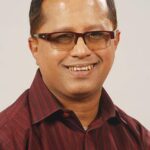 Salah Uddin Shoaib Choudhury is an award-winning journalist, writer, and Editor of the newspaper Blitz. He specializes in counterterrorism and regional geopolitics. Follow him on X: @Salah_Shoaib
Recipient of Freedom to Write Award from PENUSA (2005)
Moral Courage Award from AJC (2006)
Monaco Media Award from Prince Albert-II (2007)
Key to Englewood (NJ) from Mayor Michael Wildes (2007)