We publish the collective interview with the New York group Cycling x Solidarity NYC , inspired by the similar group in Chicago.
When was your group founded?
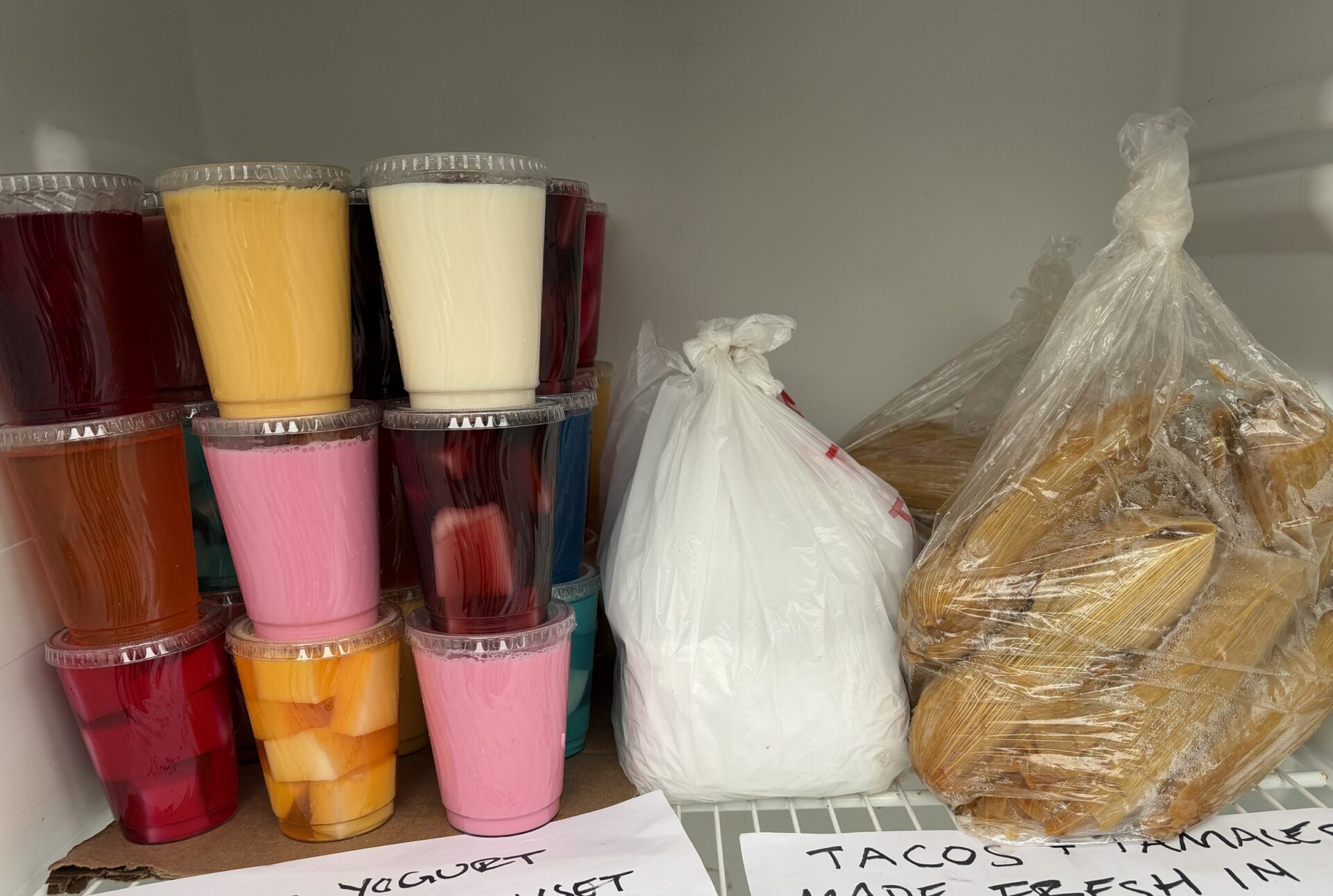
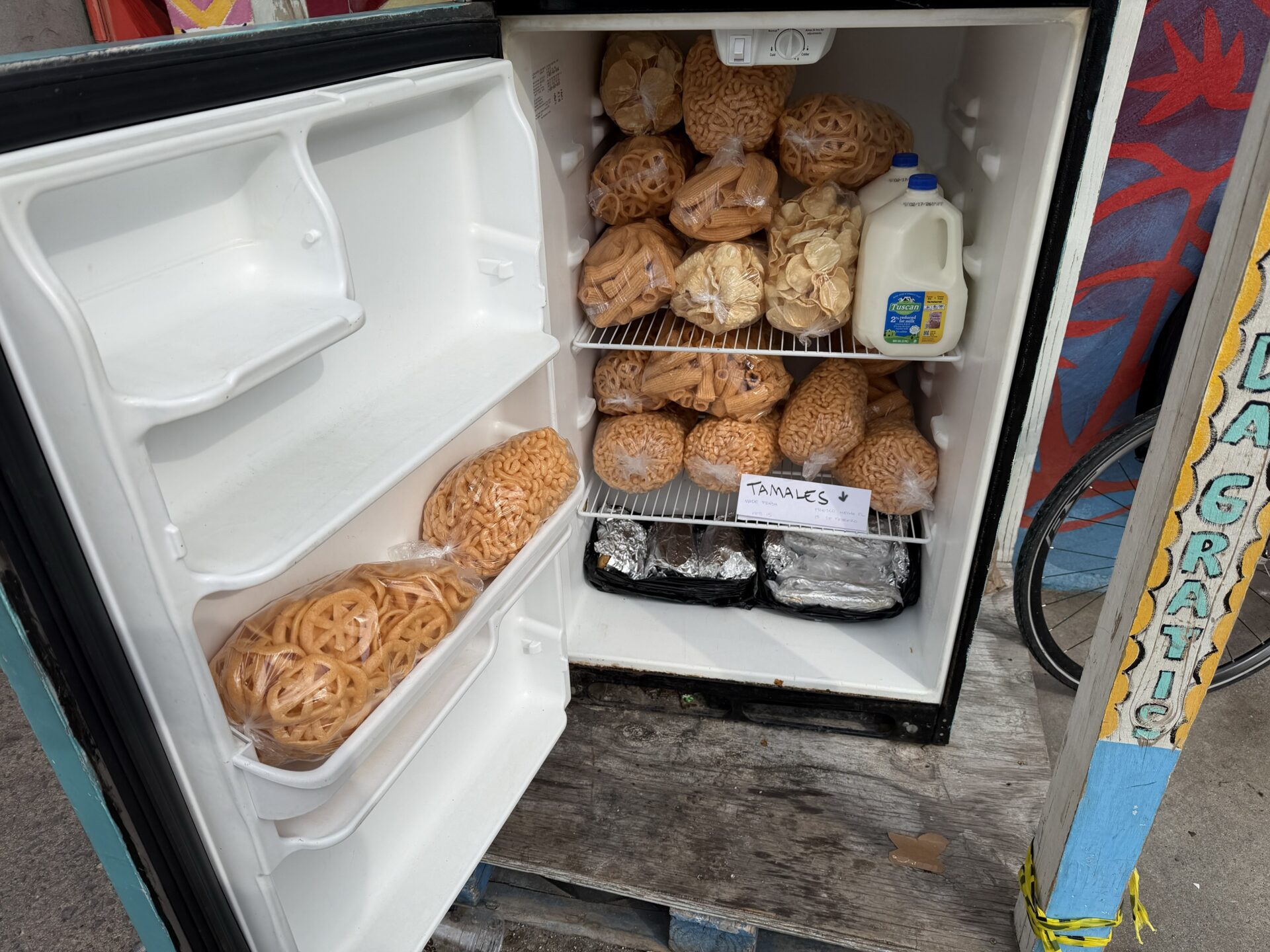
We founded Cycling x Solidarity NYC in October 2025. I had come across an article about Cycling x Solidarity Chicago, and the concept struck me as both beautiful and easily replicable. I knew others who had been feeling the same quiet urgency to do something tangible. So, with fire in our hearts, I reached out to the Chicago organizers, who generously shared their guidance. Within a week, we held our first ride. There were just three of us. Our plan was modest: introduce ourselves to vendors and hand out flyers. Instead, we sold out one churro vendor entirely and bought all the tamales from another. The joy and gratitude they expressed is hard to put into words. We filled one community fridge and handed the rest off to a local pantry. That first ride has stayed with me—proof that one morning of solidarity can restore a sense of relief and possibility. With Chicago’s go-ahead, we decided to carry their name forward—to prove that good ideas travel, take root, and can feed a community.
On February 6th, Mayor Zohran Mamdami issued an executive order to protect immigrants in New York from ICE raids. Has this courageous decision had a positive impact on the situation?
Mayor Mamdani’s executive order is a meaningful and courageous act—and it matters that New York has a mayor willing to use the full weight of his office to protect its people. That said, policy and lived experience often move at different speeds. Even when legal protections are strengthened, fear and economic consequences can persist. Will Mayor Mamdani’s Executive Order directly help these communities? I believe so. But rebuilding a sense of safety will take more time, and adequate enforcement of such policies is another question entirely.
It’s also important to recognize that the current climate of fear extends well beyond undocumented immigrants. Lawful permanent residents, visa holders, DACA recipients, asylum seekers, and even U.S. citizens have been caught up in enforcement operations, detained unlawfully, and in some instances killed.
With street vendors specifically, the vulnerabilities run deep. Long before ICE budgets were expanded to rival the size of the world’s 15th largest army, vendors were already operating under a restrictive, decades-old permitting system that caps licenses and forces many to work without proper authorization—leaving them exposed to steep fines, confiscation (and waste) of their food, and potential consequences for their legal immigration status.
The broader picture is alarming too… In New York City alone, tens of thousands of legal refugees, asylees, and people with Temporary Protected Status have already lost SNAP eligibility as a result of the One Big Beautiful Budget Act and in less than a year, over a million New Yorkers are at risk of losing their health coverage. Hunger will inevitably rise as a result. More children are already arriving at school hungry, while others are no longer attending at all—kept home by fear of detainment. As families withdraw from public life, vendors and small businesses in immigrant neighbourhoods alike have reported to our group a significant drop in sales.
All this to say, a quick recovery as a direct result of this executive order is unlikely. If there’s a place for faith in a brighter future, I do believe Mamdani will wield the full power of his office to hopefully change the course New York is currently on.
What are your activities?
We organize monthly bike rides where we raise funds for food in advance, ride together to purchase as much food as we can carry from street vendors and then redistribute it back into the community. The goal is twofold: to support vendors whose livelihoods and safety are increasingly precarious, and to redirect their fresh, home-cooked food to neighbours facing food insecurity. The food is distributed to community fridges, local pantries, unhoused neighbours, and anyone who needs a meal. Every ride is designed to create immediate, practical impact. At its core, Cycling x Solidarity NYC uses passionate New Yorkers and bicycles to move nourishment from one corner of our community to another.
Are you in contact with other activists in New York and other cities?
We are in contact with other groups in New York and beyond—primarily to share best practices, learn from each other’s successes and setbacks, and generally lifting each other up. The challenges we are tackling are bigger than any one organization, and by learning from others—sharing resources, amplifying each other’s voices, and showing up for one another—is how we will sustain our efforts moving forward. The support we’ve received from other groups has been humbling and instrumental to our growth.
The Chicago group in particular has been extraordinarily generous with us. They didn’t just inspire the idea, they have actively championed our work, sharing their hard-won organizing wisdom, amplifying our presence on social media, and connecting us with volunteers we never would have reached on our own. They’ve been our single biggest source of new volunteers, and we are deeply grateful for that.
What practical and emotional consequences does your commitment to helping vulnerable people such as undocumented immigrants have for you?
History—personal, local, and international—has always been my favourite subject because it teaches one essential lesson: pay attention. What has happened before returns under different names, in different moments, but with familiar consequences. History is not just about the past. It is a mirror that contextualizes the present. And our present in the U.S. reflects what happens when too many of us fail to stand up for one another, independent of differences. My commitment to vulnerable communities is rooted in the understanding that things can always get worse, if we let them, and that anyone’s community can quickly become vulnerable.
Practically, the upstart of our group has required time, energy, and resources. It has meant coordinating and feeding the effort during downtime and asking strangers for help.
Emotionally, every ride has been heavy, hopeful, and energizing. Heavy, because once you witness vulnerability up close, you cannot unsee it. Hopeful, because of the warmth and generosity of everyone who has shown up. And of the vendors themselves, who deserve far more recognition than they receive. Long before the political turbulence of recent years, these were people who always woke before dawn, stood in the cold and rain, and fed this city every single day. They have always been the quiet heroes of New York’s neighbourhoods. That was true before, and it remains true now.
And energizing, because solidarity is contagious. There’s nothing quite like biking alongside new friends, seeing a vendor’s expression when you ask to buy them out, filling refrigerators with their home-cooked food, and returning an hour later to find it empty.
In a city often defined by its transactional pace—where we’re conditioned to weigh every interaction against risk and reward—there’s something quietly radical about mutual aid. It invites people back into a different way of relating to their neighbours, one rooted in care rather than calculation.
Returning to Mamdani, in Italy his electoral campaign and election, which we as Pressenza followed with numerous articles, aroused great interest and hope. Almost two months after taking office on January 1st, has he already taken steps to begin fulfilling some of his ambitious promises, for example regarding free childcare services and free public transport, to be financed by increasing taxes on the wealthiest residents?
Based on everything I’ve followed so far, Mamdani appears to be taking his promises seriously and doing everything within his power to improve the lives of all New Yorkers. There will inevitably be pushback, and change will almost certainly come incrementally. But there is something meaningful about having a mayor in office with the energy and desire to right wrongs and repair an ailing system. When a young grassroots coalition can drive that kind of swift shift in electoral outcomes—as was the case with Mamdani—the only real response is hope.