The Taliban, the TTP and the Limits of Islamabad’s Regional Power — Why Pakistan Is Confronting the Consequences of Its Own Afghanistan Policy
by Chrysoula Asteriadou
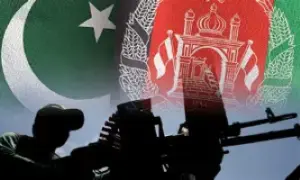
The latest escalation between Pakistan and Afghanistan exposes a strategic failure that Islamabad can no longer contain through military pressure or diplomatic manoeuvring. The return of the Taliban to power in 2021 did not deliver the strategic alignment Pakistan had anticipated. Instead, Islamabad now faces an increasingly autonomous Afghan leadership, a resurgent Tehrik-i-Taliban Pakistan (TTP) and growing insecurity along its western border. The central paradox is difficult to ignore: the strategic depth Pakistan sought in Afghanistan may have become one of its greatest strategic vulnerabilities.
The latest incidents illustrate the seriousness of the crisis. On 1 November 2026, Pakistani and Afghan border forces exchanged fire, temporarily closing the strategically important Torkham crossing for approximately five hours. According to Dawn, mortar shelling also killed a civilian near Angoor Adda. On 11 November, a TTP attack on a police convoy in Pakistan’s Kohat district killed ten police officers and eighteen militants, according to Pakistani authorities. The organisation claimed responsibility. These developments, reported by Dawn and FDD’s Long War Journal, demonstrate that the confrontation has evolved beyond isolated border incidents into a broader regional security challenge.
The origins of the crisis lie in Pakistan’s longstanding efforts to maintain influence over Afghanistan. Since the 1990s, elements of Pakistan’s military establishment, particularly those associated with the Inter-Services Intelligence Directorate (ISI), cultivated close relationships with the Afghan Taliban. Islamabad viewed the movement as an instrument for limiting Indian strategic influence and securing what Pakistani strategists traditionally described as strategic depth.
This relationship extended beyond diplomacy. The UK Parliament’s research briefing on Afghanistan documents evidence of financial assistance, training, weapons and intelligence provided to the Taliban by individuals within or connected to the ISI during the 2001–2021 US-led intervention. Pakistan has consistently denied providing military support, but its historical relationship with the movement remains central to understanding the present crisis.
More fundamentally, Pakistan’s predicament reflects the consequences of a selective approach to militancy. For decades, elements within its security establishment distinguished between organisations threatening the Pakistani state and those considered useful for advancing regional objectives. Islamist networks were consequently treated not consistently as security threats, but at times as instruments of geopolitical influence. Islamabad is now confronting the consequences of this policy: it cannot credibly demand the dismantling of militant networks across its borders while ignoring its own historical role in cultivating the environment from which some of them emerged.
The Afghan Taliban’s return to power strengthened the ideological and symbolic position of the TTP, an organisation seeking to overthrow the Pakistani state and establish an Islamist system of governance. Although the two movements are distinct, they share historical, ideological and personal connections. Islamabad accuses the Afghan authorities of allowing the TTP to operate from Afghan territory; Kabul rejects these allegations and refuses to accept responsibility for Pakistan’s internal security problems.
A 9 November 2026 analysis by the London School of Economics highlights how Pakistan’s attempt to instrumentalise the Taliban has increasingly worked against its original objectives. Kabul is pursuing more autonomous relations with China, India, Iran and Russia, while Islamabad struggles to convert its historical influence into political concessions.
There is also a fundamental contradiction in Pakistan’s position. Islamabad invokes sovereignty and territorial integrity when demanding that Afghanistan prevent militant attacks from its territory, yet its own historical policy involved repeated attempts to shape Afghanistan’s internal political order. This does not invalidate Pakistan’s legitimate security concerns, but it raises serious questions about the consistency of its foreign policy.
The failure also raises questions of institutional accountability. Pakistan’s military establishment has exercised considerable influence over regional policy for decades, yet the strategic costs have rarely produced a fundamental reassessment. It cannot indefinitely claim the benefits of past interventions while treating their consequences as exclusively external security problems. A credible change of course requires more than military adjustments along the Afghan border: it demands a reassessment of the strategic doctrines that made the pursuit of strategic depth possible.
Since the ceasefire arrangements brokered by Qatar and Türkiye in October 2025, successive diplomatic initiatives have attempted to prevent renewed hostilities. The joint statement issued by Türkiye on 30 October 2025 confirmed the continuation of the ceasefire and envisaged a monitoring and verification mechanism.
China subsequently facilitated discussions in Urumqi between 1 and 7 April 2026. Beijing described the talks as constructive and confirmed that both sides had agreed to avoid escalation, although no lasting settlement emerged. China’s Foreign Ministry expressed its readiness to continue facilitating communication.
The limitations of these efforts became particularly visible at the eighth Moscow Format consultations on 5 October 2026, which ended without a joint communiqué after Pakistan and Afghanistan failed to agree on language concerning terrorist organisations operating from Afghan territory. Dawn reported on the disagreement, which exposed the difficulty of establishing even a common diplomatic position.
The central obstacle remains the TTP. Pakistan demands verifiable action against militant networks, while the Afghan Taliban reject the premise that they should be held responsible for Pakistan’s internal security challenges. Qatar, Türkiye, China and Russia can facilitate dialogue, but they cannot impose political agreement where the parties fundamentally disagree over responsibility.
For the European Union, the confrontation presents a dual challenge: supporting legitimate counterterrorism efforts while preventing military escalation and further humanitarian deterioration.
During her visit to Islamabad on 1 June 2026, EU High Representative Kaja Kallas acknowledged Pakistan’s right to defend its citizens, while stressing that “dialogue, not air strikes, are the best-off ramp in this situation.” Her remarks, recorded in the official EEAS press conference transcript, reflected the EU’s preference for diplomatic de-escalation.
The Union reinforced this position in its 28 February 2026 statement, calling for an end to hostilities, civilian protection and effective action by the Afghan authorities against terrorist organisations. On 22 October 2026, the tenth round of the EU–Pakistan Bilateral Counterterrorism Dialogue again highlighted concerns about Afghanistan’s impact on regional security and the need for stronger counterterrorism cooperation, according to the EEAS.
European engagement with Islamabad should not, however, become an unquestioning endorsement of Pakistan’s security narrative. The TTP threat is real, but Pakistan’s historical reliance on militant proxies has contributed to the strategic conditions underlying today’s crisis. Counterterrorism cooperation must therefore be accompanied by an expectation that Islamabad abandon the use of non-state armed actors as instruments of regional influence. Otherwise, international support risks addressing the symptoms while leaving some of the underlying causes untouched.
The EU’s relationship with the Taliban authorities presents another dilemma. Brussels refuses formal recognition while maintaining diplomatic contacts and humanitarian assistance. On 13 August 2026, the EEAS reiterated that engagement does not constitute recognition and stressed Afghanistan’s importance to European security.
On 5 November, European Commission Executive Vice-President Henna Virkkunen reaffirmed that any change in the EU’s approach would depend on measurable progress in human rights, particularly the rights of women and girls.
Nevertheless, this distinction has become increasingly difficult to sustain politically. On 23 June 2026, European Commission representatives and fifteen EU member states held technical discussions with a Taliban delegation in Brussels concerning the return of Afghan nationals. The Commission maintained that these discussions did not amount to political recognition.
The initiative prompted criticism from French MEP Mounir Satouri, who on 10 November questioned the compatibility of cooperation on deportations with European democratic principles and the EU’s non-recognition policy. His intervention, reported by Amu TV, was not an official European Parliament position but highlighted a genuine political contradiction.
The humanitarian implications are substantial. In June 2026, the EU announced €20 million in additional funding through the International Organization for Migration to support Afghan returnees and displaced populations. According to the EEAS, more than 2.8 million undocumented Afghans returned from Iran and Pakistan during 2025. The EU must therefore balance migration management and regional security with the protection of vulnerable populations and fundamental rights.
The Pakistan–Afghanistan confrontation extends well beyond a contested border. Prolonged instability could intensify displacement, disrupt regional trade and create further opportunities for extremist networks, with consequences for European security involving terrorism, organised crime, narcotics trafficking and migration.
Pakistan now confronts the long-term costs of a security doctrine that repeatedly treated militancy as an instrument of statecraft. Its military establishment helped cultivate a regional political environment that it can no longer control. Military pressure may demonstrate resolve or temporarily disrupt militant networks, but it cannot resolve the underlying political contradictions. Without verifiable security arrangements, sustained diplomacy and a fundamental reassessment of its Afghanistan policy, Pakistan risks remaining trapped in a cycle of retaliation and instability.
For the EU, the challenge is to defend Pakistan’s legitimate security concerns without endorsing military escalation, maintain communication with Kabul without legitimising Taliban rule, and pursue migration cooperation without compromising fundamental rights. Brussels should support a regional diplomatic framework based on verifiable counterterrorism commitments, civilian protection and sustained dialogue, while making clear that the use of militant proxies as instruments of foreign policy is incompatible with lasting regional security.
Ultimately, the crisis is a warning about the limits of proxy politics, the dangers of instrumentalising ideology and the long-term costs of confusing influence with control.
Pakistan’s pursuit of strategic depth has produced strategic blowback. Islamabad must confront not only the security consequences of its failed Afghanistan policy, but also the institutional assumptions that made it possible. For Europe, preventing this failure from becoming a wider regional security crisis is no longer a distant foreign-policy concern. It is a matter of direct strategic interest.
####
About the Author:
 Chrysoula Asteriadou. Social Worker with deep knowledge in Intercultural Education and Mental Health. A Social Policy specialist with a degree from Panteion University and a background in Social Work, specializing in mental health, intercultural education, and counseling, she possesses extensive professional and volunteer experience providing psychosocial support to vulnerable populations, refugees, and migrants directly impacted by modern geopolitical crises. Her field engagement with humanitarian organizations allows her to actively implement crisis management and social inclusion strategies for communities displaced by international instability.