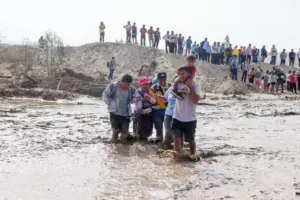
In light of the imminent arrival of the El Niño phenomenon—which, according to all forecasts, will be of “extraordinary” or “very strong” magnitude in the central Pacific—civil society is organizing to mitigate its impacts. These include above-average rainfall and precipitation, extreme temperatures (reaching up to 36°C), territorial paradoxes (such as overflowing rivers and mudslides in some areas, contrasted with water shortages or droughts in others), and significant risks to infrastructure related to drinking water, agriculture, transportation, energy, and public health.
The Development Studies Network (Redes) has issued a challenge via its LinkedIn account to the incoming administration of the Loreto region (located in the country’s northeastern rainforest), urging them to establish a contingency plan to address the El Niño phenomenon. This is particularly critical as the event will coincide with a political transition (the new regional government is set to take office in January 2027). The concerning reality is that this situation applies to the entire country… Are we prepared?
El Niño Amidst a Change in Administration
Regarding the Loreto region, Redes points out that “the rainfall will coincide with the change in administration, as new regional authorities take office on January 1, 2027, while the critical period for flooding is expected between January and March of that year. The current administration must ensure that plans are well underway so that the incoming administration does not have to start from scratch in the middle of an emergency,” the organization emphasized.
This proposal was accompanied by a risk assessment for Loreto, which identifies 116,000 people at high risk, 29,000 homes exposed to flooding, and 123 healthcare facilities and 1,502 educational institutions also at risk. How should the emergency be addressed? Redes proposes “approving contingency plans, defining actions and resources for emergencies, and coordinating among regional, local, and national authorities. It is this regional government that must put this contingency plan in place,” stated Cynthia Sánchez, economic spokesperson for Redes.
The call from Redes opens a debate on the preventive measures required for the El Niño phenomenon, which has caused losses nationwide in previous years. Its initial impacts are already being felt, prompting the Peruvian government to allocate more than 4 billion soles to address its effects. Furthermore, efforts are underway to clear riverbeds and waterways at critical locations across the country, and preventive actions are being coordinated in conjunction with the UN World Food Programme.