By Kamal Mosharef (Dhaka Bureau)
As one of South Asia’s emerging economies, Bangladesh draws its primary strength from its hardworking population, the sharp innovative mindset of its youth, and marginal micro, small, and medium enterprises (SMEs).
Ranging from rural development to urban mobility, the sweat and intellect of these young entrepreneurs drive every wave of the economy. From Fast Moving Consumer Goods (FMCG) distribution businesses to the country’s vast, promising tourism sector, youth are making themselves self-reliant while keeping the wheels of the national economy turning.
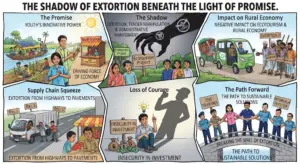
However, behind this bright potential lies a cruel, invisible wall- local extortion, tender manipulation, and administrative harassment- which is nipping the self-employment dreams of thousands of youths in the bud.
Adverse Impacts on Ecotourism and Rural Economy
Every corner of riverine Bangladesh conceals immense potential for the tourism industry. Ecotourism centered around waterways and roads not only contributes to national economic growth but can also transform the living standards of local communities.
Yet, when an entrepreneur attempts to build a new eco-friendly transport or tourism platform using their hard-earned savings and creativity, local extortionists and influential syndicates emerge as their primary obstacles. Intriguingly, many individuals involved in these illegal circles possess the financial capacity to invest legitimately. However, they hold zero interest in creating employment or driving production; instead, extracting a share from the earnings of others’ labor remains their core profession.
The Distribution Sector: Extortion from Highways to Pavements
The crisis is not confined to tourism alone; its detrimental impact is equally evident in the supply chain of essential commodities. When distribution vehicles set out toward their destinations, organized extortion runs rampant at various points along highways and regional routes.
From small roadside tea stalls and pavement vendors to medium-scale wholesale distribution, the custom of paying regular ‘protection money’ (moshahara) or cuts at fixed intervals places traders at extreme risk. Operated in collusion with dishonest administrative personnel, this syndicate not only drives small-capital entrepreneurs to ruin but also exerts extra pressure on ordinary consumers by inflating commodity prices in the market.
Three primary barriers facing small enterprises include: organized extortion at highways and local transport points; the moshahara culture perpetuated by corrupt administrative officials and influential figures; and a distinct lack of legal protection and safe investment environments for entrepreneurs.
Rising Unemployment and Insecurity in Investment
In Bangladesh’s current economic reality, it is impossible for the state machinery alone to secure government jobs for one hundred percent of the youth. The private sector, particularly micro-enterprises and startups, plays an indispensable role in eradicating unemployment.
The root cause of degrading law and order and rising crime rates lies precisely within this unemployment crisis. Yet, when an entrepreneur realizes that extortion and corruption syndicates hold more power than their honest labor, they lose the courage to invest. As a direct consequence, the natural momentum of job creation stalls.
Pathways to Sustainable Solutions: Imperatives for Policymakers
Achieving economic liberation for the country and making the youth self-reliant demands the immediate establishment of a safe and investment-friendly environment. In this regard, rigorous and visible actions are required from relevant policymakers and the administration:
Zero Tolerance Policy:
Crushing all local and transport-sector extortion networks with an iron fist, regardless of political affiliation.
Administrative Transparency: Permanently halting police harassment and the practice of collecting protection money along highways and business routes.
Entrepreneur Protection Cell: Establishing a dedicated ‘Protection Cell’ to provide legal assistance to small and medium enterprises and ensure harassment-free business operations.
If the intellect of the youth and the dreams of marginal entrepreneurs are lost to unorganized crimes like extortion, the nation’s future economic growth will face severe threats. Removing these invisible barriers must now become a paramount priority for the state to build a prosperous, self-reliant, and just Bangladesh.

Kamal Mosharef:
Kamal Mosharraf is a senior journalist and writer. He is associated with the Pressenza- Dhaka Bureau as a contributor.


