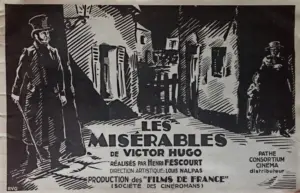
Two centuries after Victor Hugo, misery no longer fits within the streets of Paris: it has become a global geography.
“The world has never been so rich, so technological, or so powerful; nor has it ever had so many reasons to be ashamed of those it still leaves behind.”
“Victor Hugo wrote about France. We will have to write about the world.”
“Victor Hugo wrote about the miserables of one society. The twenty-first century will have to explain why, after conquering the atom, space, and artificial intelligence, it still has not managed to conquer misery.”
I. Jean Valjean Still Steals Bread
In 1862, Victor Hugo published Les Misérables and transformed the suffering of the forgotten into an indictment of an entire society. Jean Valjean had initially been sentenced to five years in prison for stealing a loaf of bread to feed his sister’s hungry children. His successive escape attempts extended his imprisonment to nineteen years. Hugo was not writing merely about a thief. He was posing a much more uncomfortable question: who is truly responsible when a human being must break the law in order to eat?
More than one hundred and sixty years have passed. Humanity built airplanes, satellites, nuclear power plants, computers, robots, and artificial intelligence. It produces enough food to feed billions of people and possesses wealth that Victor Hugo could hardly have imagined. And yet there are still human beings searching for food among the rubble, families living for years in refugee camps, and men, women, and children crossing deserts and seas because remaining where they were born may be more dangerous than attempting to escape.
Jean Valjean belongs to the nineteenth century. His desperation continues to walk among us.
Perhaps the greatest failure of progress is not that poor people still exist. It is that we learned how to reach the Moon before learning how to prevent someone from going hungry.”
II. Gaza, the Miserables Beneath the Rubble
In Gaza, Victor Hugo’s literature ceases to seem old. Displaced families, destroyed homes, damaged hospitals, children waiting for food, and a population dependent on humanitarian aid remind us that contemporary misery is not always born from the absence of wealth. It can also be produced by war, blockade, destruction, and decisions made far away from those who ultimately pay the consequences.
The difference from the nineteenth century is disturbing. Victor Hugo had to imagine the barricades of Paris and then describe them in words. We can watch the ruins practically in real time. Satellites record the destruction. Journalists transmit images. International organizations publish reports. Phones carry suffering all the way to our tables. Never before has such a large part of humanity possessed such an extraordinary ability to simultaneously observe the pain of another part of humanity. And yet observing does not mean preventing.
“Victor Hugo had to imagine the barricades. We can watch them on a phone while having dinner. Perhaps that is one of the most uncomfortable differences between the miserables of 1862 and the miserables of the twenty-first century.”
III. The Camps Where Entire Generations Wait
There are places where the word temporary has lost its meaning. In Sudan, Chad, the Democratic Republic of the Congo, Syria, Jordan, Lebanon, and Bangladesh, millions of displaced people and refugees survive inside camps or settlements that were once conceived as temporary solutions. The Rohingya expelled from Myanmar represent one of the most dramatic examples. Some children are born refugees, grow up as refugees, and may become adults without ever having known what the rest of us simply call home.
There, time works differently. Wars end or change names, governments fall, borders shift, and international cameras eventually leave. The camp remains. A tent becomes a home, food distribution becomes routine, and a humanitarian emergency eventually turns into a permanent form of existence.
Victor Hugo described human beings trapped by the social structures of his time. More than one hundred and sixty years later, we have built something even more disturbing: places where waiting can be inherited from parents by their children.
“We are no longer talking only about refugees. We are talking about permanent geographies of despair, where entire generations can be born waiting for what the rest of the world calls life to someday begin.”
IV. The Mediterranean and the New Barricades
Victor Hugo’s barricades were built with cobblestones in the streets of Paris. Those of the twenty-first century have radar, thermal cameras, barbed wire, patrol boats, drones, and biometric systems. Before them, the same character who crossed the pages of Les Misérables continues to appear: the human being trying to escape an existence he considers unbearable.
Between Africa and Europe, thousands of migrants cross deserts before even reaching the Mediterranean. Others attempt to reach Ceuta and Melilla, cross toward the Canary Islands, or board boats bound for European shores. Some arrive. Others disappear into a sea that connects two continents separated by only a few miles and by infinitely greater economic differences. On the other side of the Atlantic, the border between Mexico and the United States reproduces another version of the same dilemma. The languages, governments, and fences change; the desperation that drives people to walk remains.
The poor person of the nineteenth century could leave the countryside in search of a city. The contemporary miserable crosses countries, deserts, seas, and digitized borders simply searching for another place to begin.
“Never have we built borders so technologically intelligent to confront a desperation so ancient.”
V. The United States, Wealth and Contradiction
The United States represents one of the most extraordinary paradoxes of the twenty-first century. The world’s greatest economic power brings together some of the most advanced universities, technology companies, scientific centers, and military capabilities in history, while within its own cities enormous fortunes coexist with homeless people, wealth inequality, and permanent migration pressure along its southern border. It is not an exclusively American contradiction, but there it assumes dimensions that are difficult to ignore.
Washington devotes enormous resources to defense, intelligence, border security, and international military presence. Many of those investments respond to real threats and global responsibilities. Yet Victor Hugo would probably ask a much more elementary question: how much does it cost to permanently contain the consequences of inequality, and how much would it cost to combat some of its causes?
Because security also begins long before a border.
“Perhaps humanity has learned perfectly well how much it costs to defend itself from desperation, but it still has not calculated how much it would cost to prevent that desperation from existing.”
VI. China, the Giant Experiment Against Poverty
Over the past several decades, China has carried out one of the greatest reductions in extreme poverty in modern history. Hundreds of millions of people substantially improved their material living conditions as the country industrialized, built cities, railways, highways, ports, and factories, and became the largest manufacturing power on the planet. For any serious analysis of the miserables of the twenty-first century, ignoring that transformation would simply be absurd.
But China’s success immediately raises another question. Can such an experience be projected into other countries without creating new relationships of dependency? China builds infrastructure in Africa, finances projects, purchases minerals and raw materials, and has become one of the continent’s leading trading partners. For many African governments, it represents investment and an alternative to the West; for its critics, there are also risks associated with indebtedness, export dependence, and economic asymmetries.
Victor Hugo would probably examine both sides before passing judgment.
“Lifting millions of people out of poverty constitutes an achievement. The truly universal challenge begins when the development of a great power also allows those living beyond its borders to prosper.”
VII. Russia, Europe, and India Before the Mirror
Russia, the European Union, and India represent three profoundly different realities, but none can completely escape Victor Hugo’s question.
. Russia possesses some of the largest reserves of natural resources on the planet while a prolonged war consumes lives, money, and infrastructure that could have other destinations.
. Europe spent decades building one of the most advanced social protection systems in the world, yet watches from the opposite shore of the Mediterranean as thousands of human beings risk their lives trying to reach precisely that security.
. India represents another paradox. It is a nuclear, technological, and space power, possesses a gigantic industrial base, develops infrastructure, and is advancing toward the top ranks of the global economy. At the same time, a significant part of its population continues to face profound social and economic inequalities.
Three models. Three histories. Three centers of power. And the same question crossing their borders.
“The lions may have different flags. The miserables recognize hunger perfectly well in any language.”
VIII. Africa, the Rich Continent Inhabited by Too Many Poor People
Africa is not a poor continent. That phrase, repeated for generations, confuses the poverty of millions of its inhabitants with the extraordinary wealth of the territory where they were born. Beneath its soil lie cobalt, copper, uranium, gold, diamonds, oil, gas, lithium, and other strategic minerals indispensable to the global economy. Above them stretch enormous agricultural areas, vast river systems, and a young population that during this century will represent a growing proportion of humanity.
And yet, in the Democratic Republic of the Congo, the Sahel, Sudan, and numerous African regions, that wealth coexists with extreme poverty, armed conflicts, displacement, and refugee camps. For centuries, human beings turned into slaves, minerals, oil, and raw materials left the continent. Today, resources indispensable for manufacturing electric vehicles, phones, batteries, power grids, weapons, and technologies used thousands of miles away from the communities where they were extracted continue to leave.
Victor Hugo would probably have recognized the contradiction immediately. Jean Valjean stole a loaf of bread because he was hungry. Africa possesses a large share of the ingredients with which the twenty-first century is building its prosperity, and the great majority of Africans still watch that prosperity from the outside.
“Africa was never poor. It was impoverished with remarkable efficiency: its gold, diamonds, oil, copper, cobalt, land, and labor enriched others for centuries, while the wealth extracted from the continent left before it could become prosperity for the people who produced it. The cynicism is almost perfect: first they extracted the wealth; then they called the result poverty.
IX. The Lions Watch the Banquet
The United States, China, Russia, the European Union, India, and the emerging powers compete for markets, critical minerals, maritime routes, energy, technology, and influence. Alliances change, new blocs emerge, and every lion tries to secure its place on the twenty-first-century chessboard. Meanwhile, the United Nations, humanitarian agencies, multilateral banks, and thousands of organizations try to contain the social consequences of an international system extraordinarily capable of producing wealth, but far less efficient at distributing opportunities.
The paradox is difficult to hide. Never have there been so many resources, so much scientific knowledge, or so much technological capacity to fight hunger and poverty. Nor have there ever been so many tools for knowing exactly where those who need help are.
The lions argue over who controls the minerals, who dominates the routes, and who will occupy the head of the table. Victor Hugo would probably look toward the door.
“The lions continue arguing over who sits where at the great banquet of power. The miserables are still waiting outside, wondering when their invitation will arrive.”
X. Jean Valjean Walks Among Us Again
Jean Valjean never disappeared. He changed his name, his face, his language, and his continent. Today he may be a child searching for food among the ruins of Gaza, a mother crossing the Mediterranean with her child, a family driven from its home in Sudan, a Rohingya refugee waiting in Bangladesh, or a migrant crossing Mexico in the hope of reaching the United States. None of them probably knows Victor Hugo. All of them could walk through the pages of Les Misérables.
More than one hundred and sixty years later, our civilization possesses resources that would have seemed miraculous in 1862. We can communicate instantly across continents, observe the Earth from satellites, send machines to other planets, modify genes, and build artificial intelligences capable of conversing with millions of people. And yet we still have not managed to guarantee that no human being has to abandon his or her home because staying means hunger, persecution, war, or death.
Perhaps that is the true judgment the twenty-first century will have to face. Not how much our economies grew, how many aircraft carriers we built, how many minerals we controlled, or who ultimately became the world’s leading power. It will be something much simpler: what did we do with those who were left outside while we were building all that greatness…
“The scandal of the twenty-first century will not be that poverty exists, but that it exists in a world that already possesses the means to end it.”
“Misery has ceased to be merely a tragedy of the poor; it has become an indictment of the intelligence, wealth, and conscience of the world.”
“Perhaps the question Victor Hugo left us was not why a man stole a piece of bread. It was what kind of society manages to produce enough bread for everyone and still allows someone to have to steal it in order to survive…”
Brief Bibliography
• Victor Hugo, Les Misérables
The great literary reference on poverty, exclusion, injustice, human dignity, and the distance between law and justice.
• Thomas Piketty, Capital and Ideology
A historical analysis of how societies construct and justify systems of inequality, concentration of wealth, and privilege.
• Joseph E. Stiglitz, The Price of Inequality
A study of the economic, political, and social consequences of extreme inequality and of how it weakens democracy and social cohesion.
• United Nations Development Programme (UNDP), Human Development Report
A contemporary reference on poverty, inequality, human development, and the profound differences that exist among countries and groups.