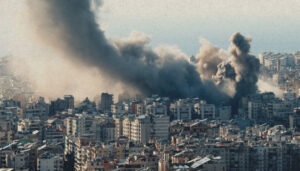
In modern warfare, there is an unwritten rule: striking energy infrastructure means striking the very heart of a society. It is not only about military objectives or geopolitical strategies. Energy is what keeps hospitals, transportation systems, water supply networks, industries, and the daily lives of millions of people functioning.
For this reason, in contemporary international crises, power plants and energy infrastructure have become highly sensitive targets.
In the case of Iran, this vulnerability is particularly evident. The country’s electrical system largely depends on a number of major thermal and gas power plants, many of which represent critical nodes in the national energy network. In a scenario of military escalation, these infrastructures could become strategic targets with potentially far-reaching consequences.
The Power Plants Sustaining Iran’s Energy System
Among the country’s most important facilities, several power plants play a central role in maintaining grid stability.
The Damavand combined-cycle power plant, located near Tehran (in the Pakdasht area), is considered the largest power plant in Iran, with a capacity of approximately 2,868 megawatts. It is not only one of the country’s main energy facilities, but at the time of its construction, it was also among the largest combined-cycle plants in the Middle East.
Another key node is the Shahid Salimi power plant in Neka, located in the north of the country along the Caspian Sea, with a capacity of around 2,214 megawatts. This plant represents one of the primary energy sources for northern regions.
In southern Iran, the Ramin power plant in Ahvaz, with a capacity of about 1,900 megawatts, plays a crucial role in supplying energy to the southern provinces.
These are complemented by other important infrastructures such as the Bandar Abbas power plant, with an estimated capacity of 1,300–1,400 megawatts, and the Mina Bandar Abbas plant, producing approximately 1,000–1,200 megawatts.
Finally, among the most sensitive energy infrastructures in the region is the Bushehr nuclear power plant, the only operational nuclear facility in Iran, with a capacity of around 1,000 megawatts.
Together, these infrastructures constitute an essential part of the country’s energy production.
The Case of the Damavand Power Plant
Among all the facilities in Iran’s electrical system, the Damavand power plant represents one of the most critical points in the entire network.
With nearly 3,000 megawatts of installed capacity, this plant contributes approximately 3–4% of the country’s electricity production and plays a particularly important role in maintaining grid stability in central regions.
If a power plant of this scale were suddenly struck or disconnected from the grid, Iran’s energy system would immediately lose around 2,500 megawatts of production capacity.
In a complex electrical system, a loss of this magnitude is never isolated.
The Risk of a Domino Effect
Electrical grids operate on a constant balance between production and consumption. When a large power plant suddenly goes offline, this balance can quickly break down.
In Iran, a significant portion of the electricity used in the Tehran metropolitan area comes from power plants located in surrounding regions.
The sudden loss of a facility like Damavand could therefore trigger a domino effect involving several central provinces, including:
Tehran
Alborz
Qom
Semnan
Qazvin
Parts of Mazandaran province
According to some technical estimates, a crisis of this kind could lead to the immediate loss of up to 30% of the electricity available in the capital.
When the Grid Cannot Compensate
When the network is unable to quickly compensate for a loss exceeding 2,000 megawatts, system operators are often forced to introduce controlled blackouts in order to prevent a total grid collapse.
Consequences for Daily Life
The problem of a large-scale blackout is not only an energy issue—it is deeply social.
The first infrastructures to be affected would be those that sustain everyday urban life:
Hospitals
Urban transport systems
Metro networks
Water pumping systems
Elevators
Fuel stations
In a metropolis like Tehran, a significant reduction in available energy could rapidly generate an urban crisis.
Moreover, many hospitals rely on emergency generators that can operate only for limited periods. In the case of prolonged blackouts, healthcare services could come under severe pressure.
The Invisible Cost of War
In strategic analyses, the destruction of a power plant may appear as a simple technical fact: a facility out of service, a certain number of megawatts lost.
But behind those numbers lies a much more concrete reality.
A destroyed power plant means neighborhoods without electricity, hospitals operating on emergency generators, water systems that stop pumping, and industries forced to shut down.
In other words, behind every lost megawatt there is not just an energy figure—there is the daily life of millions of people.
Conclusion
Modern wars increasingly demonstrate a simple but often overlooked lesson: destroying infrastructure takes only minutes, but rebuilding the economic and social balance of a country can take years sometimes entire generations.