A Tribute to Maxine Lowy’s Report, the Andrónicos Antequera Brothers, and the Chilean Families Who Transformed the Suffering of Enforced Disappearance into Memory, Truth, and a Demand for Justice.
“The 1973 coup d’état did not end with the seizure of La Moneda Palace or the establishment of a military dictatorship. For thousands of Chilean families, it marked the beginning of a tragedy that would span generations. People were detained, tortured, executed, and forcibly disappeared. Mothers grew old searching for their children, families learned to live without answers, and state agencies turned political persecution into a systematic practice. Fifty-three years later, the question remains as simple as it is devastating: Where are they? And as long as that question remains unanswered, Chile will continue to owe a debt to its own history.”
I. A TRIBUTE TO THOSE WHO REFUSED TO REMAIN SILENT
Some reports cover recent events, while others recover stories that certain periods in history sought to bury. Maxine Lowy’s work belongs to the latter category. Her account of the Andrónicos Antequera family, originally from Tocopilla, takes us directly to one of Chile’s deepest wounds: the enforced disappearance of people during the military dictatorship. We are not dealing with an abstract ideological controversy, but with lives cut short, institutions that participated in repression, and families forced to search for answers for decades.
“Journalism achieves its greatest dignity when it restores names, faces, and stories to those whom those in power tried to reduce to mere absences.”
Lowy uses the camanchaca, the coastal fog characteristic of northern Chile, as a metaphor for a memory obscured for far too long. The comparison possesses extraordinary narrative power. Tocopilla was a center of social organization, political activity, and conflicts that preceded the coup d’état. Then came the repression. The story of the brothers Juan Carlos and Jorge Elías Andrónicos Antequera demonstrates that the consequences of that violence were not confined to Santiago or the country’s major political centers. They also reached families in cities far from the capital.
“Distance from La Moneda Palace never meant being far from the consequences of decisions made by those in power.”
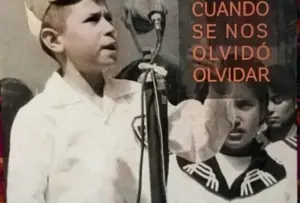
On October 3, 2026, Maxine Lowy’s book “Cuando se nos olvidó olvidar” was presented at the Museum of Memory and Human Rights. The publication is the result of research and a family effort spanning three generations. It brings together photographs, letters, court documents, and testimonies that make it possible to reconstruct the brothers’ lives and their family’s search for answers. The museum confirmed that the work was conceived as an exercise in active remembrance.
“A book cannot bring the disappeared back home. But it can prevent silence from ultimately erasing them from their country’s memory as well.”