-
Václav Havel: Commemoration of the 90th anniversary of his birth
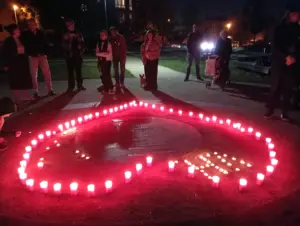
On 5 October, the Czech Republic commemorated the 90th anniversary of the birth of Václav Havel, a playwright, essayist, dissident and the first president of the independent Czech Republic. He was born on 5 October 1936 and was one of the leading figures of the Czechoslovak dissident movement. After November 1989, he became head of…
-
Where the Footsteps Converge ― The 41st Anniversary Ceremony of the New England Peace Pagoda
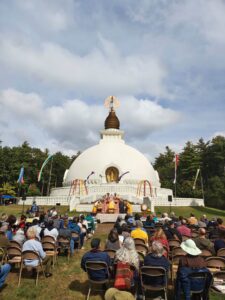
On October 4, the 41st Anniversary Ceremony of the New England Peace Pagoda was solemnly observed, with some 200 people in attendance. The forecast had called for rain, but the day turned out partly cloudy with sunny spells: neither hot nor cold, and altogether fine weather. Native American opening prayer and dance, led by longtime…
-
Nuclear deterrence: who are the real ‘Care Bears’?

Advocates of nuclear disarmament are regularly dismissed by the champions of nuclear deterrence as naïve and unrealistic, utopian or even irresponsible. Yet this ‘doctrine’ of deterrence, regarded by France as the ‘cornerstone’ of its national security, is based on quasi-religious beliefs, a theory that cannot be proven, risky gambles and fragile assumptions. So much so…
-
Books or Bombs? France’s Student Revolt vs. NATO’s Spending Push
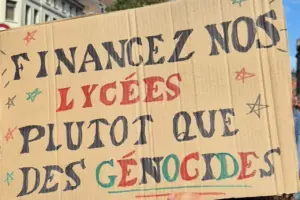
For the third week in a row, high school students across France are taking to the streets demanding more investment in their education. They want more teachers, smaller classes, decent school buildings and a public education system that works for poor and working-class students. By Medea Benjamin But their struggle comes at a moment when…
-
The World March for Peace and Nonviolence: An Attempt to Sow and Nurture the Seeds of a Nonviolent Revolution
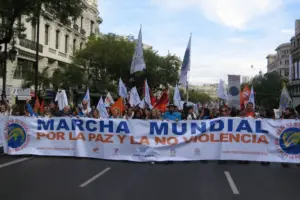
When we talk about revolution, we often imagine only crowds dramatically—and sometimes violently—flooding the streets, storming symbolic buildings, and so on; but there is a quieter form of revolution that is taking root all over the world, from grassroots movements to initiatives led by certain inspired leaders—and which, of course, is not covered by the…
-
The Silk Road Has Reached South America
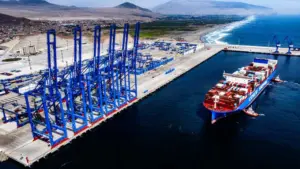
When the Indo-Pacific Met the Continent of Resources “For two centuries, South America searched for the centers of power by looking north and toward the Atlantic. In the twenty-first century, it may discover that a decisive part of its future lies on the other side of the Pacific.” Something profound is happening in South America,…
-
The Slow-Motion Erasure Of The West Bank
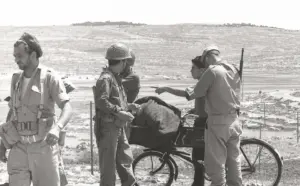
There are crimes that arrive with explosions, and crimes that advance quietly—through a bulldozer at dawn, a rifle at a shepherd’s chest, a child torn from bed, a family denied water until leaving becomes the only way to survive. In the West Bank, dispossession has become a daily ritual and Palestinian anguish a background noise…
-
Barcelona acollirà Sports X Hope, una conferència internacional sobre esport i construcció de pau
La conferència internacional, a l’Auditori 1899 del FC Barcelona, reunirà clubs, entitats socials i institucions per parlar del paper de l’esport en la construcció de pau i la cohesió social. El punt de partida serà la Hope League, un projecte de futbol comunitari a Síria i el Kurdistan iraquià. Raqqa, Kobane, Tirbespiyê, Al-Hasakah, Sulaymaniyah i…
-
Activisme sense cremar-se: obertes les inscripcions al curs en línia gratuït sobre ecofeminismes
L’Escola d’Activisme obre les inscripcions de la sisena edició del seu curs en línia, que enguany planteja com organitzar-nos davant la crisi climàtica i altres injustícies sense esgotar-nos pel camí. Del 2 al 26 de novembre, el curs combina materials per avançar al teu ritme amb una sessió en directe cada dimecres amb activistes vinculades…
-
International Book Fair «Written by Them» to Bring Together Women Writers from Around the World in Virtual Edition

From October 13 to 20, FILE 2026 will take place, a great virtual celebration of women’s literature, within the framework of Women Writers’ Day. The International Book Fair Written by Them – FILE 2026, which will take place from October 13 to 20, will virtually bring together women writers, authors, poets, storytellers, researchers and literary…