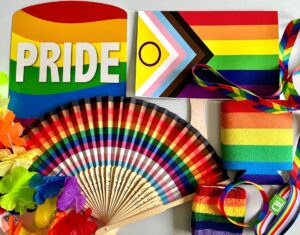
Self-proclaimed “Queen of Drag” Ru Paul once said: “You know, we as gay people, we get to choose our family. We get to choose the people we’re around.” That sounded like a spin. But he was referencing the cold reality that for some, coming out as gay meant rejection by the family they were born into and finding a new one. According to the non-profit Homeward NYC, 40% of the homeless youth in New York City were LGBTQ, even though only 7% of youth in the U.S. identify as such.
Today, Pride Parades worldwide have become mainstream events. Most gloss over the fight for acceptance catalyzed by the Stonewall uprising of 1969, the event Pride commemorates. LGBTQIA+ individuals still experience varying degrees of rejection worldwide. U.S.-based National Coalition for the Homeless posted that “26% of homeless LGBTQ youth report being forced out of their homes solely because of their sexual orientation or gender identity.”
Not too long ago, I met Christopher (not his real name), who grew up in the Philippines, where 91.5% of the population is identified as Christian, according to a 2020 census. A shy college student, he came to California in 2022 with relatives from Oregon who were also my friends. I met Christopher’s immediate family of four and the rest of my old pals at the Getty Museum, one of their last stops.
The day after our joyful reunion, my friend, the eldest in the family, called me from the airport. They were waiting to board their flight back to Oregon. Just a day earlier, we were hugging and we spent a lovely time updating one another. We last met in person before the COVID-19 pandemic hit. So, my first question to her was, “Did you call to tell me that someone in the group tested positive for COVID?”
To my surprise, she wanted advice. She did not know what to do with a disclosure. And it was the quandary, not the revelation, that bothered her. During the trip, Christopher came out as gay to her, my friend, who was his aunt. It came unexpectedly, even to me, that the teen came out to her before telling anybody else or his parents.
It became apparent why. The teenager’s father was not only a practicing pastor but also held a high position in the church, one of the most conservative. Its leadership publicly proclaims disapproval of homosexuality. They call sexual relations between men a sin or an abomination. Allegedly, the father said so himself in one of the after-dinner conversations at their rented vacation house in L.A. My friend, feeling concerned, expressed what we both feared could happen – that her gay nephew could be thrown out by his father should he come out.
“Do I tell his mother?”
My friend asked me if she should tell her sister, the nephew’s mother. She wanted my advice on how best to help Christopher come out to his family. As a medical professional, she wondered aloud if he had access to correct information on how to protect himself from sexually transmitted diseases. She asked if I knew of literature that could help him avoid those who might take advantage of his situation.
Another question from my friend was whether Christopher needed to come out at all. The conundrum to the heteronormative majority, especially to the baby boomer generation (born 1946 – 1964), was why even draw attention to “that.” If coming out led to unimaginable consequences, should Christopher just “blend in” and stay closeted to keep everyone happy?
First, I reminded my friend that the teen came out to her while visiting a spectacular museum with his extended family. Despite the joyous occasion, he must have agonized over coming out. So, it was important to him. Perhaps hiding his sexuality bothered him. And he yearned to live an authentic life. Maybe he wanted to stop pretending.
However, I said it was totally up to her nephew, Christopher, to come out to his mother and the rest of the family, including his father. Coming out was deeply personal, and all my friend could do was offer support, whatever he needed. And that she was not betraying her sister, Christopher’s mother, by keeping his secret.
Friend’s Concern Justified
For those old enough, coming out even as recently as the ‘90s could cost someone his or her job, even for those outside entertainment and political careers. Being out or simply acting gay was treated as an invitation. Mathew Sheppard’s murder in 1998 made more people notice. But it was not the first.
The risks of damaging reputation and losing everything, life included, were extremely high to keep even the more liberated Gen X (born 1960 – 1980) cohort hiding in the closet. By the turn of the century, some members of the LGBTQ community, especially outside U.S. cities, still settled by getting married and raising a family to pass as straight, gain acceptance, or run for office. They choose to lead a double life.
Those on the down-low satisfy their needs for physical intimacy by cruising anonymously for sexual encounters in some “secret” spots in parks or public restrooms. Paying for sexual favors was another way out. But keeping sexuality under the radar while engaging in illicit activities only exposed them to potential harassment or blackmail. Moreover, anonymous hookups increase the vulnerability of the whole community to diseases. Still, lying, overcompensating, and deploying other coping mechanisms to keep their authentic self hidden were preferable to discrimination.
Eleven years after the 2015 U.S. Supreme Court’s Obergefell decision made same-sex marriage legal, did the world become more welcoming of LGBTQ people? In 2026, post-pandemic U.S.A. plows through a second Trump orbit. According to the American Civil Liberties Union (ACLU), they have tracked 616 anti-LGBTQ bills in 2025. The NGO Outright International’s Executive Director Maria Sjödin said that among the countries they reviewed in 2024, 85% of those that held elections had anti-LGBTQ messages in their campaigns. Indeed, U.S. policy shifts influence global trends.
Today, the internet, mobile, social media, and AI technologies all together provide anyone with access to a good look at everybody else’s curated lifestyles. Ironically, these technologies also offer a glimpse of freedoms other cohorts enjoy. Youth and digital native millennials (born 1981-1996) have become proficient in finding dates, hook-ups, or pornography on apps unfamiliar to their Gen X parents. So, hiding in the closet could easily intensify feelings of isolation or being “less than” their global peers.
Meanwhile, GLBT Historical Society shared that the Gay and Lesbian Alliance Against Defamation (GLAAD) Alert Desk tracked 932 anti-LGBTQ incidents across 49 states and Washington D.C. Routinely and increasingly –though the full scale remains deliberately obscured—LGBTQ, particularly trans and other non-binary communities, continue to deal with discrimination, covert and otherwise. Coded racism, outright bigotry, or plain hate add to this gender bias. Coming out for a teen in 2026 is as complicated as it was decades ago.
Not surprisingly, however, is the GLAAD report on Ipsos polling that on average, across the 26 countries they surveyed in 2024, 17% of Gen Z (defined as those born 1996-2012) identified as LGBTQ. This was followed by 11% of millennials, 6% of Gen X, and 5% of baby boomers. Does this mean that Gen Zs more readily admit to being LGBTQ because gender is a non-issue to them? Maybe Gen Z is the generation that has already resolved questions that older adults are still performatively debating. Unfortunately, it is still their parents who pay the bills, and they are the targets of cultural anxiety politics.
So, Why Come Out?
Looking back half a century ago, even before his attempt in 1973 to run for the San Francisco Board of Supervisors, his election in 1977, and his assassination in 1978, Harvey Milk encouraged gays and lesbians to summon the courage to reveal their sexual orientation to their families. His assumption then was that everyone in San Francisco would know a family member or friend who was gay. And no one would vote or choose to harm loved ones deliberately.
Coming out then was a way to show everyone that variations existed outside the socially constructed binary gender norm. Mere recognition of that would help demystify, destigmatize, and even decriminalize homosexuality. Families that made up the society would see “queer” in the faces of loved ones. And they would realize that nothing else has changed in their son, daughter, mother, father, brother, sister, cousin, aunt, uncle, or friend. Except that now they knew them better.
Coming out to families was a way of seeking allies — a form of visibility that protected the community fighting for social acceptance and equality. Now, for Gen Z Christopher, expressing his sexual identity is not a political action as much as it is a lived reality. So, I told my friend that his well-being came first.